
1. Driving a motorized vehicle in the city road which has no central line, the maximum speed can not exceed 50 kilometers per hour.
A. Right
B. Wrong
Answer:B
2. This sign warns the driver there is school area ahead.
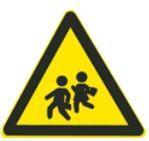
A. Right
B. Wrong
Answer:B
3. A motorized vehicle driver who does not hang the license plate is subject to a ________.
A. 6-point penalty
B. 12-point penalty
C. 2-point penalty
D. 3-point penalty
Answer:B
4. When driving in icy and snowy weather, ________.
A. The braking distance becomes longer
B. The resistance to slide becomes larger
C. The braking performance does not change
D. The road grip becomes stronger
Answer:A
5. A vehicle running on an expressway may frequently change lanes.
A. Right
B. Wrong
Answer:B
6. Which kind of vehicle can be applied for when initially applying for the driving license?
A. midsize bus
B. large bus
C. ordinary motor tricycle
D. trailer
Answer:C
7. The vehicle is allowed to _______ at this intersection.
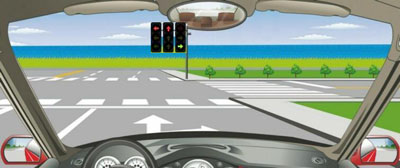
A. go straight
B. turn right
C. turn left
D. go straight or turn left
Answer:B
8. If a motorized vehicle driver drives on the road after getting drunk is subject to a prison term of more than 3 years.
A. Right
B. Wrong
Answer:B
9. When encountering a traffic accident ahead and help is needed while driving, the driver should ________.
A. Bypass to dodge it as much as possible
B. Immediately report to the police, stop and look on.
C. Help to preserve the scene and immediately report to the police
D. Speed up and pass to ignore it
Answer:C
10. When there is a continuous rain, the shoulders of the mountain roads may become loose and the embankments may collapse. When driving in this weather, the driver should select the middle solid road and refrain from going close to the roadsides.
A. Right
B. Wrong
Answer:A
11. Motor vehicle frontal collision, the double protection of the airbag and the safety belts can give full play to the role.
A. Right
B. Wrong
Answer:A
12. When driving, the driver should be courteous and defensive, instead of being offensive.
A. Right
B. Wrong
Answer:A
13. When driving a vehicle through an inundated road with non-motorized vehicles on both sides, the driver should _________.
A. Reduce speed and go slowly
B. Go forward normally
C. Speed up and pass
D. Continuously honk
Answer:A
14. If a motorized vehicle hits a building or a public facility, the vehicle may leave the scene right away.
A. Right
B. Wrong
Answer:B
15. Whats the meaning of this sign?
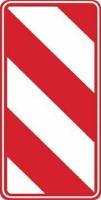
A. Passing on both sides
B. Passing by the right side
C. Passing by the left side
D. Passing is prohibited
Answer:B
16. When a vehicle passes a curve on a mountain road, the driver should reduce speed, honk and stick to the right.
A. Right
B. Wrong
Answer:A
17. Whats the meaning of this sign?
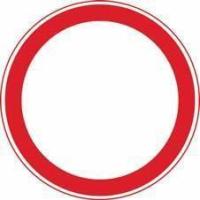
A. No passing
B. driving at reduced speed
C. time limit for entering
D. no entering
Answer:A
18. Which kind of sign is it?
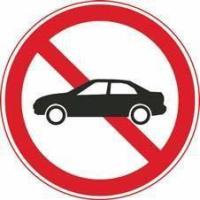
A. warning sign
B. prohibitive sign
C. indicative sign
D. directional sign
Answer:B
19. This sign warns obstacles ahead and reducing speed to bypass.
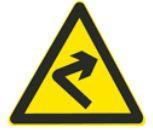
A. Right
B. Wrong
Answer:B
20. When driving at night, the drivers observation ability is visibly poorer and his visibility range becomes shorter than driving in the daytime.
A. Right
B. Wrong
Answer:A
21. Going though the intersection according to the traffic lights when traffic lights and command of the traffic police are inconsistency.
A. Right
B. Wrong
Answer:B
22. A driver applies for the driving license for the first time and is during the period of probation, he can drive a motorized vehicle on expressway alone.
A. Right
B. Wrong
Answer:B
23. Reduce speed or stop to look before the stop line when encountering this traffic light at the intersection.
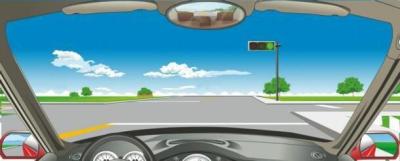
A. Right
B. Wrong
Answer:B
24. After a tire blows out and before the driver can control the speed of the vehicle, he should refrain from using the foot brake to stop the vehicle. Otherwise, a horizontal swing of the vehicle can cause greater danger.
A. Right
B. Wrong
Answer:A
25. When encountering an overflowing bridge, the driver should look at the situation, and passes through slowly before he makes sure that it is safe to do so.
A. Right
B. Wrong
Answer:A


