
1. A driver can park the vehicle by borrowing the sidewalk if he cannot find the parking area.
A. Right
B. Wrong
Answer:B
2. Driving a small passenger vehicle on the expressway, the minimum speed should not be less than 90 kilometers per hour.
A. Right
B. Wrong
Answer:B
3. This sign indicates intersection ahead.
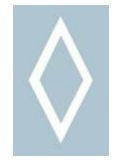
A. Right
B. Wrong
Answer:B
4. Driving license will be detained if you allow to drive your car.
A. driver during the period of probation
B. driver who has obtained a driving license
C. one whose driving license been revoked
D. one whose penalty points reach 6 points
Answer:C
5. It lights when the handbrake is pulled up.

A. Right
B. Wrong
Answer:A
6. A driver may drive on the road a motorized vehicle overhauled which has reached the scraped standard.
A. Right
B. Wrong
Answer:B
7. What is the max speed when passing this curve?
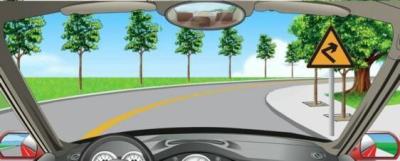
A. 40km/hr
B. 30km/hr
C. 50km/hr
D. 70km/hr
Answer:B
8. This sign reminds dangerous hillside road ahead.
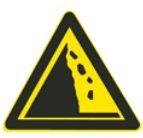
A. Right
B. Wrong
Answer:B
9. The vehicle is allowed to _______ at this intersection.
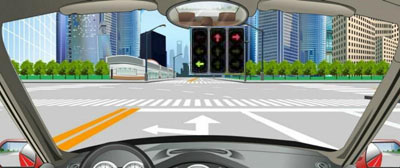
A. go straight or turn right
B. turn right
C. turn left
D. go straight
Answer:C
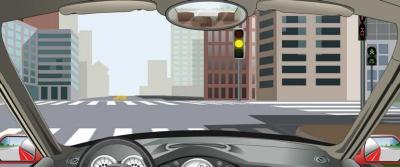
10. Continue to go through if having passed the stop line when encountering this traffic light at the intersection.
A. Right
B. Wrong
Answer:A
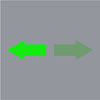
11. It lights when turning on the right-turn signal.
A. Right
B. Wrong
Answer:B
12. A motorized vehicle driver is not allowed during the period of probation to pull a trailer.
A. Right
B. Wrong
Answer:A
13. Whats the role of the indicative marking?
A. No passing
B. indicate vehicles to pass
C. restrict from passing
D. warn and remind
Answer:B
14. The police can detain the vehicle if one drives a vehicle without ______
A. vehicle license
B. qualification certificate
C. ID card
D. pass paper
Answer:A
15. Whats the meaning of this sign?
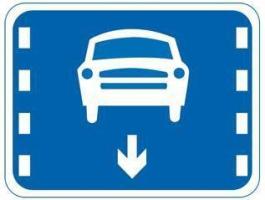
A. lane for small vehicles
B. special lane for small vehicles
C. special lane for multi-passenger vehicles
D. lane for motorized vehicles
Answer:D
16. It lights to indicate that right door is not closed.

A. Right
B. Wrong
Answer:B
17. Whats the meaning of this sign?
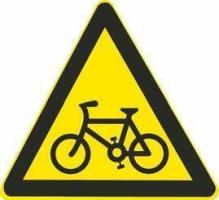
A. the lane for non-motorized vehicles
B. yield non-motorized vehicles
C. no passing for non-motorized vehicles
D. watch for non-motorized vehicles
Answer:D
18. This sign indicates ______
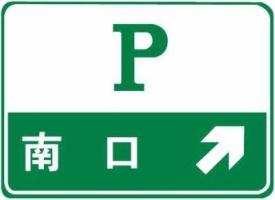
A. expressway service area ahead
B. expressway shelter ahead
C. expressway bus station ahead
D. expressway parking area ahead
Answer:D
19. It lights to remind that the driver‘s seat is not adjusted properly.

A. Right
B. Wrong
Answer:B
20. When a motorized vehicle runs on an expressway, it ________.
A. May stop on the road shoulder to let passengers on and off
B. May stop in the emergency lane to load and unload cargos
C. May overtake or stop in the acceleration or deceleration lane
D. Is not allowed to drive or stop in the emergency lane in a non-emergency case
Answer:D
21. Whats the meaning of the double yellow solid lines?
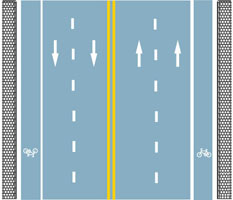
A. opposite direction lanes dividing line that can not be crossed
B. opposite direction lanes dividing line that can be crossed
C. bilateral same direction lanes dividing line that can be crossed
D. one-way lanes dividing line
Answer:A
22. Whats the meaning of this sign?
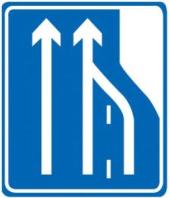
A. fewer lanes
B. merging point
C. emergency lane
D. changing to left lane
Answer:A
23. When driving at night, the drivers visibility range becomes shorter and his observation becomes poorer. At the same time, the driver can easily become tired because he has to highly concentrate his attention.
A. Right
B. Wrong
Answer:A
24. Whats the meaning of this sign?
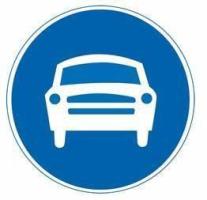
A. no passing for small vehicle
B. passing for small vehicle only
C. passing for motorized vehicle
D. no passing for small vehicle
Answer:C
25. Traffic Police can detain the vehicle which is suspected of using other vehicles license plate and vehicle license.
A. Right
B. Wrong
Answer:A


