
1. Whats the meaning of this sign?
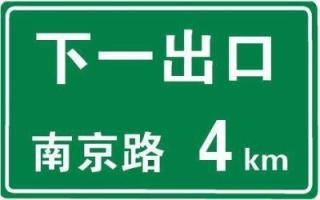
A. expressway left exit ahead
B. expressway destination ahead
C. expressway right exit ahead
D. expressway next exit ahead
Answer:D
2. In which section cannot overtake?
A. main streets
B. elevated road
C. crosswalk
D. ring express
Answer:C
3. Stopping temporarily on the road should not obstruct the passing of other vehicles and pedestrians.
A. Right
B. Wrong
Answer:A
4. What is this manipulation device?
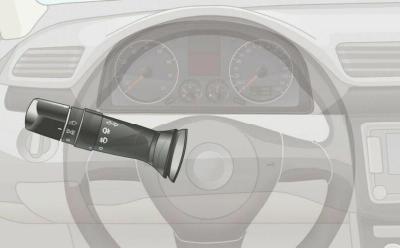
A. switch of reverse light
B. switch of wiper
C. switch of the hazard lights
D. combination switch of lights and signals
Answer:D
5. A small bus driver should reduce speed rapidly when he suddenly feel bumpy on a flat expressway, to prevent tire blowout.
A. Right
B. Wrong
Answer:A
6. When reaching an intersection, a left-turning vehicle may enter the left-turn waiting area anytime.
A. Right
B. Wrong
Answer:B
7. What is this instrument?
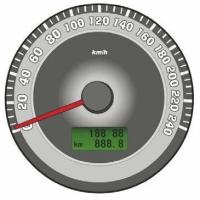
A. speed and mileage meter
B. engine tachometer
C. top speed meter
D. fuel consumption / 100 km
Answer:A
8. When a vehicle follows another vehicle on a mountain road, it should ____.
A. Properly increase the safe distance
B. Closely follow the vehicle in front
C. Properly reduce the safe distance
D. Try to find a chance to overtake
Answer:A
9. This sign reminds the road ahead goes through the village or town.
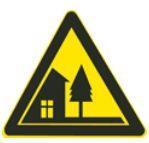
A. Right
B. Wrong
Answer:A
10. Whats the meaning of the marking in the red circle?
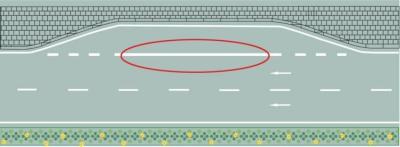
A. temporary stopping
B. bay-stopping
C. emergency stopping
D. public bus station
Answer:B
11. The age limit of applying for small vehicle is ________ .
A. 18~60 years old
B. 18~70 years old
C. 24~70 years old
D. 21~50 years old
Answer:B
12. When a motorized vehicle breaks down at night, and is difficult to move, the driver should turn on the hazard lights, the contour lights and the tail lights.
A. Right
B. Wrong
Answer:A
13. You can drive directly into the expressway from this position.
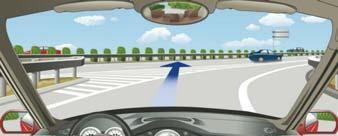
A. Right
B. Wrong
Answer:B
14. When reversing on an ordinary road and discovering some vehicles are passing, the driver should _________.
A. Honk to indicate the intention
B. Voluntarily stop and yield
C. Speed up and reverse
D. Continue to reverse
Answer:B
15. Whats the meaning of this sign?
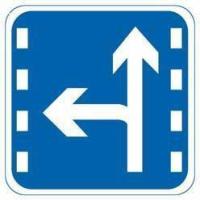
A. lane for both going straight and U turn
B. lane for both going straight and left turn
C. lane for going straight and right turn
D. lanes for going in different directions
Answer:B
16. After a vehicle enters the ramp, the driver should swiftly increase the speed to more than 60 kilometers per hour.
A. Right
B. Wrong
Answer:B
17. Whats the meaning of this sign?
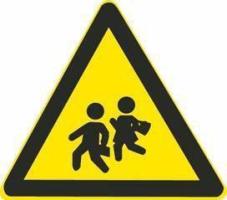
A. school area
B. watch for children
C. crosswalk
D. watch for pedestrians
Answer:B
18. A person who has taken the state-controlled psychiatric substances can drive motorized vehicle in short distance.
A. Right
B. Wrong
Answer:B
19. A rear tire blowout can sway the tail of the vehicle. The driver should firmly hold the steering wheel with both hands to ensure the vehicle go straight, reduce speed and then stop.
A. Right
B. Wrong
Answer:A
20. After starting the engine, it lights to indicate that ______

A. engine main oil way blockage
B. engine oil pressure is too low
C. engine crankshaft box leaks
D. engine oil pressure is too high
Answer:B
21. When driving in windy, rainy, snowy, foggy and other complex weather conditions, the driver should turn on the head light, honk continuously and overtake rapidly if the vehicle in front goes slowly.
A. Right
B. Wrong
Answer:B
22. This sign reminds an unmanned level crossing ahead.
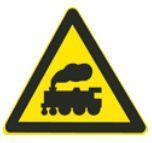
A. Right
B. Wrong
Answer:A
23. What should the driver do when encountering a vehicle from the opposite direction on a road without a central line?
A. driving closely by the roadside
B. driving by the central of the road
C. reducing speed and driving by right side
D. run by using the lane for non-motorized vehicles
Answer:C
24. Going though the intersection according to the traffic lights when traffic lights and command of the traffic police are inconsistency.
A. Right
B. Wrong
Answer:B
25. When a motorized vehicle passes through narrow road or bridge, the maximum speed should not exceed 30 kilometers per hour.
A. Right
B. Wrong
Answer:A


