
1. What does the traffic light mean?
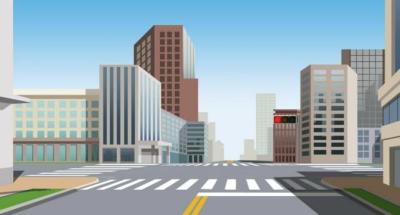
A. allowed to pass
B. draw attention
C. intersection warning
D. prohibited from passing
Answer:D
2. When the green light at a congested intersection is on, the vehicles _______.
A. May directly enter the intersection
B. Cannot enter the intersection
C. May pass the intersection by borrowing the opposite lane
D. Enter the intersection if it is safe to do so
Answer:B
3. Cannot make a U turn in this section.
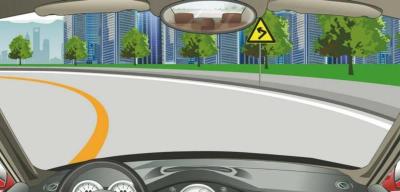
A. Right
B. Wrong
Answer:A
4. A vehicle is not allowed to make a U turn on the ramp of an expressway.
A. Right
B. Wrong
Answer:A
5. Which kind of sign is it?
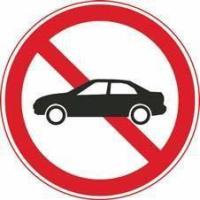
A. warning sign
B. prohibitive sign
C. indicative sign
D. directional sign
Answer:B
6. What does this sign mean?
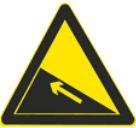
A. Reminding the side of a reservoir, lake or river ahead
B. Reminding the steep uphill road ahead
C. Reminding continuous two or more up slopes ahead
D. Reminding the steep downhill road ahead
Answer:B
7. What is this traffic sign?
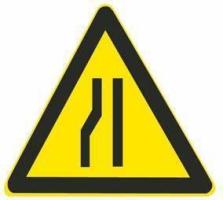
A. Road narrows on both sides
B. Road narrows on the right side
C. Road narrows on the left side
D. Bridge narrows
Answer:C
8. Whats the meaning of this sign?
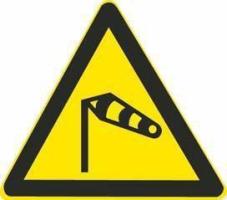
A. tunnel entry
B. observatory
C. mind side wind
D. wind vane
Answer:C
9. A motorized vehicle driver who drives after drinking is subject to a ________.
A. 3-point penalty
B. 2-point penalty
C. 6-point penalty
D. 12-point penalty
Answer:D
10. How often should a driver who is more than 60 years old present the certificate of physical conditions?
A. every 3 years
B. every 2 years
C. every 6 months
D. every 1 year
Answer:D
11. What is the max speed when visibility is less than 50m due to foggy, rainy or snowy?
A. 70km/hr
B. 50km/hr
C. 40km/hr
D. 30km/hr
Answer:D
12. Which part does it control when rotating this part of the switch?
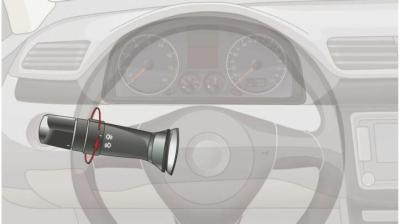
A. the low beam lights
B. the head and tail fog lights
C. high beam lights
D. turn signals
Answer:B
13. This sign reminds the road ahead goes through the village or town.
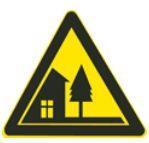
A. Right
B. Wrong
Answer:A
14. What is the main role of the seat belt when there is a collision?
A. to protect the driver and passengers necks
B. to protect the driver and passengers chests
C. to reduce the injuries of the driver and passengers
D. to protect the driver and passengers waists
Answer:C
15. Motor vehicle frontal collision, the double protection of the airbag and the safety belts can give full play to the role.
A. Right
B. Wrong
Answer:A
16. When encountering a vehicle coming in the opposite direction on a mountain road, the driver should ______ when crossing each other.
A. Not reduce speed
B. Stick to the center of the road
C. Speed up
D. Reduce speed or stop to yield
Answer:D
17. May not drive if _____
A. the window is not closed
B. the door is not closed
C. the audio device is not closed
D. the roof window is not closed
Answer:B
18. No turning right when encountering this traffic light at the intersection.
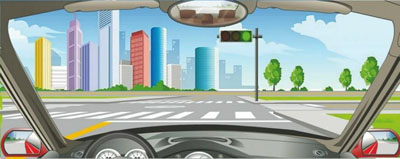
A. Right
B. Wrong
Answer:B
19. When a vehicle running at night encounters a curve ahead, its lighting ____.
A. Leave the road surface
B. Moves from the center of the road to the roadside
C. Does not change its distance
D. Become lower
Answer:B
20. You can overtake from both sides in this case.
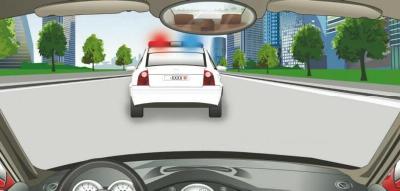
A. Right
B. Wrong
Answer:B
21. It lights continuously to indicate that ______

A. safety bags work
B. not buckled up
C. ABS system malfunction
D. safety bags malfunction
Answer:D
22. The method of this small passenger vehicle to leave the expressway lane is correct.
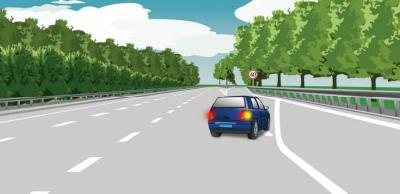
A. Right
B. Wrong
Answer:A
23. Reducing the speed when driving in sand, hail, rain, fog, ice and other weather conditions.
A. Right
B. Wrong
Answer:A
24. Which should be taken along while driving?
A. vocational qualification certificate
B. ID card
C. driving license
D. work permits
Answer:C
25. When discovering a road congestion ahead, the correct way to deal with this situation is to _______.
A. Continue to weave through
B. Find space and overtake one vehicle after another
C. Honk to indicate the vehicle in front to speed up
D. Stop and wait in line
Answer:D


