
1. When a vehicle coming in the opposite direction suddenly overtakes and occupies your lane, the correct way to deal with this situation is to __________.
A. Obstruct the way of that vehicle
B. Maintain the original speed
C. Reduce speed and avoid as much as possible, till stop
D. Speed up and go forward
Answer:C
2. You can make an U turn at this intersection.

A. Right
B. Wrong
Answer:B
3. Whats the role of the prohibitive sign?
A. indicate the vehicles to go ahead
B. warn danger ahead
C. prohibit or restrict from doing
D. tell the direction information
Answer:C
4. A motorized vehicle driver who uses falsified and altered vehicle license is subject to a ________.
A. 6-point penalty
B. 3-point penalty
C. 2-point penalty
D. 12-point penalty
Answer:D
5. What marking is it?

A. A cross-hatched marking
B. prohibitive area
C. guide line
D. central circle
Answer:D
6. No running into the middle lane when encountering this situation.

A. Right
B. Wrong
Answer:A
7. Whats the meaning of the white solid lines at the edge of the carriageway on both sides of the road?

A. Vehicles may cross temporarily
B. Vehicles are not allowed to cross.
C. Motorized vehicles may cross temporarily.
D. Non-motorized vehicles may cross temporarily
Answer:B
8. Whats the meaning of this sign?

A. no left turn
B. dead-end road
C. no passing
D. bypass if overheight
Answer:D
9. When a vehicle passes a crosswalk, the driver should yield to the pedestrians.
A. Right
B. Wrong
Answer:A
10. Which is correct if a vehicle breaks down and is difficult to move?
A. turn on the hazard lights
B. turn on all the lights of the vehicle
C. forbid the passengers to get off
D. place a warning sign in front of the vehicle
Answer:A
11. Whats the meaning of this sign?
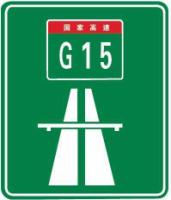
A. expressway exit
B. expressway beginning
C. expressway entry
D. expressway ending
Answer:B
12. What is the role of ABS system when applying emergency braking?

A. cut off the power output
B. control the direction automatically
C. reduce braking inertia
D. prevent wheel blocking
Answer:D
13. What causes the rear-end collision?

A. not observe through the rear-view mirror while the vehicle in front brakes
B. the vehicle in front brakes suddenly
C. distance from the vehicle in front is too close when the rear vehicle overtakes
D. not maintain a safe distance from the vehicle in front
Answer:D
14. When passing an unmanned level crossing, the driver should ________.
A. Speed up and pass
B. Reduce speed and pass
C. Maintain the speed and pass
D. Stop, look and pass
Answer:D
15. What marking is the combination of the white broken lines and the triangle area?

A. road entry marking
B. lane-dividing line that can be crossed
C. deceleration line at road entry
D. road exit marking
Answer:A
16. This motorized vehicle parked on the roadside has no illegal act.

A. Right
B. Wrong
Answer:B
17. A motorized vehicle driver who uses other motorized vehicles license plate and vehicle license is subject to a 3-point penalty.
A. Right
B. Wrong
Answer:B
18. Whats the meaning of this sign?
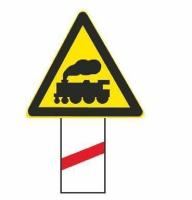
A. an unmanned level crossing 100m ahead
B. a manned level crossing 100m ahead
C. an unmanned level crossing 50m ahead
D. a manned level crossing 50m ahead
Answer:C
19. What is this manipulation device?
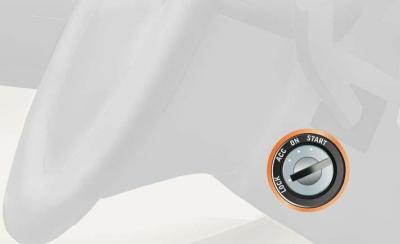
A. air conditioner switch
B. ignition switch
C. wiper switch
D. light switch
Answer:B
20. If a driver has driven a motorized vehicle for more than four hours running, he should stop the vehicle and rest for at least ____________.
A. 10 minutes
B. 15 minutes
C. 20 minutes
D. 5 minutes
Answer:C
21. When a vehicle has increased its speed to more than 60 kilometers per hour on the ramp of an expressway, it may directly enter the carriageway.
A. Right
B. Wrong
Answer:B
22. When a vehicle goes downhill, it may fully use the neutral gear and slide.
A. Right
B. Wrong
Answer:B
23. This sign reminds strong side wind ahead.

A. Right
B. Wrong
Answer:A
24. Whats the meaning of this sign?

A. lane information indication
B. road branching point ahead
C. place and distance indication
D. intersection ahead
Answer:D
25. A motorized vehicle driver who escapes after causing a traffic accident but his conduct does not constitute a crime, is subject to a ________.
A. 3-point penalty
B. 2-point penalty
C. 12-point penalty
D. 6-point penalty
Answer:C


