
1. When a vehicle goes uphill on a mountain road, it should change to a lower gear in a timely, accurate and rapid manner so as to avoid a situation in which driving at a high gear can reduce the power of the engine.
A. Right
B. Wrong
Answer:A
2. This sign reminds dangerous hillside road ahead.
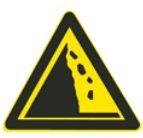
A. Right
B. Wrong
Answer:B
3. This sign warns the driver there is a crosswalk ahead.
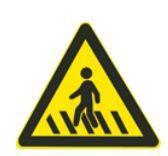
A. Right
B. Wrong
Answer:B
4. A motorized vehicle is not allowed to stop in the section 50 meters to the bridge, steep slope or tunnel.
A. Right
B. Wrong
Answer:A
5. Whats the meaning of this sign?
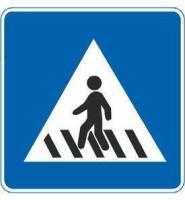
A. crosswalk
B. students passage
C. watch for pedestrians
D. childrens passage
Answer:A
6. Whats the meaning of this sign?
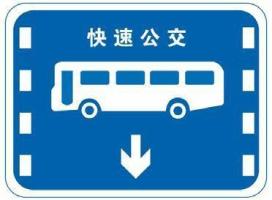
A. special lane for large buses
B. special lane for multi-passenger vehicles
C. special lane for public buses
D. special lane for BRT vehicles
Answer:D
7. How to drive through the intersection without traffic lights?
A. reduce speed and go slowly
B. speed up and pass
C. let large vehicle go first
D. let the left vehicle go first
Answer:A
8. When a motorized vehicle breaks down on the expressway, the persons on board should swiftly move to the right side road shoulder or emergency lane, and report to the police rapidly.
A. Right
B. Wrong
Answer:A
9. The doors of both sides are not closed if it lights.

A. Right
B. Wrong
Answer:A
10. After a vehicle enters a mountain road, it should pay special attention to the continuous curves sign. In addition, it should voluntarily evade vehicles and pedestrians, reduce speed in a time manner and honk in advance.
A. Right
B. Wrong
Answer:A
11. When a vehicle has to stop on an expressway due to a vehicle trouble, the driver should place a breakdown warning sign beyond ______ m behind the vehicle.
A. 25
B. 150
C. 100
D. 50
Answer:B
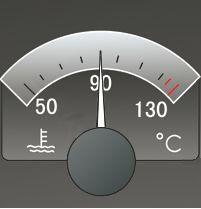
12. It displays that the current temperature of the coolant is 90 degrees.
A. Right
B. Wrong
Answer:A
13. What device does the switch of this symbol control?
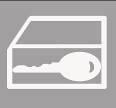
A. window glasses of both sides
B. electric door
C. door unlock
D. child safety lock
Answer:C
14. Turn on the right-turn signal and return immediately to the original lane afterovertaking.
A. Right
B. Wrong
Answer:B
15. Whats the meaning of this figure mark on the road?
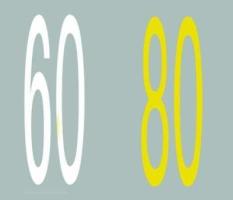
A. a mark of keeping distance
B. a mark of minimum distance
C. a mark of speed limit
D. a mark of road number
Answer:C
16. When starting up a vehicle stopping at the roadside, the driver should first ________.
A. Depress the accelerator pedal and start
B. Honk
C. Increase engine rotation speed
D. Observe the conditions around the vehicles
Answer:D
17. The front safety bags play a fully protective role when used in conjunction with ______
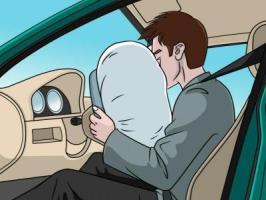
A. ABS system
B. seat belt
C. safety pillow of the chair
D. safety glasses
Answer:B
18. How to do while entering this intersection?
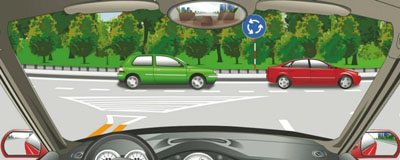
A. shift the high and low beam lights alternately to remind the cars already in the intersection to yield
B. quickly cut in the cars already in the intersection
C. let the cars already in the intersection go first
D. honk and enter directly
Answer:C
19. Whats the meaning of the yellow slash filled area in the middle of the road?
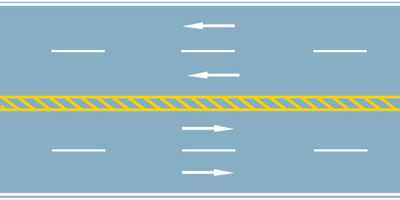
A. one-way lanes dividing line
B. opposite direction lanes dividing line that can not be crossed
C. bilateral same direction lanes dividing line that can be crossed
D. opposite direction lanes dividing line that can be crossed
Answer:B
20. This traffic light means ______
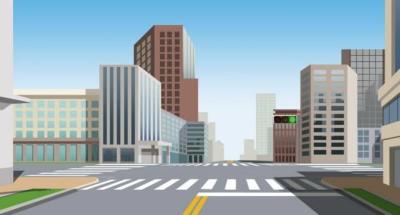
A. intersection warning
B. no passing
C. draw attention
D. allow to pass
Answer:D
21. When the traffic conditions at an intersection are complicated, the driver should be patiently waiting instead of taking chance.
A. Right
B. Wrong
Answer:A
22. When a motorized vehicle runs on an expressway, it ________.
A. May stop on the road shoulder to let passengers on and off
B. May stop in the emergency lane to load and unload cargos
C. May overtake or stop in the acceleration or deceleration lane
D. Is not allowed to drive or stop in the emergency lane in a non-emergency case
Answer:D
23. When a vehicle goes downhill, the driver should properly control the speed and fully use the engine to brake.
A. Right
B. Wrong
Answer:A
24. What marking is the white solid lines in the circle?
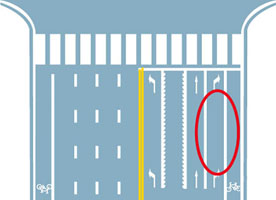
A. guide lanes lines
B. variable guide lanes lines
C. direction guide lines
D. one-way driving lines
Answer:A
25. How to turn left at this intersection?
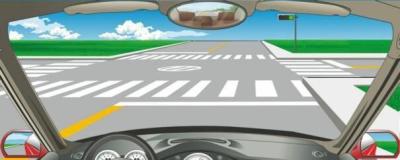
A. along the right side of the center point in the intersection
B. along the left side of the center point in the intersection
C. cover the center point in the intersection
D. can not turn left
Answer:B


