
1. Turn on the left-turn signal in advance when making a U turn on the road.
A. Right
B. Wrong
Answer:A
2. What is the max speed on this expressway?
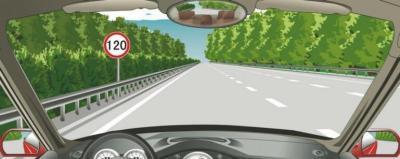
A. 60km/hr
B. 90km/hr
C. 90km/hr
D. 120km/hr
Answer:D
3. The reason that a road destroyed by flood affects safe driving and smooth passage is __.
A. The road grip becomes stronger
B. It is impossible to see the hidden holes and bumps in road surface
C. The visibility become lower and blurs the field of vision
D. The sunshine reflection blurs the view
Answer:B
4. A person can not apply the motorized vehicle driving license, if he has been held for criminal liabilities according to law because of driving after drinking and causing a major traffic accident.
A. Right
B. Wrong
Answer:A
5. What is the max speed at sharp curve?
A. 20km/hr
B. 30km/hr
C. 40km/hr
D. 50km/hr
Answer:B
6. Traffic Police can detain the driver according to law, if the driver drives a motorized vehicle which is suspected of reaching the write-off standard.
A. Right
B. Wrong
Answer:B
7. Nobody is allowed to drive a motorized vehicle that has safety hazards.
A. Right
B. Wrong
Answer:A
8. What marking is the white semicircle in the circle?
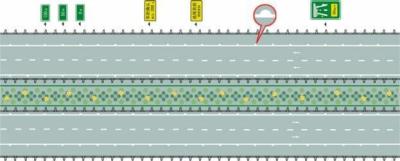
A. driving at reduced speed
B. ascertaining the vehicles speed
C. reducing the speed at the intersection
D. ascertaining the distance between the vehicles
Answer:D
9. Whats the meaning of this sign?
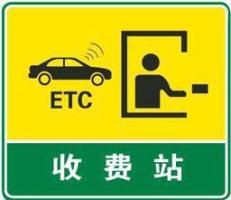
A. expressway toll station
B. expressway checkpoint
C. toll station with ETC
D. expressway card-getting point
Answer:C
10. It lights to indicate that engine compartment is opened.

A. Right
B. Wrong
Answer:B
11. When a driver needs to borrow a lane to bypass an obstacle in front and a vehicle in the opposite direction is approaching the obstacle, the driver should ___________.
A. Reduce speed or stop and yield to the vehicle coming in the opposite direction
B. Speed up and bypass the obstacle in advance
C. Honk to indicate the vehicle in the opposite direction to yield
D. Rapidly occupy the lane and force the vehicle coming in the opposite direction to stop and yield
Answer:A
12. What is the Minimum speed in this lane?
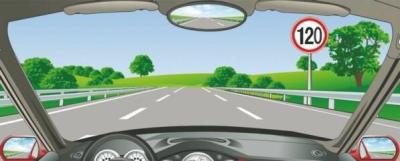
A. 100km/hr
B. 110km/hr
C. 60km/hr
D. 90km/hr
Answer:D
13. Whats the meaning of this sign?
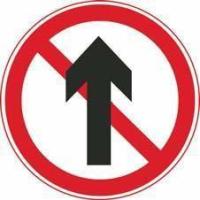
A. no right turn
B. no U turn
C. no going straight
D. no left turn
Answer:C
14. What is the minimum speed in this lane?
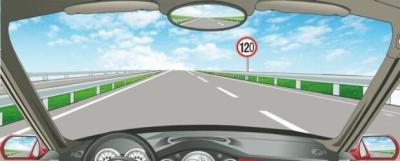
A. 60km/hr
B. 90km/hr
C. 100km/hr
D. 110km/hr
Answer:C
15. After a vehicle enters the ramp, the driver should swiftly increase the speed to more than 60 kilometers per hour.
A. Right
B. Wrong
Answer:B
16. When a vehicle is being overtaken by another vehicle, the driver should _____.
A. Run by the central line of the road
B. Speed up and yield
C. Continue to speed up and run
D. Reduce speed and run on the right side
Answer:D
17. Whats the meaning of the white rectangle marking?
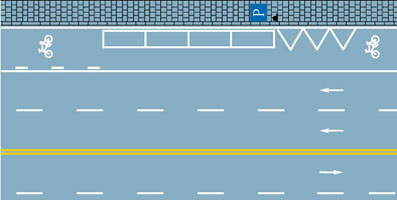
A. special space for taxicabs to take and drop passengers
B. horizontal parking space
C. inclined parking space
D. vertical parking space
Answer:B
18. When a vehicle passes a curve on a mountain road, the driver should reduce speed, honk and stick to the right.
A. Right
B. Wrong
Answer:A
19. This set of the hand signals of the traffic police indicates that the vehicles should ___ .
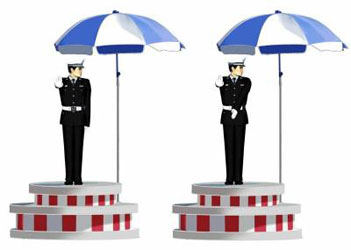
A. wait to turn left
B. pull over
C. reduce speed and pass slowly
D. turn left
Answer:D
20. Whats the meaning of this sign?
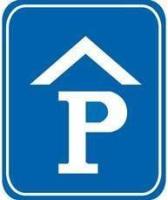
A. special car park
B. uncovered car park
C. indoor car park
D. internal car park
Answer:C
21. What kind of violation does this broken down vehicle have?
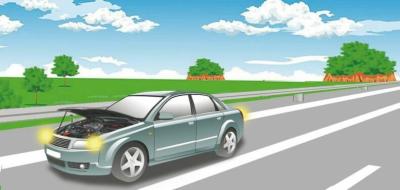
A. not turn on the hazard lights
B. not stop the car by the roadside
C. not solve the problem at once
D. not place the warning sign
Answer:D
22. It lights to indicate that ______

A. ABS system malfunction
B. handbrake is released
C. braking system malfunction
D. safety bags malfunction
Answer:A
23. The driving license of a motorized vehicle driver will be detained after his penalty scores reach 12 points in a scoring circle.
A. Right
B. Wrong
Answer:A
24. When encountering children on the road, the driver should _________.
A. Reduce speed and go slowly, or stop to yield when necessary
B. Continuously honk to urge
C. Swiftly bypass from one side
D. Speed up and bypass
Answer:A
25. Whats the meaning of the marking in the red circle?
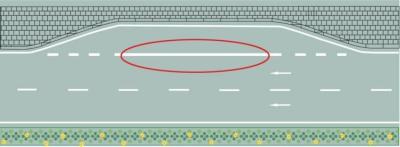
A. temporary stopping
B. bay-stopping
C. emergency stopping
D. public bus station
Answer:B


