
1. Whats the meaning of this sign?

A. T-shaped intersection ahead
B. road branching point ahead
C. Y-shaped intersection ahead
D. intersection ahead
Answer:A
2. No U turn at this section.

A. Right
B. Wrong
Answer:B
3. Whats the meaning of this sign?

A. low-lying road
B. hump bridge
C. bump road
D. high outburst road
Answer:C
4. This sign indicates landslide section ahead and bypassing.

A. Right
B. Wrong
Answer:B
5. You can overtake from both sides in this case.

A. Right
B. Wrong
Answer:B
6. Whats the meaning of this sign?

A. watch for two-way road
B. driving by either side of the road
C. watch for variable lane
D. variable lane
Answer:C
7. Whats the meaning of this sign?

A. no entering the intersection
B. no right turn
C. no changing lane
D. no U turn
Answer:B
8. To hold the steering wheel like this is correct.
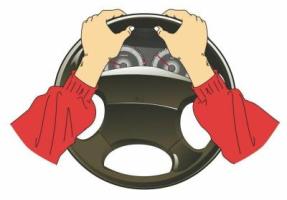
A. Right
B. Wrong
Answer:B
9. The subject 3 test is divided into two parts including Driving Skills, Common Knowledge on Safe and Courteous Driving.
A. Right
B. Wrong
Answer:A
10. Whats the meaning of this sign?

A. provincial highway No.
B. county road No.
C. township road No.
D. national highway No.
Answer:C
11. When a vehicle passes a sharp curve, it may overtake if traffic is light.
A. Right
B. Wrong
Answer:B
12. The driving license will be revoked when the person is executed community drug treatment, forced isolation treatment or community-based rehabilitation measures.
A. Right
B. Wrong
Answer:A
13. Whats the meaning of the white horizontal solid line in the circle?

A. turning waiting line
B. deceleration line
C. yielding line
D. stop line
Answer:D
14. Whats the meaning of this sign?

A. no yielding
B. yield while crossing each other
C. reduce speed and yield
D. stop to yield
Answer:C
15. What is the max speed when down slope, turning around and U turn?
A. 50km/hr
B. 60km/hr
C. 30km/hr
D. 40km/hr
Answer:C
16. It lights to indicate that ______

A. ABS system malfunction
B. handbrake is released
C. braking system malfunction
D. handbrake is pulled up
Answer:D
17. In which situation the traffic police may detain the vehicle?
A. no lable of inspection
B. no ID card
C. no lable of environmental protection
D. no vehicle registration papers
Answer:A
18. How to run in this situation?

A. stop and yield to the opposite car
B. turn on the left-turn signal and run on the left side
C. turn on the head lights to let the other side yield
D. speed up to bypass the obstacle and then cross the other vehicle
Answer:A
19. In which situation the traffic police may detain the vehicle on road?
A. not hang the license plate
B. no ID card
C. no insurance contract
D. no lable of environmental protection
Answer:A
20. What is the max speed on the expressway when the visibility is lower than 100 meters?
A. less than 40km/hr
B. less than 60km/hr
C. less than 80km/hr
D. less than 90km/hr
Answer:A
21. What pedal is it?

A. accelerator pedal
B. clutch pedal
C. handbrake
D. the brake pedal
Answer:A
22. What to do besides controlling speed less than 20km/hr when the visibility is lower than 50 meters on the expressway?
A. run in the emergency lane
B. leave the expressway as soon as possible
C. stop by the roadside as soon as possible
D. run slowly in the road shoulder
Answer:B
23. What is the max speed when passing this curve?

A. 40km/hr
B. 30km/hr
C. 50km/hr
D. 70km/hr
Answer:B
24. When a vehicle on the main road approaches a conjunction with a feeder road, the driver should ______ in order to prevent a collision with a vehicle that suddenly enters from the feeder road.
A. Maintain the normal speed
B. Reduce speed in advance, observe and drive with care
C. Honk and swiftly pass
D. Speed up in advance and pass
Answer:B
25. When the driver is suspected of drinking or drunk in a traffic accident, preserve the scene and immediately report to the police.
A. Right
B. Wrong
Answer:A


