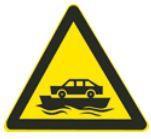
1. This sign reminds there is a ferry ahead for vehicles.
A. Right
B. Wrong
Answer:A
2. To hold the steering wheel like this is correct.
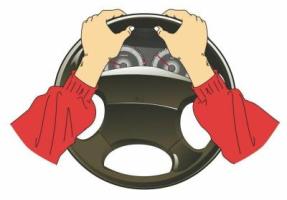
A. Right
B. Wrong
Answer:B
3. When changing lanes on an expressway, the driver should turn on the turn signal in advance, observe the traffic conditions, and slowly turn the steering wheel and enter the new lane after making sure it is safe to do so.
A. Right
B. Wrong
Answer:A
4. When a vehicle goes downhill, it may fully use the neutral gear and slide.
A. Right
B. Wrong
Answer:B
5. When braking on a muddy road, the tires can easily spin or drift and cause traffic accidents.
A. Right
B. Wrong
Answer:A
6. When a vehicle starts to move at night, the driver should first turn on the low beam light.
A. Right
B. Wrong
Answer:A
7. What marking is the white solid lines in the circle?
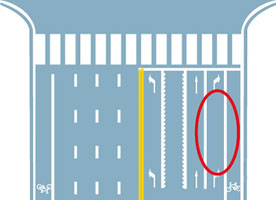
A. guide lanes lines
B. variable guide lanes lines
C. direction guide lines
D. one-way driving lines
Answer:A
8. This sign reminds serious bump road ahead.
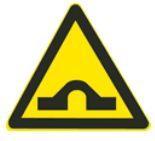
A. Right
B. Wrong
Answer:B
9. It lights continuously to indicate that airbag is working.

A. Right
B. Wrong
Answer:B
10. Which part of the driver can be protected by the safety pillow when there is a rear-end collision?
A. waist
B. chest
C. head
D. neck
Answer:D
11. It lights to indicate that ______

A. windscreen wash lacks
B. braking oil lacks
C. cooling system malfunction
D. coolant lacks
Answer:D
12. If a vehicle has the right of way at an intersection but encounters a vehicle cutting in, the driver should _________.
A. Rush to pass
B. Speed up in advance and pass
C. Reduce speed and evade, or stop to yield when necessary
D. Go forward at the normal speed according to the right of way and refuses to evade
Answer:C
13. It lights to remind that the driver‘s seat is not adjusted properly.

A. Right
B. Wrong
Answer:B
14. It lights to indicate that ______

A. handbrake released
B. foot brake failure
C. braking system is abnormal
D. the brake pedal does not return back
Answer:C
15. If a front tire blowout has caused a turn in direction, the driver should not avoid excess adjustment. Instead, he should control the direction of the vehicle, ____, and slowly reduce the speed of the vehicle.
A. Apply emergency braking
B. Use the handbrake
C. Gently depress the brake pedal
D. Swiftly depress the brake pedal
Answer:C
16. If a motorized vehicle causes a traffic accident on the road, the driver should immediately move the vehicle to the roadside.
A. Right
B. Wrong
Answer:B
17. A motorized vehicle can make a U turn on this road as long as it does not interfere other vehicles.
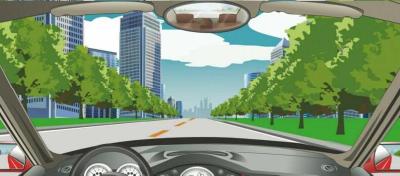
A. Right
B. Wrong
Answer:A
18. No turning right when encountering this traffic light at the intersection.
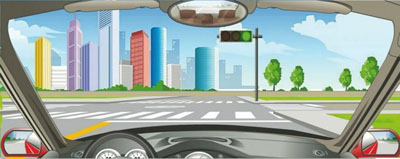
A. Right
B. Wrong
Answer:B
19. Before the motorized vehicle runs on the road, the driver should check the safety and technical performance of the vehicle.
A. Right
B. Wrong
Answer:A
20. A driver should drive the vehicles in accordance with the qualification listed on the driving license.
A. Right
B. Wrong
Answer:A
21. Driving on the expressway with full signs and marking, the driver should run in the lane and at the speed according to _________.
A. Signs and markings
B. Rules on road traffic safety
C. Vehicle manual
D. Local regulations
Answer:A
22. Whats the meaning of the double yellow solid lines?
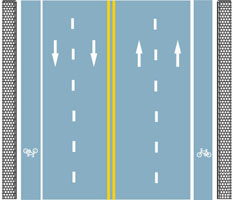
A. opposite direction lanes dividing line that can not be crossed
B. opposite direction lanes dividing line that can be crossed
C. bilateral same direction lanes dividing line that can be crossed
D. one-way lanes dividing line
Answer:A
23. The three principles for careful driving are concentration, careful observation and early prevention.
A. Right
B. Wrong
Answer:A
24. What is the main role of the seat belt when there is a collision?
A. to protect the driver and passengers necks
B. to protect the driver and passengers chests
C. to reduce the injuries of the driver and passengers
D. to protect the driver and passengers waists
Answer:C
25. Overtaking is allowed when passing a level crossing in city where no train passes.
A. Right
B. Wrong
Answer:B