
1. It lights when turning on the front low beam lights.
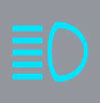
A. Right
B. Wrong
Answer:B
2. The driving license of 10-year validity will be issued if the penalty points never reached 12 points in every scoring cycle during the 6-year validity of the license.
A. Right
B. Wrong
Answer:A
3. It lights to indicate that luggage compartment is open.

A. Right
B. Wrong
Answer:B
4. It lights continuously to indicate that ______

A. safety bags work
B. not buckled up
C. ABS system malfunction
D. safety bags malfunction
Answer:D
5. When reaching an intersection, the driver should _____ if a turning vehicle cuts in.
A. Stop to evade
B. Maintain the normal speed
C. Speed up and pass ahead of it
D. Honk and pass ahead of it
Answer:A
6. What marking is the yellow road surface in the center of the intersection?
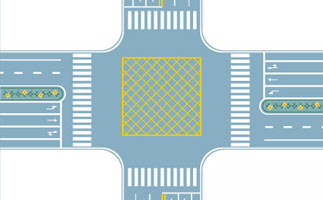
A. central circle
B. guide line
C. cross-hatched marking
D. parking area
Answer:C
7. Whats the meaning of this sign?
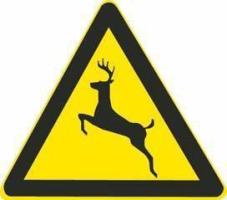
A. watch for wildlife
B. watch for animals
C. zoo park
D. opened pastoral area
Answer:A
8. Whats the meaning of the double white solid lines in far front of the intersection?

A. stopping and yield line
B. slowdown and yield line
C. left-turn waiting line
D. waiting to run line
Answer:A
9. Whats the meaning of this sign?
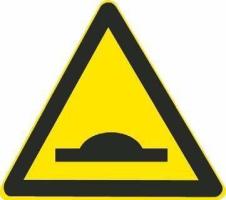
A. bump road
B. high outburst road
C. low-lying road
D. hump bridge
Answer:B
10. What is the max speed on the expressway when the visibility is lower than 100 meters?
A. less than 40km/hr
B. less than 60km/hr
C. less than 80km/hr
D. less than 90km/hr
Answer:A
11. This sign reminds there is a one-way and poor lighting culvert ahead.
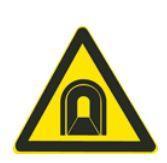
A. Right
B. Wrong
Answer:B
12. When crossing each other at night, how far should change the high beam lights to low beam lights?
A. not need to change lights
B. beyond 150m
C. within 100m
D. within 50m
Answer:B
13. Whats the meaning of the yellow broken and solid lines in the middle of the road?
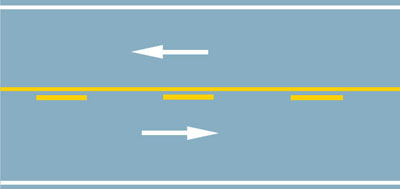
A. no crossing the lines on the side of the broken line
B. no crossing the lines on the side of the solid line
C. allowed to cross the lines on the side of the solid line
D. allowed to cross the lines on both sides
Answer:B
14. When the green arrow for a lane is on and there are still pedestrians in the crosswalk before the vehicle, the driver should ___________.
A. Directly start up and pass
B. Start up and bypass the pedestrians from behind
C. Start up and bypass before the pedestrians
D. Start up after the pedestrians have passed
Answer:D
15. Whats the meaning of this sign?
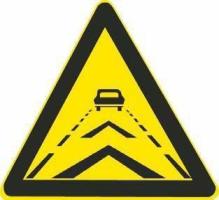
A. section narrows on both sides
B. section for speed test
C. section for ascertaining the distance between the vehicles
D. pay attentions to keeping distance
Answer:D
16. Whats the role of the prohibitive sign?
A. indicate the vehicles to go ahead
B. warn danger ahead
C. prohibit or restrict from doing
D. tell the direction information
Answer:C
17. Which kind of vehicle can be initially applied for when one reaches 20 years old?
A. large truck
B. large bus
C. midsize bus
D. trailer
Answer:A
18. No turning left in this situation.
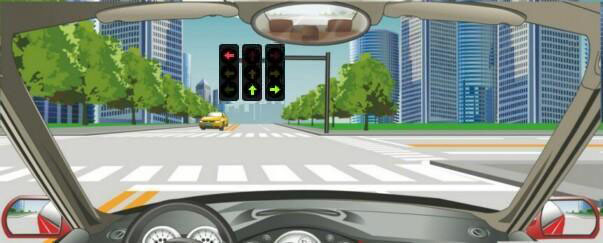
A. Right
B. Wrong
Answer:A
19. When braking on a muddy road, the tires can easily spin or drift and cause traffic accidents.
A. Right
B. Wrong
Answer:A
20. Whats the meaning of this sign?
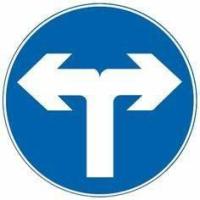
A. no left turn
B. leftt and right turn
C. no leftt and right turn
D. no right turn
Answer:B
21. Whats the meaning of this sign?
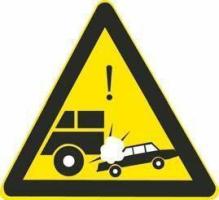
A. accident-prone section
B. construction section
C. reducing speed and going slowly section
D. jammed section
Answer:A
22. Before a vehicle enters a curve of a mountain road, the driver ______ if there is no vehicle coming in the opposite direction.
A. Should reduce speed, honk and drive on the right side
B. Should drive along the outer side of the curve
C. May briefly borrow the opposite lane
D. May speed up and pass along the tangent line of the curve
Answer:A
23. When changing lanes on an expressway, the driver should turn on the turn signal in advance, observe the traffic conditions, and slowly turn the steering wheel and enter the new lane after making sure it is safe to do so.
A. Right
B. Wrong
Answer:A
24. Whats the meaning of this sign?
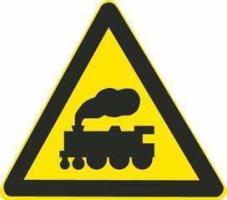
A. watch for long time honking
B. an unmanned level crossing
C. a manned level crossing
D. multi-crossing of railway and road
Answer:B
25. If a motorized vehicle driver causes a traffic accident and runs away but his conduct does not constitute a crime, he is subject to a 12-point penalty.
A. Right
B. Wrong
Answer:A


