
1. A person whose driving license has been destroyed cannot drive a motorized vehicle.
A. Right
B. Wrong
Answer:A
2. This set of the hand signals of the traffic police indicates that the vehicles should ____ .
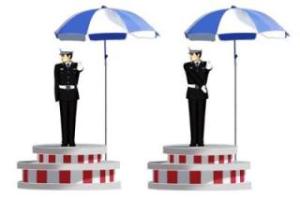
A. reduce speed and pass slowly
B. pull over
C. stop
D. turn right
Answer:D
3. It lights when turning on the front high beam lights.
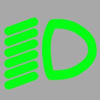
A. Right
B. Wrong
Answer:B
4. Use the high and low beam lights alternately when passing the crosswalk at night.
A. Right
B. Wrong
Answer:A
5. When a vehicles turns, it should do so on the right side and refrain from occupying the lane of the other party. The left turn should be gentle and the right turn should be sharp.
A. Right
B. Wrong
Answer:A
6. Whats the meaning of this sign?

A. reduce speed in tunnel
B. turn on the high beam lights in tunnel
C. turn on the light in tunnel
D. width light in tunnel
Answer:C
7. When passing through an overflowing road, a high gear should be used to pass rapidly.
A. Right
B. Wrong
Answer:B
8. This traffic light means ______
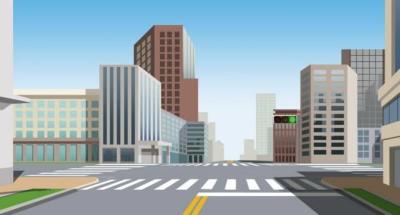
A. intersection warning
B. no passing
C. draw attention
D. allow to pass
Answer:D
9. When a vehicle approaches a bus stopping at a bus stop, the driver should ______ in case the bus starts up suddenly or pedestrians cross in front of the bus.
A. Reduce speed, keep a sufficient distance and be ready to stop anytime
B. Maintain the normal speed
C. Honk to remind, speed up and pass
D. Be ready to apply emergency braking
Answer:A
10. Traffic Police can detain the driver according to law, if the driver drives a motorized vehicle which is suspected of reaching the write-off standard.
A. Right
B. Wrong
Answer:B
11. This sign warns the driver there is a crosswalk ahead.
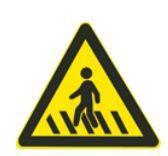
A. Right
B. Wrong
Answer:B
12. It lights to indicate that ______
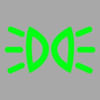
A. the head and tail fog lights are turned on
B. front and rear width lights are turned on
C. the head lights are turned on
D. the hazard lights are turned on
Answer:B
13. Whats the meaning of this sign?
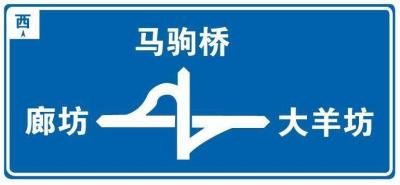
A. intersection ahead
B. interchange ahead
C. Y-shaped intersection ahead
D. ring intersection ahead
Answer:B
14. No U turn at this section.
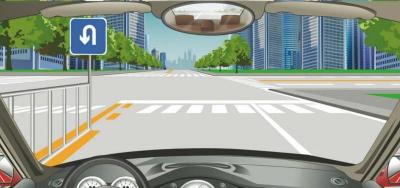
A. Right
B. Wrong
Answer:B
15. Whats the meaning of this sign?
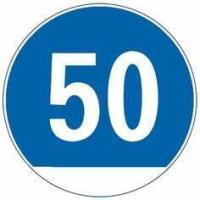
A. minimum speed limit is 50km/hr
B. maximum speed limit is 50km/hr
C. the height is 50m
D. the altitude is 50m
Answer:A
16. It flashes when turning on the hazard lights.

A. Right
B. Wrong
Answer:A
17. If a driving license has been revoked as it is obtained by deception, bribery or other illegal means, the applicant is not allowed to re-apply for it within ______
A. 6 months
B. 1 year
C. 2 years
D. 3 years
Answer:D
18. How to drive in sand, hail, rain, fog, ice and other weather conditions?
A. run as normal
B. maintain the speed
C. speed up properly
D. reduce the speed
Answer:D
19. Whats the meaning of this sign?
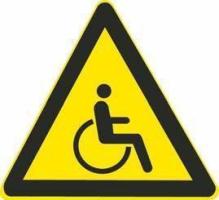
A. exit and entry for disabled people
B. watch for disabled people
C. rest area for disabled people
D. special passage for disabled people
Answer:B
20. It displays that oil in tank has less than the warning line
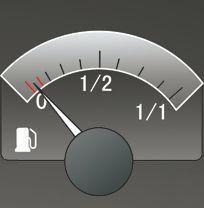
A. Right
B. Wrong
Answer:A
21. When passing through an inundated road, the driver should ________.
A. Reduce speed and go slowly
B. Maintain the normal speed and pass
C. slide over in the neutral gear
D. Speed up and pass
Answer:A
22. A motorized vehicle is not allowed to stop in the section 50 meters to the narrow road less than 4 meters width.
A. Right
B. Wrong
Answer:A
23. Whats the meaning of this sign?
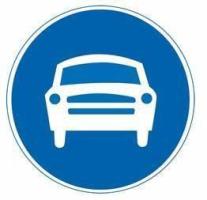
A. no passing for small vehicle
B. passing for small vehicle only
C. passing for motorized vehicle
D. no passing for small vehicle
Answer:C
24. The police can detain the vehicle if one drives a vehicle without ______
A. vehicle license
B. qualification certificate
C. ID card
D. pass paper
Answer:A
25. It lights to remind that engine coolant may be insufficient.

A. Right
B. Wrong
Answer:A


