
1. What should the driver do if conditions permit when a following vehicle gives the overtaking signal on a road without a central line?
A. maintain the original speed
B. speed up
C. reduce speed, move to the right side and yield
D. immediately stop and yield
Answer:C
2. When driving in a snowy day, the driver should drive along the vehicle tracks if there are any.
A. Right
B. Wrong
Answer:A
3. This sign reminds a sharp curve ahead.

A. Right
B. Wrong
Answer:B
4. Whats the meaning of this sign?

A. stop by the left side of the road
B. downhill section left
C. left turn only
D. run by the left side of the road
Answer:D
5. This set of the hand signals of the traffic police indicates that the vehicles should ___ .

A. turn left
B. wait to turn left
C. reduce speed and pass slowly
D. turn right
Answer:B
6. When encountering an overflowing bridge, the driver should look at the situation, and passes through slowly before he makes sure that it is safe to do so.
A. Right
B. Wrong
Answer:A
7. Whats the meaning of this sign?
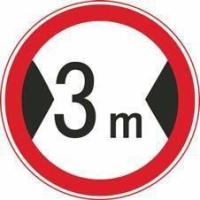
A. 3m width limit ahead
B. 3m width limit
C. the 3m width limit ban is lifted
D. 3m height limit
Answer:B
8. The validity of the driving license which is initially applied for is ______
A. 3 years
B. 5 years
C. 6 years
D. 12 years
Answer:C
9. When encountering non-motorized vehicles cutting in on the road, the driver should ___.
A. Honk to warn
B. Speed up and pass
C. Reduce speed and yield
D. Suddenly speed up when approaching
Answer:C
10. After causing a road accident, the vehicle driver needs to change the scene for rescuing the wounded, the driver should mark the location.
A. Right
B. Wrong
Answer:A
11. When driving at night, the drivers observation ability is visibly poorer and his visibility range becomes shorter than driving in the daytime.
A. Right
B. Wrong
Answer:A
12. Whats the meaning of the white broken lines area on the far left side?

A. special lane for multi-passenger vehicles
B. special lane for small buses
C. special lane for taxis with no passenger
D. special lane for large buses
Answer:A
13. A driver should stop on the expressway at once to have a rest when he feel tired.
A. Right
B. Wrong
Answer:B
14. When following a vehicle, the following vehicle may use the high beam light.
A. Right
B. Wrong
Answer:B
15. How to run at this position when leaving the expressway?

A. enter the deceleration lane
B. keep running forward
C. keep the speed at 100km/hr
D. reduce the speed to less than 40km/hr
Answer:A
16. Whats the meaning of this sign?

A. Passing on both sides
B. Passing is prohibited
C. Passing by the left side
D. Passing by the right side
Answer:A
17. Whats the meaning of this sign?

A. expressway emergency strip
B. expressway yielding area
C. expressway bus station
D. expressway parking area
Answer:A
18. When a vehicles turns, it should do so on the right side and refrain from occupying the lane of the other party. The left turn should be gentle and the right turn should be sharp.
A. Right
B. Wrong
Answer:A
19. This set of the hand signals of the traffic police indicates that the vehicles should ___ .

A. turn right
B. reduce speed and pass slowly
C. pull over
D. change lane
Answer:D
20. When bicycles ahead obstruct the traffic flow, the driver may honk to remind them,speed up and bypass.
A. Right
B. Wrong
Answer:B
21. A person who has the expired driving license can drive motorized vehicle within 1 year.
A. Right
B. Wrong
Answer:B
22. Whats the meaning of this sign?

A. straight-going and left-turn lane
B. straight-going and side road exit lane
C. lane for both going straight and right turn
D. lanes for going in different directions
Answer:C
23. What pedal is it?

A. accelerator pedal
B. clutch pedal
C. handbrake
D. the brake pedal
Answer:A
24. May not drive if _____
A. the window is not closed
B. the door is not closed
C. the audio device is not closed
D. the roof window is not closed
Answer:B
25. When following a vehicle on the road, the distance from the vehicle in front is not important. As long as the driver goes forward at the same speed as the vehicle in front does, he can avoid rear-end collision.
A. Right
B. Wrong
Answer:B


