
1. When a vehicle has to stop on an expressway due to a vehicle trouble, the driver should place a breakdown warning sign beyond ______ m behind the vehicle.
A. 25
B. 150
C. 100
D. 50
Answer:B
2. If a motorized vehicle driver escapes after causing a major traffic accident which has caused human death, the driver is subject to a prison term of ________.
A. more than 7 years
B. less than 3 years
C. 3 ~ 7 years
D. more than 10 years
Answer:C
3. How to do when the vehicle breaks down on road and needs to stop to solve the problem?
A. stop in the middle of the road
B. stop the vehicle where will not interfere the traffic
C. turn on the low beam lights or fog lights
D. stop on the spot to solve the problem
Answer:B
4. When ignition switch is in the START position, the starter starts.

A. Right
B. Wrong
Answer:A
5. Whats the meaning of the white rectangle marking?

A. special space for taxicabs to take and drop passengers
B. horizontal parking space
C. inclined parking space
D. vertical parking space
Answer:B
6. It lights to remind that the driver‘s seat is not adjusted properly.

A. Right
B. Wrong
Answer:B
7. Stop the vehicle and observe when reaching the level crossing in this situation.

A. Right
B. Wrong
Answer:A
8. Emergency braking on a road covered by ice and snow can easily cause side skidding. The driver should use the engine braking to reduce speed.
A. Right
B. Wrong
Answer:A
9. It lights to indicate that ______

A. the front fan works
B. air external circulation
C. windscreen defroster
D. air internal circulation
Answer:D
10. It lights to indicate that ______

A. handbrake released
B. foot brake failure
C. braking system is abnormal
D. the brake pedal does not return back
Answer:C
11. Driving a motorized vehicle on the road should be required to be with a license plate.
A. Right
B. Wrong
Answer:A
12. Which kind of sign is it?

A. warning sign
B. prohibitive sign
C. indicative sign
D. directional sign
Answer:C
13. Whats the meaning of this sign?

A. dangerous hillside road
B. cliff section
C. watch for dropping stone
D. dangerous section
Answer:C
14. When a driver needs to borrow a lane to bypass an obstacle in front and a vehicle in the opposite direction is approaching the obstacle, the driver should ___________.
A. Reduce speed or stop and yield to the vehicle coming in the opposite direction
B. Speed up and bypass the obstacle in advance
C. Honk to indicate the vehicle in the opposite direction to yield
D. Rapidly occupy the lane and force the vehicle coming in the opposite direction to stop and yield
Answer:A
15. What is the max speed on this highway?

A. 30km/hr
B. 40km/hr
C. 50km/hr
D. 70km/hr
Answer:D
16. When encountering a traffic accident ahead and help is needed while driving, the driver should ________.
A. Bypass to dodge it as much as possible
B. Immediately report to the police, stop and look on.
C. Help to preserve the scene and immediately report to the police
D. Speed up and pass to ignore it
Answer:C
17. Whats the meaning of this sign?

A. no left turn
B. leftt and right turn
C. no leftt and right turn
D. no right turn
Answer:B
18. At night, the drivers observation is markedly poorer than in the daytime and the range of visibility range is _______.
A. Unchanged
B. Irregular
C. Longer
D. Shorter
Answer:D
19. What is this manipulation device?
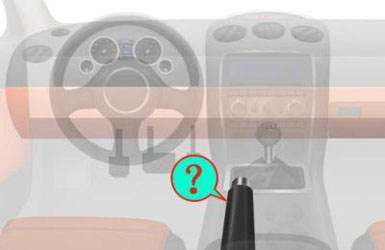
A. the air throttle lever
B. the gear lever
C. the clutch lever
D. the handbrake
Answer:D
20. Whats the meaning of this sign?

A. right-turn lane
B. U turn lane
C. left-turn lane
D. straight-going lane
Answer:D
21. Whats the meaning of the marking in the red circle?

A. temporary stopping
B. bay-stopping
C. emergency stopping
D. public bus station
Answer:B
22. When passing through an overflowing road, a high gear should be used to pass rapidly.
A. Right
B. Wrong
Answer:B
23. Whats the meaning of this sign?

A. left-turn lane
B. straight-going lane
C. right-turn lane
D. lanes for going in different directions
Answer:D
24. Whats the role of the indicative marking?
A. No passing
B. indicate vehicles to pass
C. restrict from passing
D. warn and remind
Answer:B
25. What causes the rear-end collision?

A. not observe through the rear-view mirror while the vehicle in front brakes
B. the vehicle in front brakes suddenly
C. distance from the vehicle in front is too close when the rear vehicle overtakes
D. not maintain a safe distance from the vehicle in front
Answer:D


