
1. If a person who has caused a major traffic accident and if his act constitutes a crime, he may not be held for criminal liabilities.
A. Right
B. Wrong
Answer:B
2. Before a motorized vehicle overtakes, the driver should turn on the left-turn signal, use the high and low beam lights alternately or honk in advance.
A. Right
B. Wrong
Answer:A
3. The passenger in the front seat does not need to buckle up when a motorized vehicle runs.
A. Right
B. Wrong
Answer:B
4. Traffic lights are divided into red, green and yellow light.
A. Right
B. Wrong
Answer:A
5. Whats the meaning of this sign?

A. no borrowing lane
B. no changing lane
C. no overtaking
D. no U turn
Answer:C
6. This sign reminds the lane for non-motorized vehicles ahead.

A. Right
B. Wrong
Answer:B
7. How to use lights when overtaking at night?
A. turn off the high beam light
B. turn on high beam lights
C. use fog lights
D. using the high and low beam lights alternately
Answer:D
8. Whats the meaning of this sign?

A. expressway bus station ahead
B. expressway shelter ahead
C. expressway service area ahead
D. expressway toll station ahead
Answer:C
9. Whats the meaning of the white broken lines area on the far left side?

A. special lane for multi-passenger vehicles
B. special lane for small buses
C. special lane for taxis with no passenger
D. special lane for large buses
Answer:A
10. What marking is it?

A. prohibitive area
B. cross-hatched marking
C. guide line
D. central circle
Answer:D
11. Whats the meaning of this sign?

A. muddy road
B. low-lying road
C. overflowing road
D. ferry
Answer:C
12. When driving a vehicle on the road, the driver should drive safely at the prescribed speed.
A. Right
B. Wrong
Answer:A
13. Whats the role of indicative sign?
A. tell the direction information
B. warn danger ahead
C. restrict the vehicles and pedestrians from passing
D. indicate the vehicles and pedestrians to go ahead
Answer:D
14. This sign indicates indoor car park here.
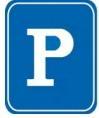
A. Right
B. Wrong
Answer:B
15. Whats the meaning of this sign?

A. no U turn at intersection
B. no changing lane from both sides
C. no left or right turn
D. no going straight
Answer:C
16. When encountering stopping in turn or slow-moving vehicles in front at an intersection where lanes are reduced, the motorized vehicle should _________.
A. enter the intersection from road shoulder by the right side of the vehicle in front
B. enter the intersection from the side of interspace
C. pass alternately with one vehicle each lane to enter the intersection
D. change to left lane and cut in to enter the intersection
Answer:C
17. What is the max speed on this city road?

A. 30km/hr
B. 40km/hr
C. 50km/hr
D. 70km/hr
Answer:C
18. You have the priviledged passing right of way at the intersection in this situation.

A. Right
B. Wrong
Answer:B
19. The main impact of the road conditions in icy and snowy weather is ______.
A. The electric equipment can easily get wet and cause short circuit
B. The visibility is lower and the field of vision is blurred
C. The resistance to the vehicle increases
D. Poor braking performance and Side pulling
Answer:D
20. Whats the meaning of the diamond broken lines on the road?

A. road construction marking
B. vertical deceleration marking
C. horizontal deceleration marking
D. fewer lanes indication marking
Answer:B
21. Whats the meaning of this sign?

A. going straight and right turn
B. going straight and left turn
C. no going straight and no left turn
D. right turn and left turn only
Answer:B
22. When a vehicle encounters a bike rider coming in the opposite direction on the road, the driver should _________.
A. Continuously change the high and low bean lights
B. Continuously honk
C. Use the low beam light, reduce speed or stop to evade
D. Use the high beam light
Answer:C
23. When driving on a mountain road covered by ice and snow, the vehicle behind should ______ if the vehicle in front is climbing a slope.
A. Climb slowly
B. Closely follow and climb
C. Select a proper place to stop and climb after the vehicle in front has passed
D. Rapidly overtake the vehicle in front
Answer:C
24. Whats the meaning of this sign?

A. no long time honking
B. honk discontinuously
C. reduce speed and honk
D. no honking
Answer:D
25. Whats the meaning of the white solid lines at the edge of the carriageway on both sides of the road?

A. Vehicles may cross temporarily
B. Vehicles are not allowed to cross.
C. Motorized vehicles may cross temporarily.
D. Non-motorized vehicles may cross temporarily
Answer:B


