
1. When driving a small vehicle downhill, the driver may coast down by stopping the engine.
A. Right
B. Wrong
Answer:B
2. When driving in icy and snowy weather, the vehicle steadiness decreases and sudden acceleration can very easily cause spins and slides.
A. Right
B. Wrong
Answer:A
3. When discovering a road congestion ahead, the correct way to deal with this situation is to _______.
A. Continue to weave through
B. Find space and overtake one vehicle after another
C. Honk to indicate the vehicle in front to speed up
D. Stop and wait in line
Answer:D
4. How to run if this traffic light continuously flashes?
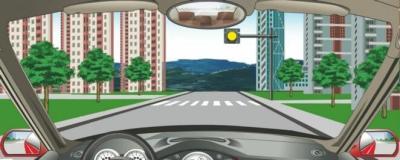
A. speed up and pass as soon as possible
B. stop by the side to wait
C. look and make sure it is safe to pass
D. apply emergency braking
Answer:C
5. Can leave the expressway into the ramp from this location directly.
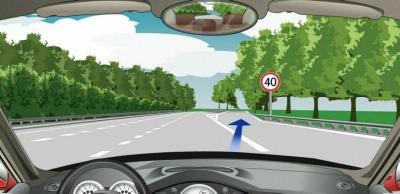
A. Right
B. Wrong
Answer:B
6. When a vehicle changes lane, the driver should turn on the turn signal and rapidly enter the new lane.
A. Right
B. Wrong
Answer:B
7. This sign indicates landslide section ahead and bypassing.
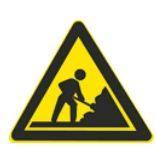
A. Right
B. Wrong
Answer:B
8. When the vehicle has changed its direction due to a front tire blowout on the road, the driver should firmly hold the steering wheel with both hands to ensure the vehicle goes straight.
A. Right
B. Wrong
Answer:A
9. If a motorized vehicle breaks down or causes a traffic accident on the expressway and cannot to run normally, the vehicle should be towed by ______.
A. a vehicle passing by
B. a large bus
C. a vehicle traveling together
D. a tow truck
Answer:D
10. In which section cannot overtake?
A. main streets
B. elevated road
C. crosswalk
D. ring express
Answer:C
11. How long is the period of probation after a motorized vehicle driver obtains his driving license for the first time or the permission to drive higher level vehicles.
A. 6 months
B. 12 months
C. 2 years
D. 3 months
Answer:B
12. How to do in this intersection?
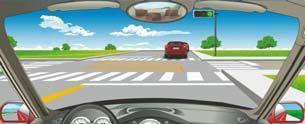
A. wait in the cross-hatched marking area
B. stop and wait outside the intersection
C. follow the vehicle in front and pass
D. wait inside the intersection
Answer:B
13. The traffic lights allow the vehicle to ______
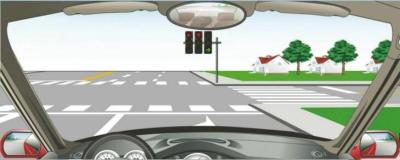
A. turn right
B. stop and wait
C. turn left
D. go straight
Answer:A
14. Whats the meaning of this sign?
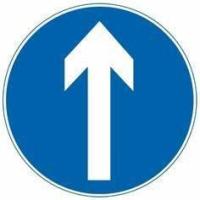
A. straight-going lane
B. going straight only
C. one-way road
D. no going straight
Answer:B
15. Whats the meaning of this sign?
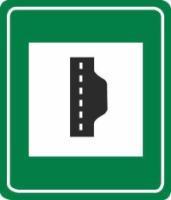
A. expressway emergency strip
B. expressway yielding area
C. expressway bus station
D. expressway parking area
Answer:A
16. When driving in icy and snowy weather, ________.
A. The braking distance becomes longer
B. The resistance to slide becomes larger
C. The braking performance does not change
D. The road grip becomes stronger
Answer:A
17. It lights to indicate that ______
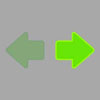
A. front and rear width lights light on
B. front and rear width lights light on
C. left-turn signal flashes
D. right-turn signal flashes
Answer:D
18. When there is a continuous rain, the shoulders of the mountain roads may become loose and the embankments may collapse. When driving in this weather, the driver should select the middle solid road and refrain from going close to the roadsides.
A. Right
B. Wrong
Answer:A
19. May speed up to go through the crosswalk in this situation.
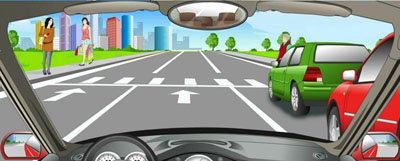
A. Right
B. Wrong
Answer:B
20. What marking is the road mark in the circle?
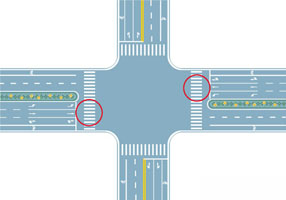
A. crosswalk line
B. slowdown and yield line
C. stopping and yield line
D. intersection signal line
Answer:A
21. Driving across the double solid lines is _______
A. rule-breaking act
B. violation of law
C. faulty act
D. violation of regulations
Answer:B
22. This sign warns the driver to run slowly with care and beware of the vehicles from horizontal road.
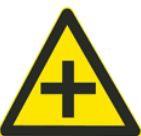
A. Right
B. Wrong
Answer:A
23. Whats the meaning of this sign?
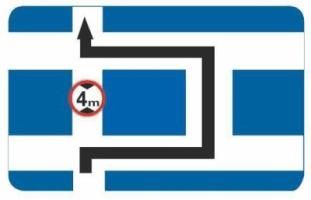
A. no left turn
B. dead-end road
C. no passing
D. bypass if overheight
Answer:D
24. Whats the meaning of this sign?
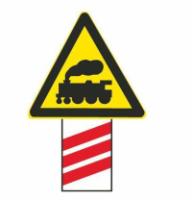
A. an unmanned level crossing 150m ahead
B. an unmanned level crossing 100m ahead
C. a manned level crossing 100m ahead
D. a manned level crossing 150m ahead
Answer:A
25. When a vehicle passes a school or a residential area, the driver should observe the signs and markings, go slowly and refrain from honking.
A. Right
B. Wrong
Answer:A


