
1. The driving license of 10-year validity will be issued if the penalty points never reached 12 points in every scoring cycle during the 6-year validity of the license.
A. Right
B. Wrong
Answer:A
2. What is this instrument?

A. water temperature meter
B. fuel meter
C. ammeter
D. pressure meter
Answer:A
3. Which is subject to a 6-point penalty?
A. violate the traffic lights
B. drive school bus without qualification
C. drive the vehicle which permission is different
D. drive after drink
Answer:A
4. Causing a traffic accident due to violating the law and regulations on road traffic safety is the rule-breaking act.
A. Right
B. Wrong
Answer:B
5. Which kind of vehicle can be applied for when initially applying for the driving license?
A. midsize bus
B. large bus
C. ordinary motor tricycle
D. trailer
Answer:C
6. From which side to overtake?

A. both sides
B. right side
C. left side
D. the side with no obstacle
Answer:C
7. When driving a small vehicle downhill, the driver may coast down by stopping the engine.
A. Right
B. Wrong
Answer:B
8. Which kind of sign is it?

A. warning sign
B. directional sign
C. indicative sign
D. prohibitive sign
Answer:A
9. Driving license will be detained if you allow to drive your car.
A. driver during the period of probation
B. driver who has obtained a driving license
C. one whose driving license been revoked
D. one whose penalty points reach 6 points
Answer:C
10. Whats the meaning of this sign?
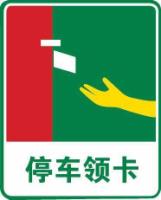
A. stop to get card
B. stop to pay
C. ETC lane
D. stop for inspection
Answer:A
11. How often should a driver who is more than 60 years old present the certificate of physical conditions?
A. every 3 years
B. every 2 years
C. every 6 months
D. every 1 year
Answer:D
12. If a vehicle enters a left lane for overtaking but is unable to ensure a safe horizontal distance with the normally-running vehicle in front, the driver should ________.
A. Speed up and overtake
B. Overtake after running a distance in parallel
C. Give up overtaking
D. Overtake with care
Answer:C
13. Whats the meaning of this sign?

A. accident-prone section
B. construction section
C. reducing speed and going slowly section
D. jammed section
Answer:A
14. What marking is the combination of the white broken lines and the triangle area?

A. road entry marking
B. lane-dividing line that can be crossed
C. deceleration line at road exit
D. road exit marking
Answer:D
15. What marking is the white solid lines in the circle?

A. guide lanes lines
B. variable guide lanes lines
C. direction guide lines
D. one-way driving lines
Answer:A
16. When a traffic accident causing human injuries, preserve the scene and immediately report to the police.
A. Right
B. Wrong
Answer:A
17. Motor vehicle frontal collision, the double protection of the airbag and the safety belts can give full play to the role.
A. Right
B. Wrong
Answer:A
18. If a motorized vehicle driver allows his vehicle to be driven by a person whose driving license has been detained, the traffic police will serve an oral warning.
A. Right
B. Wrong
Answer:B
19. When a vehicle stops for a long time, the driver should select a car park to do so.
A. Right
B. Wrong
Answer:A
20. What should the driver do if conditions permit when a following vehicle gives the overtaking signal on a road without a central line?
A. maintain the original speed
B. speed up
C. reduce speed, move to the right side and yield
D. immediately stop and yield
Answer:C
21. When encountering school children crossing the road in a queue, the driver should ______.
A. Speed up in advance and pass forcefully
B. Stop to yield
C. Reduce speed and go slowly
D. Continuously honk to urge them
Answer:B
22. What is the max speed on the expressway when the visibility is lower than 200m?
A. less than 100km/hr
B. less than 90km/hr
C. less than 60km/hr
D. less than 80km/hr
Answer:C
23. It lights when ABS is open.

A. Right
B. Wrong
Answer:B
24. When driving at night on a road that has good lighting, the driver should use _______.
A. The fog light
B. The low beam light
C. The high beam light
D. The hazard lights
Answer:B
25. In the course of reversing, the driver should move slowly, observe the conditions on both sides and in the rear and be ready to stop anytime.
A. Right
B. Wrong
Answer:A


