
1. Which is correct to use lights on rainy day when following a vehicle?

A. use high beam lights
B. cannot use the low beam lights
C. cannot use the high beam light
D. use fog lights
Answer:C
2. When encountering school children crossing the road in a queue, the driver should ______.
A. Speed up in advance and pass forcefully
B. Stop to yield
C. Reduce speed and go slowly
D. Continuously honk to urge them
Answer:B
3. What is the max speed on this city road?

A. 40km/hr
B. 30km/hr
C. 50km/hr
D. 70km/hr
Answer:B
4. Let the straight-going vehicle go first at this intersection.

A. Right
B. Wrong
Answer:A
5. The method and direction of changing lanes by the red car is correct.

A. Right
B. Wrong
Answer:B
6. What is this manipulation device?
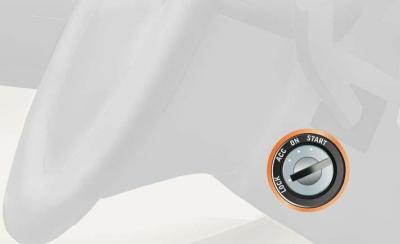
A. air conditioner switch
B. ignition switch
C. wiper switch
D. light switch
Answer:B
7. It lights when turning on the left-turn signal.

A. Right
B. Wrong
Answer:B
8. Whats the meaning of this sign?

A. an unmanned level crossing 150m ahead
B. an unmanned level crossing 100m ahead
C. a manned level crossing 100m ahead
D. a manned level crossing 150m ahead
Answer:A
9. It displays that the current temperature of the coolant is 90 degrees.

A. Right
B. Wrong
Answer:A
10. The safety pillow is used to protect the driver‘s head when there is a rear-end collision.
A. Right
B. Wrong
Answer:B
11. Whats the meaning of this yellow sign on the road?

A. no U turn
B. no left turn
C. no right turn
D. no going straight
Answer:C
12. A Social vehicle is not allowed to stop in the section 30 meters to the fire hydrant or the fire brigade (station).
A. Right
B. Wrong
Answer:A
13. When passing through an overflowing road, a high gear should be used to pass rapidly.
A. Right
B. Wrong
Answer:B
14. When a vehicle overtakes the bike riders going in the same direction, the rational way to deal with is to ________.
A. Continuously honk to remind them to yield
B. Continuously honk and speed up to overtake
C. Yield to the bike riders
D. Observe them, reduce speed and go slowly, while keeping a sufficient safe distance.
Answer:D
15. If a motorized vehicle driver has caused a major accident in violation of the traffic regulations which has caused serious injury, the driver is subject to a prison term of less than 3 years or a criminal detention.
A. Right
B. Wrong
Answer:A
16. Whats the meaning of this sign?

A. T-shaped intersection ahead
B. road branching point ahead
C. Y-shaped intersection ahead
D. intersection ahead
Answer:A
17. The driver who drives after drunk is subject to ______
A. a criminal restriction and a fine
B. a prison term of more than 2 years
C. a criminal detention and a fine
D. a prison term of less than 2 years
Answer:C
18. The validity of the driving license is divided into 6-year, 10-year and 20-year.
A. Right
B. Wrong
Answer:B
19. When encountering stopping in turn or slow-moving vehicles in front at an intersection where lanes are reduced, the motorized vehicle should _________.
A. enter the intersection from road shoulder by the right side of the vehicle in front
B. enter the intersection from the side of interspace
C. pass alternately with one vehicle each lane to enter the intersection
D. change to left lane and cut in to enter the intersection
Answer:C
20. Whats the meaning of this sign?

A. no stopping temporarily
B. no long stopping
C. no stopping
D. long stopping is allowed
Answer:B
21. The front safety bags play a fully protective role when used in conjunction with ______

A. ABS system
B. seat belt
C. safety pillow of the chair
D. safety glasses
Answer:B
22. May not turn on the turn signal when overtaking.
A. Right
B. Wrong
Answer:B
23. Whats the meaning of this sign?

A. left-turn lane
B. straight-going lane
C. right-turn lane
D. lanes for going in different directions
Answer:D
24. Which kind of sign is it?

A. warning sign
B. prohibitive sign
C. indicative sign
D. directional sign
Answer:B
25. What dangerous acts cant the driver conduct when driving downhill?
A. slide the vehicle in the neutral gear
B. driving in lower gear
C. braking to reduce speed
D. changing to the lower gear in advance
Answer:A


