
1. If an improper place is chosen for crossing another vehicle, the driver should immediately _______.
A. Reduce speed and cross each other slowly, or stop to yield
B. Occupy the left lane to force the opposite party to reduce speed and yield
C. Turn the head light to indicate the opposite party to stop and yield
D. Speed up and select a better place
Answer:A
2. Which of the following vehicle in front in the same lane is not allowed to be overtaken?
A. large bus or large truck
B. taxis
C. ambulance on duty
D. public bus
Answer:C
3. What does the traffic light mean?
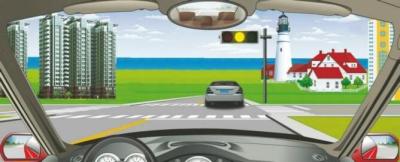
A. no right turn
B. intersection warning
C. going straight is allowed
D. speed up and pass
Answer:B
4. One can drive the low-speed truck if the authorized vehicle applied for is small motor vehicle with automatic transmission.
A. Right
B. Wrong
Answer:B
5. When a vehicle stops temporarily in a snowy day, the driver should turn on _______.
A. The head and tail fog light
B. The reserve light
C. The high beam light
D. The hazard lights
Answer:D
6. Whats the meaning of this sign?
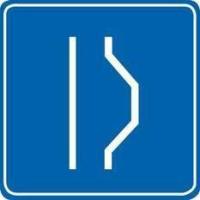
A. uncovered car park
B. emergency stopping
C. parking space
D. passing bay
Answer:D
7. A motorized vehicle driver who has not yielded to the school bus according to stipulations is subject to a 6-point penalty.
A. Right
B. Wrong
Answer:A
8. The vehicles are prohibited from passing when encountering this traffic light at the intersection.
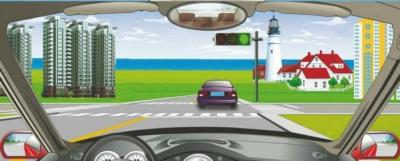
A. Right
B. Wrong
Answer:B
9. What is the max speed on muddy road?
A. 15km/hr
B. 20km/hr
C. 40km/hr
D. 30km/hr
Answer:D
10. Whats the meaning of this guide arrow?
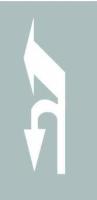
A. going straight and U turn are allowed ahead
B. left turn and U turn are allowed ahead
C. going straight and changing to left lane are allowed ahead
D. going straight and left turn are allowed ahead
Answer:B
11. It lights to indicate that ______

A. the hazard lights flash
B. right-turn signal flashes
C. left-turn signal flashes
D. front and rear width lights flash
Answer:A
12. Whats the meaning of this sign?
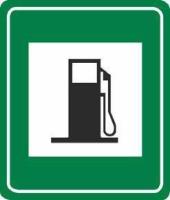
A. bus station of expressway
B. rest area of expressway
C. gasoline station of expressway
D. service area of expressway
Answer:C
13. A motorized vehicle is not allowed to stop in the section within
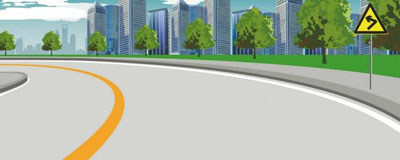
A. 5m
B. 10m
C. 50m
D. 30m
Answer:C
14. Which part of the driver can be protected by the safety pillow when there is a rear-end collision?
A. waist
B. chest
C. head
D. neck
Answer:D
15. When reaching a sharp curve, the driver should reduce speed and drive on the right side so as to avoid colliding with the vehicle crossing the central line of the curve in the opposite direction.
A. Right
B. Wrong
Answer:A
16. Whats the meaning of the double white broken lines in far front of the intersection?
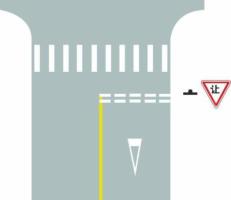
A. waiting to run line
B. stopping and yield line
C. slowdown and yield line
D. left-turn waiting line
Answer:C
17. This sign reminds an unmanned level crossing ahead.
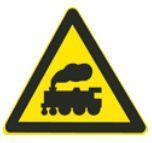
A. Right
B. Wrong
Answer:A
18. What is the time limit of deferred license checking due to military service, abroad and other reasons?
A. 3 years
B. 5 years
C. 1 years
D. 2 years
Answer:A
19. When finding a vehicle in the opposite direction having difficulty to go forward and needing to borrow road while crossing each other, the driver should ________.
A. Not occupy the road of the other side and should go forward normally
B. Indicate the other side to stop and yield
C. Speed up and go forward by the right side
D. Yield to the other side as much as possible
Answer:D
20. Whats the meaning of this sign?
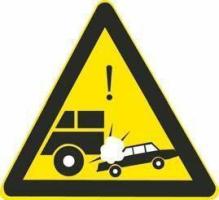
A. accident-prone section
B. construction section
C. reducing speed and going slowly section
D. jammed section
Answer:A
21. Driving a motorized vehicle on the road in this condition, the maximum speed can not exceed 50 kilometers per hour.
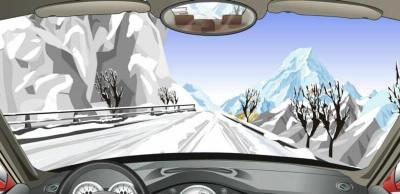
A. Right
B. Wrong
Answer:B
22. When a vehicle changes lane, the driver only needs to turn on the turn signal before rapidly entering the new lane.
A. Right
B. Wrong
Answer:B
23. Whats the meaning of this guide arrow on the road?
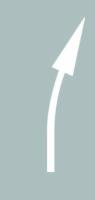
A. left curve or need to bypass from left side ahead
B. merge with the left flow due to obstacle ahead
C. right curve or need to merge with the right flow ahead
D. left curve or need to merge with the left flow ahead
Answer:C
24. It lights continuously to indicate that airbag is working.

A. Right
B. Wrong
Answer:B
25. In this case, if it has not begun going up the slope, the vehicle going uphill should yield to the one going downhill.
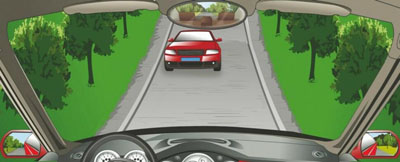
A. Right
B. Wrong
Answer:A


