
1. When encountering an ambulance rushing in the same lane in the opposite direction, the driver should ________.
A. Move to the road side, reduce speed or stop to yield
B. Drive on by using another lane
C. Speed up and change lane to avoid
D. Continue to go in the original lane
Answer:A
2. When a vehicle goes uphill, the driver should observe the road conditions and the length of the slope in advance and shift to the lower gear in a timely manner to ensure the vehicle has sufficient power.
A. Right
B. Wrong
Answer:A
3. When a vehicle has to stop on an expressway due to a vehicle trouble, the driver should place a breakdown warning sign beyond ______ m behind the vehicle.
A. 25
B. 150
C. 100
D. 50
Answer:B
4. Whats the meaning of this sign?

A. electric bicycles may go
B. parking space for non-motorized vehicles
C. parking area for non-motorized vehicles
D. non-motorized vehicles may go
Answer:D
5. Driving a small passenger vehicle on the expressway, the minimum speed should not be less than 90 kilometers per hour.
A. Right
B. Wrong
Answer:B
6. Whats the meaning of this sign?

A. rest area
B. service area
C. car park
D. observation deck
Answer:A
7. Motorized vehicles should pass the intersections according to the traffic signals.
A. Right
B. Wrong
Answer:A
8. Whats the meaning of this sign?

A. observation deck
B. car park
C. rest area
D. parking space
Answer:A
9. A person whose driving license has been destroyed cannot drive a motorized vehicle.
A. Right
B. Wrong
Answer:A
10. A driver should drive the vehicles in accordance with the qualification listed on the driving license.
A. Right
B. Wrong
Answer:A
11. This sign reminds embankment road ahead.

A. Right
B. Wrong
Answer:B
12. Whats the meaning of this sign?

A. stop to yield
B. no stopping temporarily
C. no entry
D. no long stopping
Answer:A
13. As the traffic flow at an interchange is generally one-way, the vehicles do not have to reduce speed when passing.
A. Right
B. Wrong
Answer:B
14. When a motorized vehicle goes at night through an intersection that has no traffic lights, the driver should not use the high and low beam lights alternately.
A. Right
B. Wrong
Answer:B
15. A motorized vehicle runs on the road without a label of insurance, the traffic police can detain the vehicle license according to law.
A. Right
B. Wrong
Answer:B
16. Whats the meaning of the double yellow solid lines?

A. opposite direction lanes dividing line that can not be crossed
B. opposite direction lanes dividing line that can be crossed
C. bilateral same direction lanes dividing line that can be crossed
D. one-way lanes dividing line
Answer:A
17. You have the priviledged passing right of way at the intersection in this situation.

A. Right
B. Wrong
Answer:A
18. Whats the meaning of this sign?

A. no borrowing lane
B. no changing lane
C. no overtaking
D. no U turn
Answer:C
19. The vehicles are prohibited from passing when encountering this traffic light at the intersection.

A. Right
B. Wrong
Answer:B
20. How to run on this road?
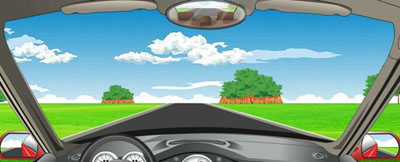
A. run in the middle of the road
B. run on both side of the road
C. run according to lanes
D. go forward at will
Answer:A
21. The vehicle with ABS system can minimize the braking distance when driving on a road covered by ice and snow.
A. Right
B. Wrong
Answer:B
22. When driving in a heavy rain, the driver should control the speed to avoid the danger arising from water slide.
A. Right
B. Wrong
Answer:A
23. Whats the meaning of this sign?

A. reduce speed and yield
B. variable lane
C. separated road
D. two-way traffic
Answer:D
24. Which is correct if a vehicle breaks down and is difficult to move?
A. turn on the hazard lights
B. turn on all the lights of the vehicle
C. forbid the passengers to get off
D. place a warning sign in front of the vehicle
Answer:A
25. When a vehicle approaches a bus stopping at a bus stop, the driver should ______ in case the bus starts up suddenly or pedestrians cross in front of the bus.
A. Reduce speed, keep a sufficient distance and be ready to stop anytime
B. Maintain the normal speed
C. Honk to remind, speed up and pass
D. Be ready to apply emergency braking
Answer:A


