
1. When encountering non-motorized vehicles intending to bypass a stopping vehicle, the driver should ________.
A. Honk to indicate them to yield
B. Yield to them
C. Speed up and bypass
D. Follow them closely and honk
Answer:B
2. Which kind of vehicle can be driven if the authorized vehicle applied for is small motor vehicle with automatic transmission?
A. low-speed truck
B. small motor vehicle
C. motorcycle
D. light truck with automatic transmission
Answer:D
3. If a motorized vehicle driver allows his vehicle to be driven by a person whose driving license has been revoked, the traffic police will detain the driving license.
A. Right
B. Wrong
Answer:A
4. What is the max speed on a road covered by ice and snow
A. 50km/hr
B. 40km/hr
C. 30km/hr
D. 20km/hr
Answer:C
5. When driving slowly in a congested road, the driver should ________ if another vehicle forcefully cuts in.
A. Honk to warn it against cutting in
B. Speed up to closely follow the vehicle in front and refuse to allow it to cut in
C. Squeeze the cutting-in vehicle to force it to leave
D. Voluntarily yield to ensure safe driving
Answer:D
6. When the fire engine, ambulance and wrecker are executing an emergency task, other vehicles should yield.
A. Right
B. Wrong
Answer:A
7. It displays that oil in tank has less than the warning line

A. Right
B. Wrong
Answer:A
8. A motorized vehicle driver is not allowed during the period of probation to pull a trailer.
A. Right
B. Wrong
Answer:A
9. When the light switch is rotated to the position, the whole car lights turn on.
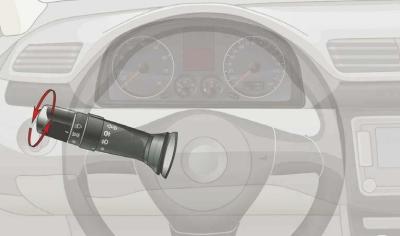
A. Right
B. Wrong
Answer:B
10. Before entering a level crossing, the vehicle should reduce speed and change to a lower gear, and _____ after entering the level crossing.
A. Cannot change gear
B. Can change gear
C. Can change to a higher gear
D. Stop and look
Answer:A
11. The main impact of mountain roads on safe driving is _______.
A. The traffic conditions are boring
B. The slopes are long, the curves are sharp and visibility range is shorter.
C. The traffic flow is heavy
D. The road signs are fewer
Answer:B
12. This traffic light means ______

A. intersection warning
B. no passing
C. draw attention
D. allow to pass
Answer:D
13. After entering the acceleration lane of an expressway, the driver should increase the speed to more than _________ per hour.
A. 50
B. 60
C. 30
D. 40
Answer:B
14. Whats the meaning of this sign?

A. no left turn
B. dead-end road
C. no passing
D. bypass if overheight
Answer:D
15. It lights to indicate that ______

A. not buckled up
B. safety belt malfunction
C. the safety belts are too loose
D. buckled up already
Answer:A
16. When encountering a vehicle coming in the opposite direction on a mountain road, the driver should ______ when crossing each other.
A. Not reduce speed
B. Stick to the center of the road
C. Speed up
D. Reduce speed or stop to yield
Answer:D
17. Traffic Signs and traffic markings are not traffic signals.
A. Right
B. Wrong
Answer:B
18. A motorized vehicle driver who has not yielded to the school bus according to stipulations is subject to a 6-point penalty.
A. Right
B. Wrong
Answer:A
19. Whats the meaning of this sign?

A. more vehicles section
B. passing slowly
C. jammed section
D. construction section
Answer:B
20. When driving, the driver should be courteous and defensive, instead of being offensive.
A. Right
B. Wrong
Answer:A
21. It lights when ABS is open.

A. Right
B. Wrong
Answer:B
22. You have the priviledged passing right of way at the intersection in this situation.

A. Right
B. Wrong
Answer:A
23. Whats the meaning of this sign?

A. emergency shelter
B. service area
C. pedestrian passage
D. crossing road facility
Answer:A
24. When encountering stopping and waiting in turn or slow-moving vehicles in front, the motorized vehicle may _________.
A. borrow road to overtake
B. occupy the opposite lane
C. follow the vehicles in front
D. cut in the waiting vehicles
Answer:C
25. Whats the meaning of this sign?

A. line guide signs
B. lane merging guide signs
C. lane branching guide signs
D. turning guide signs
Answer:A


