
1. Emergency braking on a road covered by ice and snow can easily cause side skidding. The driver should use the engine braking to reduce speed.
A. Right
B. Wrong
Answer:A
2. What is this traffic sign?

A. Road narrows on both sides
B. Road narrows on the right side
C. Road narrows on the left side
D. Bridge narrows
Answer:B
3. When the green arrow for a lane is on and there are still pedestrians in the crosswalk before the vehicle, the driver should ___________.
A. Directly start up and pass
B. Start up and bypass the pedestrians from behind
C. Start up and bypass before the pedestrians
D. Start up after the pedestrians have passed
Answer:D
4. When encountering children on the road, the driver should _________.
A. Reduce speed and go slowly, or stop to yield when necessary
B. Continuously honk to urge
C. Swiftly bypass from one side
D. Speed up and bypass
Answer:A
5. It lights to remind that engine oil needs to be filled.

A. Right
B. Wrong
Answer:B
6. Opening the doors of a motorized vehicle should not obstruct the flow of other vehicles and pedestrians.
A. Right
B. Wrong
Answer:A
7. What is the max speed on muddy road?
A. 15km/hr
B. 20km/hr
C. 40km/hr
D. 30km/hr
Answer:D
8. When a tire blows out suddenly on the road, the driver should refrain from violently depressing the brake pedal in panic. Instead, he should try his best to shift the gear to a low position and use the engine braking to reduce the speed of the vehicle.
A. Right
B. Wrong
Answer:A
9. Stopping temporarily on the road should not obstruct the passing of other vehicles and pedestrians.
A. Right
B. Wrong
Answer:A
10. When driving in icy and snowy weather, light reflection from the accumulated snow can easily make a driver feel dizzy and have an illusion.
A. Right
B. Wrong
Answer:A
11. This set of the hand signals of the traffic police indicates that the vehicles should ___ .

A. turn right
B. pull over
C. turn left
D. stop
Answer:D
12. When discovering traffic congestion ahead while driving, the driver should ________.
A. Find a chance to overtake the vehicle in front
B. Weave through other vehicles
C. Reduce speed, stop and wait in line
D. Honk to urge other vehicles
Answer:C
13. Whats the meaning of this sign?

A. bypass from left side
B. continuous curves
C. sharp left curve
D. sharp right curve
Answer:C
14. What kind of lane that the red car running in?

A. fast lane
B. slow lane
C. emergency lane
D. special lane
Answer:A
15. Whats the meaning of this sign?

A. downhill section on right side
B. driving by the right side of the road
C. stopping by the right side of the road
D. right turn only
Answer:B
16. This sign indicates intersection ahead.

A. Right
B. Wrong
Answer:B
17. Whats the meaning of this sign?
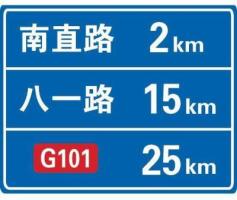
A. location and distance
B. driving route
C. destination name
D. driving direction
Answer:A
18. What should the driver do when encountering a vehicle from the opposite direction on a road without a central line?
A. driving closely by the roadside
B. driving by the central of the road
C. reducing speed and driving by right side
D. run by using the lane for non-motorized vehicles
Answer:C
19. A person who has not obtained driving license drives a motorized vehicle, he will be held for legal liability.
A. Right
B. Wrong
Answer:A
20. How the front vehicle to run in this situation?

A. run as normal
B. yield
C. turn on the hazard lights
D. should not change lane
Answer:B
21. What kind of device the safety bags are?
A. ABS system
B. electronic brake force distribution system
C. assisted occupants protection system
D. drivers head and neck protection system
Answer:C
22. When passing an intersection without traffic lights, the driver should go through as fast as possible.
A. Right
B. Wrong
Answer:B
23. Change driving license before of expiration.
A. 60 days
B. 30 days
C. 90 days
D. 6 months
Answer:C
24. This sign means the opposite vehicle should stop to yield when crossing each other.

A. Right
B. Wrong
Answer:B
25. A motorized vehicle driver who escapes after causing a traffic accident but his conduct does not constitute a crime, is subject to a ________.
A. 3-point penalty
B. 2-point penalty
C. 12-point penalty
D. 6-point penalty
Answer:C


