
1. When a vehicle changes lane before an intersection, the driver should do so ______.
A. In the area marked by solid lines before the intersection
B. In the area marked by solid lines in the intersection
C. In the area marked by broken lines as indicated by the guide arrow
D. Before the stop line at the intersection
Answer:C
2. What is the max speed when passing a level crossing?
A. 15km/hr
B. 20km/hr
C. 30km/hr
D. 40km/hr
Answer:C
3. Whats the meaning of this guide arrow?

A. indicate going straight or turning right
B. indicate turning right or making a U turn
C. indicate going straight or changing to right lane
D. indicate going straight or making a U turn
Answer:A
4. When overtaking a vehicle stopping on the right side, the driver should ________ in case that vehicle starts up suddenly or opens the door.
A. Speed up and pass
B. Keep honking
C. Maintain the normal speed
D. Keep a safe horizontal distance from that vehicle, reduce speed and pass
Answer:D
5. If the drivers accumulated penalty points reach the stipulated limit, he will be _______ by the traffic control department of the public security organ.
A. detained for less than 15 days
B. banned for lifetime from driving
C. educated on the law and regulations and take the exam again
D. held for criminal liabilities according to law
Answer:C
6. At this position, you may speed up to pass through the section.

A. Right
B. Wrong
Answer:B
7. In this case, by the right side of the bus lane to overtake.

A. Right
B. Wrong
Answer:B
8. What mark is the inclined yellow and black lines?

A. entity mark
B. protrusions mark
C. three-dimensional mark
D. deceleration mark
Answer:C
9. This sign reminds a sharp curve ahead.

A. Right
B. Wrong
Answer:B
10. You have the priviledged passing right of way at the intersection in this situation.

A. Right
B. Wrong
Answer:A
11. This set of the hand signals of the traffic police indicates that the vehicles should ____ .

A. turn right
B. change lane
C. reduce speed and pass slowly
D. pull over
Answer:C
12. Whats the meaning of this guide arrow?

A. change to left lane
B. going straight ahead
C. U turn ahead
D. right turn ahead
Answer:C
13. From which side to overtake?

A. both sides
B. right side
C. left side
D. the side with no obstacle
Answer:C
14. You can make an U turn at this intersection.

A. Right
B. Wrong
Answer:B
15. If the vehicle has no license plate, label of inspection or label of insurance, preserve the scene and immediately report to the police.
A. Right
B. Wrong
Answer:A
16. It is illegal for a driver to use a cell phone while driving.
A. Right
B. Wrong
Answer:A
17. Which is correct if a vehicle breaks down and is difficult to move?
A. turn on the hazard lights
B. turn on all the lights of the vehicle
C. forbid the passengers to get off
D. place a warning sign in front of the vehicle
Answer:A
18. What is the Minimum speed on this expressway?
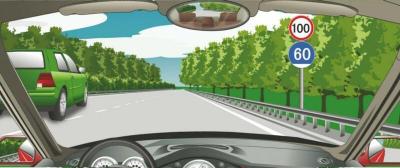
A. 100km/hr
B. 80km/hr
C. 60km/hr
D. 50km/hr
Answer:C
19. The vehicle is allowed to _______ at this intersection.

A. go straight or turn right
B. turn left
C. go straight or turn left
D. turn left or turn right
Answer:A
20. If the driver finds there is no vehicle following, he can change lanes without turning on the turn signal.
A. Right
B. Wrong
Answer:B
21. The driver is prohibited from opening the door and letting passengers on and off when a vehicle has not come to a full stop.
A. Right
B. Wrong
Answer:A
22. When overtaking on a mountain road, the vehicle should overtake ______.
A. By taking every possible chance
B. By selecting a wide gentle uphill section
C. By selecting a fairly long downhill section
D. By selecting a relatively gentle downhill section
Answer:B
23. What marking are the white broken lines in the circles?

A. small vehicles turning lines
B. lane connection lines
C. non-motorized vehicles guide lines
D. intersection guide line
Answer:D
24. How to run on this road?
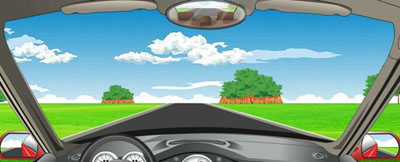
A. run in the middle of the road
B. run on both side of the road
C. run according to lanes
D. go forward at will
Answer:A
25. What is this traffic sign?

A. slippery section
B. sharp curve
C. inverse curve
D. continuous curves
Answer:D


