
1. When a vehicle passes a bumped road, the driver should ________.
A. Speed up and dash over under inertia
B. Change to the neutral gear and slide over
C. Maintain the original speed and pass
D. Pass slowly and steadily
Answer:D
2. What is the Minimum speed on this expressway?

A. 100km/hr
B. 80km/hr
C. 60km/hr
D. 50km/hr
Answer:C
3. It lights when turning on the front low beam lights.

A. Right
B. Wrong
Answer:B
4. Driving in a dusty weather, it does not needed to turn on the head light, the contour light and the tail light.
A. Right
B. Wrong
Answer:B
5. Which part does it control when rotating this part of the switch?

A. the low beam lights
B. the head and tail fog lights
C. high beam lights
D. turn signals
Answer:B
6. Whats the meaning of this sign?

A. left one-way road
B. right one-way road
C. straight one-way road
D. yield if going to turn right
Answer:B
7. Speeding up to go though the intersection before the light turns to red in this case.

A. Right
B. Wrong
Answer:B
8. Whats the meaning of this sign?

A. accident-prone section
B. construction section
C. reducing speed and going slowly section
D. jammed section
Answer:A
9. After entering the acceleration lane of an expressway, the driver should increase the speed to more than _________ per hour.
A. 50
B. 60
C. 30
D. 40
Answer:B
10. In which section cannot overtake?
A. mountain road
B. urban elevated road
C. urban expressway
D. narrow bridge and curve
Answer:D
11. When causing a road accident involving property damage, the parties to the accident may leave the scene if they have no dispute over the fact and cause.
A. Right
B. Wrong
Answer:A
12. Driving a motorized vehicle on the road in violation of road traffic regulations shall be subject to relevant punishment.
A. Right
B. Wrong
Answer:A
13. What marking is the two white broken lines in the circle?

A. stop lines at crossroad
B. left-turn waiting areas
C. U turn guide lines
D. small vehicles turning lines
Answer:B
14. Before a vehicle enters a curve of a mountain road, the driver ______ if there is no vehicle coming in the opposite direction.
A. Should reduce speed, honk and drive on the right side
B. Should drive along the outer side of the curve
C. May briefly borrow the opposite lane
D. May speed up and pass along the tangent line of the curve
Answer:A
15. Driving this kind of vehicle on road is ____

A. rule-breaking act
B. violation of regulations
C. violation of law
D. criminal act
Answer:C
16. What is the minimum speed in this lane?

A. 60km/hr
B. 90km/hr
C. 100km/hr
D. 110km/hr
Answer:C
17. Whats the meaning of this sign?
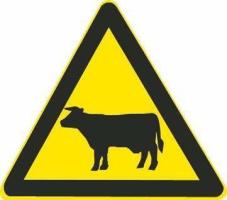
A. watch for animals
B. watch for wildlife
C. Wildlife Sanctuary
D. Large-scale farms
Answer:A
18. Must reduce the frequency of honking in this section.

A. Right
B. Wrong
Answer:B
19. The driver is prohibited from opening the door and letting passengers on and off when a vehicle has not come to a full stop.
A. Right
B. Wrong
Answer:A
20. When driving in windy, rainy, snowy, foggy and other complex weather conditions, the driver should turn on the head light, honk continuously and overtake rapidly if the vehicle in front goes slowly.
A. Right
B. Wrong
Answer:B
21. Whats the meaning of this sign?
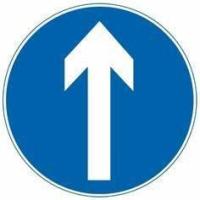
A. straight-going lane
B. going straight only
C. one-way road
D. no going straight
Answer:B
22. It lights to indicate that ______

A. left-turn signal flashes
B. front and rear width lights light on
C. front and rear width lights light on
D. right-turn signal flashes
Answer:A
23. Registration alternation is not needed when _____
A. change engine
B. add anti-collision device
C. change vehicles colour
D. change the chassis
Answer:B
24. What marking are the white serrated solid lines in the circle?

A. guide lane lines
B. direction guide line
C. variable guide lane line
D. one-way driving line
Answer:C
25. The main feature of pedestrians participating in road traffic is that _________.
A. They move slowly
B. They like to get together and look on
C. They walk around at will and can easily change directions
D. All the above
Answer:C


