
1. When a vehicle running at night encounters a curve ahead, its lighting ____.
A. Leave the road surface
B. Moves from the center of the road to the roadside
C. Does not change its distance
D. Become lower
Answer:B
2. In which section cannot overtake?
A. main streets
B. elevated road
C. crosswalk
D. ring express
Answer:C
3. What kind of sign is it?

A. directional sign
B. indicative sign
C. prohibitive sign
D. warning sign
Answer:A
4. The main impact of foggy weather on safe driving is _________.
A. The engine can easily stop
B. The vehicle can easily slide sideways
C. The resistance the vehicle increases
D. The visibility is low and the vision is poor
Answer:D
5. How to cross each other on a narrow mountain road without the central dividing line?
A. The vehicle not close to the mountain goes first
B. The vehicle close to the mountain goes first
C. The empty vehicle goes first
D. The slow-moving vehicle goes first
Answer:A
6. Whats the meaning of this sign?

A. watch for two-way road
B. driving by either side of the road
C. watch for variable lane
D. variable lane
Answer:C
7. Whats the meaning of this sign?

A. overtaking ban is lifted
B. changing lane is allowed
C. changing lane ban is lifted
D. borrowing lane ban is lifted
Answer:A
8. Whats the meaning of this sign?
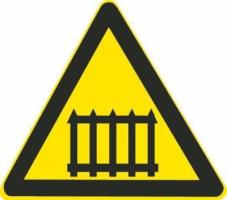
A. a manned level crossing
B. multi-crossing of railway and road
C. grade separation level crossing
D. an unmanned level crossing
Answer:A
9. It lights if left door is not closed.

A. Right
B. Wrong
Answer:B
10. If the registration paper, license plate and vehicle license of a motorized vehicle are lost or destroyed, the vehicle owner should apply for reissuing or replacing them to the _______________.
A. traffic police detachment vehicle management station at the residential place
B. vehicle management station at the issuing place of the driving license
C. vehicle management station at the registration place
D. local police station
Answer:C
11. The traffic lights allow the vehicle to ______

A. turn right
B. stop and wait
C. turn left
D. go straight
Answer:A
12. The wrong measure to avoid tire blowout is to _________.
A. Reduce tire pressure
B. Check the tires regularly
C. Remove objects from tire tread grooves in a timely manner
D. Replace the tire that has cracks or deep cuts
Answer:A
13. This sign warns the driver there is school area ahead.

A. Right
B. Wrong
Answer:B
14. Whats the meaning of this sign?
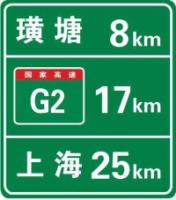
A. indication of the place name of the expressway ending
B. indication of the driving route of the expressway
C. indication of the driving direction of the expressway
D. indication of the location and distance of the expressway
Answer:D
15. Driving a motorized vehicle on the expressway is not allowed to exceed the marked maximum speed.
A. Right
B. Wrong
Answer:A
16. Whats the meaning of this sign?

A. an unmanned level crossing 150m ahead
B. an unmanned level crossing 100m ahead
C. a manned level crossing 100m ahead
D. a manned level crossing 150m ahead
Answer:A
17. When a vehicle goes downhill, the driver should properly control the speed and fully use the engine to brake.
A. Right
B. Wrong
Answer:A
18. Whats the meaning of this sign?

A. right-turn lane
B. U turn lane
C. left-turn lane
D. straight-going lane
Answer:D
19. Whats the meaning of this sign?

A. yield if going to turn left
B. straight one-way road
C. right one-way road
D. left one-way road
Answer:D
20. Whats the meaning of this sign?

A. steep downhill road
B. continuous up slopes
C. steep uphill road
D. embankment road
Answer:C
21. Whats the meaning of this sign?

A. max speed
B. speed limit
C. speed recommended
D. mini speed
Answer:C
22. It lights to indicate that the handbrake may not loose in the end.

A. Right
B. Wrong
Answer:B
23. You have the priviledged passing right of way at the intersection in this situation.

A. Right
B. Wrong
Answer:B
24. The validity of the driving license which is initially applied for is 6 years.
A. Right
B. Wrong
Answer:A
25. When a motorized vehicle stops temporarily at the roadside, the driver ________.
A. Is not allowed to stop in the opposite direction or in parallel
B. May stop anyway he likes as long as it is convenient for him to get out
C. May stop the vehicle in the opposite direction
D. May stop the vehicle in parallel
Answer:A


