
1. Whats the meaning of this sign?
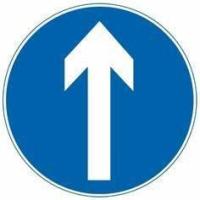
A. straight-going lane
B. going straight only
C. one-way road
D. no going straight
Answer:B
2. A small bus driver should reduce speed rapidly when he suddenly feel bumpy on a flat expressway, to prevent tire blowout.
A. Right
B. Wrong
Answer:A
3. Registration alternation is not needed when _____
A. change engine
B. add anti-collision device
C. change vehicles colour
D. change the chassis
Answer:B
4. Whats the meaning of this guide arrow?
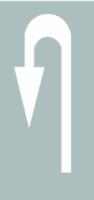
A. change to left lane
B. going straight ahead
C. U turn ahead
D. right turn ahead
Answer:C
5. Which should be carried onboard?
A. insurance policy
B. vehicle license
C. certificate of ex-factory inspection
D. vehicle registration papers
Answer:B
6. When the traffic conditions at an intersection are complicated, the driver should be patiently waiting instead of taking chance.
A. Right
B. Wrong
Answer:A
7. Which kind of sign is it?
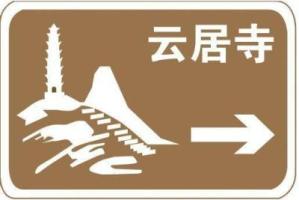
A. tourist zone sign
B. work area sign
C. notification signs
D. expressway sign
Answer:A
8. If a small motor vehicle driver has assumed equal or main liability for a traffic accident causing human deaths, and his driving license has not been revoked, it shall be checked within 30 days after the end of the scoring cycle.
A. Right
B. Wrong
Answer:A
9. Whats the meaning of this sign?
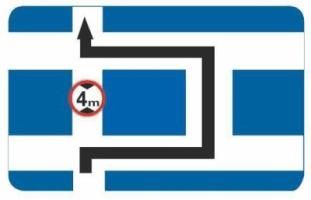
A. no left turn
B. dead-end road
C. no passing
D. bypass if overheight
Answer:D
10. If the vehicle license of a motorized vehicle are lost, the vehicle owner should apply to the vehicle management station at the registration place for reissuing.
A. Right
B. Wrong
Answer:A
11. When a vehicle goes uphill, the driver should observe the road conditions and the length of the slope in advance and shift to the lower gear in a timely manner to ensure the vehicle has sufficient power.
A. Right
B. Wrong
Answer:A
12. What to do besides controlling speed less than 20km/hr when the visibility is lower than 50 meters on the expressway?
A. run in the emergency lane
B. leave the expressway as soon as possible
C. stop by the roadside as soon as possible
D. run slowly in the road shoulder
Answer:B
13. The cycle for recording the accumulated penalty points for violating road traffic regulations is ____________.
A. 14 months
B. 12 months
C. 6 months
D. 10 months
Answer:B
14. When crossing each other on a narrow road, the driver should slow down, yield and stop first.
A. Right
B. Wrong
Answer:A
15. Whats the meaning of this sign?
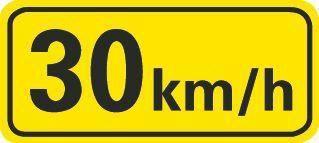
A. max speed
B. speed limit
C. speed recommended
D. mini speed
Answer:C
16. Whats the meaning of this sign?
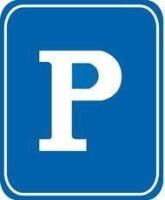
A. internal car park
B. special car park
C. uncovered car park
D. indoor car park
Answer:C
17. How to run when seeing this traffic light at level crossing?
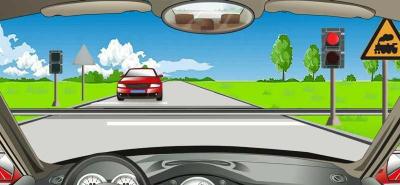
A. pass before the train comes
B. no exceeding the stop line
C. observe and pass slowly
D. speed up and pass without changing gear
Answer:B
18. A motorized vehicle driver who drives after drinking is subject to a 12-point penalty.
A. Right
B. Wrong
Answer:A
19. No U turn at this section.
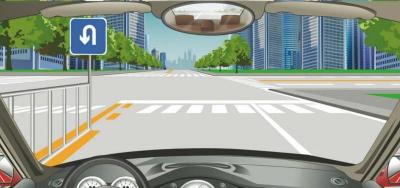
A. Right
B. Wrong
Answer:B
20. You should speed up through the section with this kind of traffic marking.
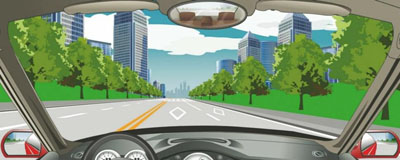
A. Right
B. Wrong
Answer:B
21. How to cross each other on a narrow mountain road without the central dividing line?
A. The vehicle not close to the mountain goes first
B. The vehicle close to the mountain goes first
C. The empty vehicle goes first
D. The slow-moving vehicle goes first
Answer:A
22. If one drives an illegally assembled motorized vehicle, he should not only pay the fine, but also ________ .
A. be confiscated the driving license
B. be revoked the driving permission
C. be forced to recover the vehicle condition
D. be revoked the driving license
Answer:D
23. Whats the meaning of the yellow mark on the road?
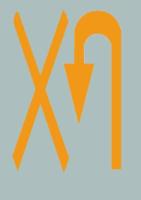
A. no going straight
B. allowed to make a U turn
C. no U turn
D. no making a turn
Answer:C
24. When the two red lights at a level crossing flash alternately, the vehicles should stop to wait.
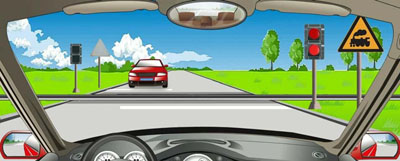
A. Right
B. Wrong
Answer:A
25. How far should be the distance from the vehicle in front at the speed of more than 100 km/hr when driving a small passenger vehicle on the expressway?
A. more than 50 meters
B. more than 60 meters
C. more than 100 meters
D. more than 80 meters
Answer:C


