
1. When a vehicles turns, it should do so on the right side and refrain from occupying the lane of the other party. The left turn should be gentle and the right turn should be sharp.
A. Right
B. Wrong
Answer:A
2. Whats the role of the prohibitive sign?
A. indicate the vehicles to go ahead
B. warn danger ahead
C. prohibit or restrict from doing
D. tell the direction information
Answer:C
3. The vehicle is allowed to _______ at this intersection.

A. go straight or turn right
B. turn right
C. turn left
D. go straight
Answer:C
4. Whats the meaning of this sign?

A. passing by the right side
B. passing by the left side
C. running to right side
D. running the roundabout
Answer:D
5. Whats the meaning of this sign?

A. no changing lane
B. no left turn
C. no going straight
D. no U turn
Answer:D
6. When causing a road accident involving property damage, the party should leave the scene on his own but he does not leave and causes a traffic jam, he may be subject to a fine of 200 yuan.
A. Right
B. Wrong
Answer:A
7. Driving and smoking has no harm on safe driving.
A. Right
B. Wrong
Answer:B
8. Whats the meaning of this sign?

A. right-turn lane
B. U turn lane
C. left-turn lane
D. lanes for going in different directions
Answer:C
9. What does this sign mean?

A. Reminding the side of a reservoir, lake or river ahead
B. Reminding the steep uphill road ahead
C. Reminding continuous two or more up slopes ahead
D. Reminding the steep downhill road ahead
Answer:B
10. What marking is the yellow road surface in the center of the intersection?

A. central circle
B. guide line
C. cross-hatched marking
D. parking area
Answer:C
11. When a vehicle stops for a long time, the driver should select a car park to do so.
A. Right
B. Wrong
Answer:A
12. When the vehicle has changed its direction due to a front tire blowout on the road, the driver should firmly hold the steering wheel with both hands to ensure the vehicle goes straight.
A. Right
B. Wrong
Answer:A
13. Whats the meaning of this sign?

A. low-lying road
B. hump bridge
C. bump road
D. high outburst road
Answer:C
14. Driving a motorized vehicle in the city road which has no central line, the maximum speed can not exceed 50 kilometers per hour.
A. Right
B. Wrong
Answer:B
15. In which section cannot overtake?
A. mountain road
B. urban elevated road
C. urban expressway
D. narrow bridge and curve
Answer:D
16. Which part does this switch control?

A. windscreen defogger
B. windscreen wiper
C. the hazard lights
D. devices of lights and signals
Answer:B
17. How often should a driver who is more than 60 years old present the certificate of physical conditions?
A. every 3 years
B. every 2 years
C. every 6 months
D. every 1 year
Answer:D
18. As the braking distance increases on a wet road in a rainy day, the driver should use the emergency brake as much as possible to reduce speed.
A. Right
B. Wrong
Answer:B
19. Whats the meaning of this sign?
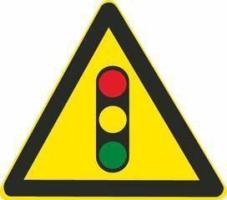
A. crosswalk lights
B. watch for pedestrians
C. attention to traffic lights
D. intersection
Answer:C
20. This traffic light means ______

A. intersection warning
B. no passing
C. draw attention
D. allow to pass
Answer:D
21. When a vehicle goes downhill on a mountain road, it is not allowed to overtake.
A. Right
B. Wrong
Answer:A
22. Whats the meaning of the white broken line by the carriage on the right side road?

A. allowed to temporarily cross
B. prohibited from crossing
C. emergency lanes dividing line
D. crosswalk dividing line
Answer:A
23. Whats the meaning of these white rectangle markings?

A. long time parking
B. time limited parking
C. free parking
D. special parking
Answer:B
24. What device does the switch of this symbol control?

A. the windscreen wiper and washer
B. the rear window defrosting or defogging
C. the rear window wiper and washer
D. the windscreen defrosting or defogging
Answer:C
25. When encountering stopping and waiting in turn or slow-moving vehicles in front, the motorized vehicle may _________.
A. borrow road to overtake
B. occupy the opposite lane
C. follow the vehicles in front
D. cut in the waiting vehicles
Answer:C


