
1. Whats the meaning of this guide arrow?

A. indicate going straight or turning right
B. indicate turning right or making a U turn
C. indicate going straight or changing to right lane
D. indicate going straight or making a U turn
Answer:A
2. Whats the meaning of the double white solid lines in far front of the intersection?

A. stopping and yield line
B. slowdown and yield line
C. left-turn waiting line
D. waiting to run line
Answer:A
3. You can overtake from right side in this case.

A. Right
B. Wrong
Answer:B
4. This sign reminds there is a one-way and poor lighting culvert ahead.

A. Right
B. Wrong
Answer:B
5. This sign means the opposite vehicle should stop to yield when crossing each other.

A. Right
B. Wrong
Answer:B
6. It lights to indicate that the handbrake may not loose in the end.

A. Right
B. Wrong
Answer:B
7. What is the max speed limit on this road?

A. 100 km/hr
B. 90 km/hr
C. 120 km/hr
D. 110 km/hr
Answer:B
8. Whats the meaning of this sign?

A. the distance from the tunnel exit
B. the distance from the tunnel entry
C. the distance of following the vehicle in front in the tunnel
D. the whole length of the tunnel
Answer:A
9. This sign indicates ______

A. expressway service area ahead
B. expressway shelter ahead
C. expressway bus station ahead
D. expressway parking area ahead
Answer:D
10. It displays that oil in tank has less than the warning line

A. Right
B. Wrong
Answer:A
11. Whats the meaning of this sign?

A. danger-avoiding lane
B. emergency lane
C. road shoulder
D. sharp curve
Answer:A
12. Whats the meaning of this sign?
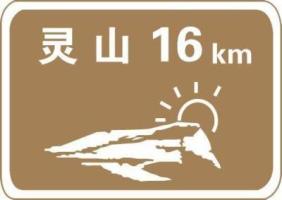
A. distance to a tourist area
B. direction of a tourist area
C. symbol of a tourist area
D. category of a tourist area
Answer:A
13. If a motorized vehicle breaks down or causes a traffic accident on the expressway and cannot to run normally, the vehicle should be towed by ______.
A. a vehicle passing by
B. a large bus
C. a vehicle traveling together
D. a tow truck
Answer:D
14. At night, the drivers observation is markedly poorer than in the daytime and the range of visibility range is _______.
A. Unchanged
B. Irregular
C. Longer
D. Shorter
Answer:D
15. Turn on the left-turn signal in advance when making a U turn on the road.
A. Right
B. Wrong
Answer:A
16. When driving at night, the driver should reduce speed and go forward if the vehicle coming in the opposite direction fails to turn off the high beam light. This is designed to prevent an accident from happening when there are pedestrians crossing the place where the lights of the two vehicles meet.
A. Right
B. Wrong
Answer:A
17. The main impact of the road conditions in icy and snowy weather is ______.
A. The electric equipment can easily get wet and cause short circuit
B. The visibility is lower and the field of vision is blurred
C. The resistance to the vehicle increases
D. Poor braking performance and Side pulling
Answer:D
18. A motorized vehicle driver who has not yielded to the school bus according to stipulations is subject to a 6-point penalty.
A. Right
B. Wrong
Answer:A
19. What marking are the white serrated solid lines in the circle?

A. guide lane lines
B. direction guide line
C. variable guide lane line
D. one-way driving line
Answer:C
20. The doors of both sides are not closed if it lights.

A. Right
B. Wrong
Answer:A
21. How to use lights in this weather condition?

A. use high beam lights
B. use fog lights
C. not use any light
D. turn on the right-turn signal
Answer:B
22. What is the max speed on this city road?

A. 40km/hr
B. 30km/hr
C. 50km/hr
D. 70km/hr
Answer:B
23. What is the role of ABS system when applying emergency braking?

A. cut off the power output
B. control the direction automatically
C. reduce braking inertia
D. prevent wheel blocking
Answer:D
24. Turn on the right-turn signal and return immediately to the original lane afterovertaking.
A. Right
B. Wrong
Answer:B
25. What marking are the white broken lines in the circles?

A. small vehicles turning lines
B. lane connection lines
C. non-motorized vehicles guide lines
D. intersection guide line
Answer:D


