
1. Whats the meaning of this sign?
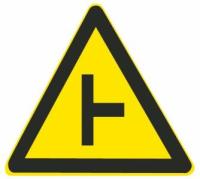
A. Y-shaped intersection
B. T-shaped intersection
C. intersection
D. ring intersection
Answer:B
2. When driving at night, the driver should try as much as possible to avoid overtaking. When he really needs to overtake, he may switch the high and low beam lights to alert the vehicle in front.
A. Right
B. Wrong
Answer:A
3. This sign reminds an unmanned level crossing ahead.

A. Right
B. Wrong
Answer:B
4. The vehicle is allowed to _______ at this intersection.

A. go straight
B. turn right
C. turn left
D. go straight or turn left
Answer:B
5. What does this sign mean?

A. Reminding the side of a reservoir, lake or river ahead
B. Reminding the steep uphill road ahead
C. Reminding the steep downhill road ahead
D. Reminding continuous two or more up slopes ahead
Answer:C
6. How often should a driver who is more than 60 years old present the certificate of physical conditions?
A. every 3 years
B. every 2 years
C. every 6 months
D. every 1 year
Answer:D
7. A motorized vehicle driver who drives after drinking is subject to a 12-point penalty.
A. Right
B. Wrong
Answer:A
8. It lights to indicate that ______

A. the head and tail fog lights are turned on
B. front and rear width lights are turned on
C. the head lights are turned on
D. the hazard lights are turned on
Answer:B
9. It lights to indicate that ______

A. handbrake released
B. foot brake failure
C. braking system is abnormal
D. the brake pedal does not return back
Answer:C
10. This set of the hand signals of the traffic police indicates that the vehicles should ____ .

A. reduce speed and pass slowly
B. pull over
C. stop
D. turn right
Answer:D
11. Whats the meaning of this sign?

A. dangerous hillside road
B. cliff section
C. watch for dropping stone
D. dangerous section
Answer:C
12. When causing a road accident involving property damage, the parties to the accident have no dispute over the fact and cause, they should take photos of the scene or mark the vehicles location when they move the vehicles.
A. Right
B. Wrong
Answer:A
13. When driving in thick or extremely thick fog, the driver should ____ due to low visibility.
A. Turn on the head light and keep driving
B. Turn on the contour light, fog light and drive along the right side
C. Turn on the hazard lights and keep driving
D. Turn on the hazard lights, fog light, and stop at a safe place
Answer:D
14. When causing a road accident involving human casualties, the driver should immediately rescue the injured people and report to the traffic police as soon as possible.
A. Right
B. Wrong
Answer:A
15. When a motorized vehicle crosses a non-motorized vehicle on a narrow road or a narrow bridge at night, the motorized vehicle should use the high beam light.
A. Right
B. Wrong
Answer:B
16. Whats the meaning of this sign?

A. expressway parking area ahead
B. expressway shelter ahead
C. expressway car park ahead
D. expressway service area ahead
Answer:A
17. On which kind of city road a vehicle is not allowed to overtake?
A. main streets
B. one-way section
C. section with heavy traffic flow
D. two one-way lanes
Answer:C
18. It displays the current engine speed is 6000 rev / min.

A. Right
B. Wrong
Answer:B
19. May speed up to go through the crosswalk in this situation.
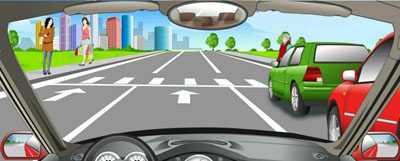
A. Right
B. Wrong
Answer:B
20. How to drive in sand, hail, rain, fog, ice and other weather conditions?
A. run as normal
B. maintain the speed
C. speed up properly
D. reduce the speed
Answer:D
21. If a person who has caused a major traffic accident and if his act constitutes a crime, he should be held for _________.
A. criminal liability
B. civil liability
C. direct liability
D. economic liability
Answer:A
22. This sign reminds an unmanned level crossing ahead.

A. Right
B. Wrong
Answer:A
23. An unregistered motorized vehicle should have _________ if it has to run on the road temporarily.
A. certificate of legal origin
B. license plate for temporary moving
C. borrowed license plate
D. certificate of legal unit
Answer:B
24. How to cross each other on a narrow mountain road without the central dividing line?
A. The vehicle not close to the mountain goes first
B. The vehicle close to the mountain goes first
C. The empty vehicle goes first
D. The slow-moving vehicle goes first
Answer:A
25. When encountering stopping in turn or slow-moving vehicles in front at an intersection where lanes are reduced, the motorized vehicle should _________.
A. enter the intersection from road shoulder by the right side of the vehicle in front
B. enter the intersection from the side of interspace
C. pass alternately with one vehicle each lane to enter the intersection
D. change to left lane and cut in to enter the intersection
Answer:C


