
1. Whats the meaning of this sign?
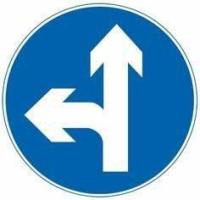
A. going straight and right turn
B. going straight and left turn
C. no going straight and no left turn
D. right turn and left turn only
Answer:B
2. Whats the meaning of this sign?
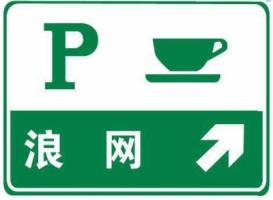
A. expressway parking area ahead
B. expressway shelter ahead
C. expressway car park ahead
D. expressway service area ahead
Answer:A
3. When a vehicle encounters a bike rider coming in the opposite direction on the road, the driver should _________.
A. Continuously change the high and low bean lights
B. Continuously honk
C. Use the low beam light, reduce speed or stop to evade
D. Use the high beam light
Answer:C
4. When a motorized vehicle breaks down at night, and is difficult to move, the driver should turn on the hazard lights, the contour lights and the tail lights.
A. Right
B. Wrong
Answer:A
5. When crossing each other on a narrow road, the driver should slow down, yield and stop first.
A. Right
B. Wrong
Answer:A
6. Fine will be 200~2000 yuan and driving license will be revoked if _____
A. violating traffic regulations
B. running 50% faster than the specified speed limit
C. escaped after causing traffic accident
D. driving without driver license
Answer:B
7. Whats the meaning of this sign?
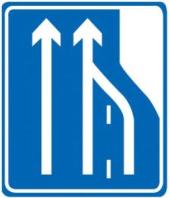
A. fewer lanes
B. merging point
C. emergency lane
D. changing to left lane
Answer:A
8. A driver may drive on the road a motorized vehicle overhauled which has reached the scraped standard.
A. Right
B. Wrong
Answer:B
9. In which situation the traffic police may detain the vehicle on road?
A. not hang the license plate
B. no ID card
C. no insurance contract
D. no lable of environmental protection
Answer:A
10. Which is correct in this kind of intersection?
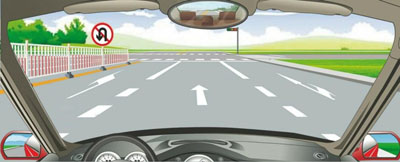
A. make a U turn along the left lane
B. cannot make a U turn
C. make a U turn through the middle lane
D. make a U turn inside the intersection
Answer:B
11. If a person who has caused a major traffic accident and if his act constitutes a crime, he should be held for _________.
A. criminal liability
B. civil liability
C. direct liability
D. economic liability
Answer:A
12. Whats the meaning of this sign?
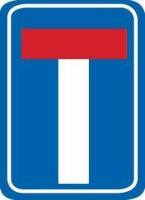
A. T-shaped intersection
B. branching intersection
C. reduce speed to pass
D. dead-end road
Answer:D
13. Reducing the speed to yield when encountering this situation in the intersection.
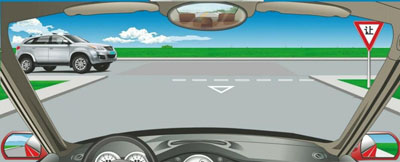
A. Right
B. Wrong
Answer:A
14. How long is the period of probation of a motor vehicle driver who has applied for a driver license for the first time?
A. 18 months
B. 16 months
C. 12 months
D. 6 months
Answer:C
15. At this position, the motorized vehicle can continue to go through if the front wheels have passed the stop line.

A. Right
B. Wrong
Answer:B
16. When overtaking, the driver should try his best to increase the horizontal distance and,when necessary, may cross the solid line to overtake.
A. Right
B. Wrong
Answer:B
17. What to do besides controlling speed less than 20km/hr when the visibility is lower than 50 meters on the expressway?
A. run in the emergency lane
B. leave the expressway as soon as possible
C. stop by the roadside as soon as possible
D. run slowly in the road shoulder
Answer:B
18. Driving a small passenger vehicle on the expressway, the minimum speed should not be less than 90 kilometers per hour.
A. Right
B. Wrong
Answer:B
19. What does this symbol indicate?

A. luggage compartment is opened
B. engine compartment is opened
C. cover of fuel tank is opened
D. door of one side is opened
Answer:B
20. A motorized vehicle can make a U turn on this road as long as it does not interfere other vehicles.
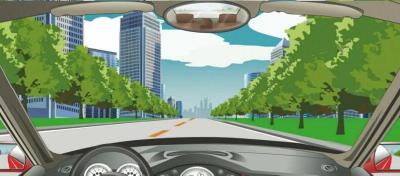
A. Right
B. Wrong
Answer:A
21. When a vehicle is being overtaken by another vehicle, the driver should _____.
A. Run by the central line of the road
B. Speed up and yield
C. Continue to speed up and run
D. Reduce speed and run on the right side
Answer:D
22. What is this traffic sign?
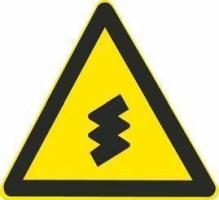
A. slippery section
B. sharp curve
C. inverse curve
D. continuous curves
Answer:D
23. When a motorized vehicle stops temporarily at the roadside, the driver ________.
A. Is not allowed to stop in the opposite direction or in parallel
B. May stop anyway he likes as long as it is convenient for him to get out
C. May stop the vehicle in the opposite direction
D. May stop the vehicle in parallel
Answer:A
24. If a motorized vehicle driver causes a traffic accident and runs away but his conduct does not constitute a crime, he is subject to a 12-point penalty.
A. Right
B. Wrong
Answer:A
25. Choose the lane with the green arrow light on.
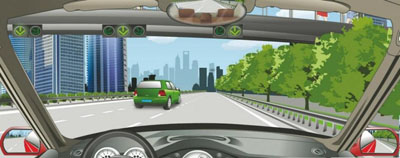
A. Right
B. Wrong
Answer:A


