
1. How to use light in this situation at the intersection?

A. turn off high beam lights
B. use hazard lights
C. use the high and low beam lights alternately
D. use high beam lights
Answer:C
2. It lights to indicate enabling the floor and the front windscreen fan.

A. Right
B. Wrong
Answer:A
3. Whats the meaning of this sign?

A. right-turn lane
B. U turn lane
C. left-turn lane
D. straight-going lane
Answer:D
4. If a front tire blowout has caused a turn in direction, the driver should not avoid excess adjustment. Instead, he should control the direction of the vehicle, ____, and slowly reduce the speed of the vehicle.
A. Apply emergency braking
B. Use the handbrake
C. Gently depress the brake pedal
D. Swiftly depress the brake pedal
Answer:C
5. If the drivers household register has moved out of the original vehicle management station, the driver should apply to the vehicle management station _______ .
A. At the former place of his household register
B. At the residential place
C. At the new place of his household register
D. At the location of his household register
Answer:C
6. Whats the meaning of this sign?

A. danger-avoiding lane
B. emergency lane
C. road shoulder
D. sharp curve
Answer:A
7. When driving at night, the driver should reduce speed and go forward if the vehicle coming in the opposite direction fails to turn off the high beam light. This is designed to prevent an accident from happening when there are pedestrians crossing the place where the lights of the two vehicles meet.
A. Right
B. Wrong
Answer:A
8. What is the Minimum speed in this lane?

A. 100km/hr
B. 110km/hr
C. 60km/hr
D. 90km/hr
Answer:D
9. When the driver senses a tire blowout on the road, he should control the direction of the vehicle and use emergency braking to bring the vehicle swiftly to a stop.
A. Right
B. Wrong
Answer:B
10. Which kind of vehicles are allowed to run in the lane with this marking on road?

A. public transport vehicles
B. private vehicles
C. taxis
D. official vehicles
Answer:A
11. A driver should observe the dynamic situation of the rear side vehicles before driving into the traffic flow from other road.
A. Right
B. Wrong
Answer:A
12. What kind of behavior of this driver violates the law?

A. not hold the steering wheel according to regulation
B. angle of the seat is not correct
C. not buckled up
D. the driving posture is incorrect
Answer:C
13. When passing a section of a mountain road which is prone to landside and mudflow, the driver should not stop.
A. Right
B. Wrong
Answer:A
14. Whats the role of the indicative marking?
A. No passing
B. indicate vehicles to pass
C. restrict from passing
D. warn and remind
Answer:B
15. Whats the meaning of this sign?

A. accident-prone section
B. construction section
C. reducing speed and going slowly section
D. jammed section
Answer:A
16. When a vehicle passes a bumped road, the driver should ________.
A. Speed up and dash over under inertia
B. Change to the neutral gear and slide over
C. Maintain the original speed and pass
D. Pass slowly and steadily
Answer:D
17. A motorized vehicle can make a U turn on this road as long as it does not interfere other vehicles.

A. Right
B. Wrong
Answer:A
18. May speed up to go through the crosswalk in this situation.

A. Right
B. Wrong
Answer:B
19. Which kind of sign is it?

A. tourist zone sign
B. work area sign
C. notification signs
D. expressway sign
Answer:A
20. A small bus driver should reduce speed rapidly when he suddenly feel bumpy on a flat expressway, to prevent tire blowout.
A. Right
B. Wrong
Answer:A
21. Whats the meaning of this sign?

A. muddy road
B. low-lying road
C. overflowing road
D. ferry
Answer:C
22. The main impact of muddy roads on safe driving is _________.
A. The resistance to the vehicle becomes weaker
B. The tires can easily spin and skid
C. The visibility become lower and blurs the field of vision
D. The road grip becomes stronger
Answer:B
23. Must reduce the frequency of honking in this section.

A. Right
B. Wrong
Answer:B
24. What is this manipulation device?
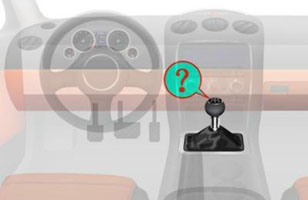
A. the handbrake
B. the air throttle lever
C. the gear lever
D. the clutch lever
Answer:C
25. When a driver needs to borrow a lane to bypass an obstacle in front and a vehicle in the opposite direction is approaching the obstacle, the driver should ___________.
A. Reduce speed or stop and yield to the vehicle coming in the opposite direction
B. Speed up and bypass the obstacle in advance
C. Honk to indicate the vehicle in the opposite direction to yield
D. Rapidly occupy the lane and force the vehicle coming in the opposite direction to stop and yield
Answer:A


