
1. When a vehicle stops for a long time, the driver should select a car park to do so.
A. Right
B. Wrong
Answer:A
2. When the motor vehicle installed ABS system applys emergency braking, the driver can depress the brake pedal heavily.
A. Right
B. Wrong
Answer:A
3. A driver may drive on the road a motorized vehicle overhauled which has reached the scraped standard.
A. Right
B. Wrong
Answer:B
4. Which should be taken along while driving?
A. vocational qualification certificate
B. ID card
C. driving license
D. work permits
Answer:C
5. Whats the meaning of this sign?
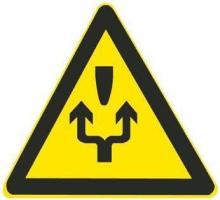
A. bypass at construction section
B. two-way traffic
C. bypass from left or right side
D. watch for danger
Answer:C
6. How to do first when encountering such kind of bridge?

A. maintain the speed and pass
B. speed up and pass as soon as possible
C. stop and observe
D. pass slowly
Answer:C
7. When passing a dangerous section of a mountain road, especially by the locations of frequent occurrence of landslides, mudslides, the driver should drive with care and avoid stopping.
A. Right
B. Wrong
Answer:A
8. It lights while driving to indicate that ______

A. engine temperature is too high
B. engine cooling system malfunction
C. engine lubrication system malfunction
D. engine temperature is too low
Answer:A
9. Whats the meaning of this sign?

A. lane direction indication
B. intersection ahead
C. lane information indication
D. road branching point ahead
Answer:B
10. As the traffic flow at an interchange is generally one-way, the vehicles do not have to reduce speed when passing.
A. Right
B. Wrong
Answer:B
11. The vehicle is allowed to _______ at this intersection.

A. go straight or turn right
B. turn right
C. turn left
D. go straight
Answer:C
12. Which behavior a person had in 3 years is not allowed to apply for a motorized vehicle driving license?
A. insulin injections
B. drunken experience
C. smoking addiction
D. drug injections
Answer:D
13. The three principles for careful driving are concentration, careful observation and early prevention.
A. Right
B. Wrong
Answer:A
14. When a motorized vehicle runs in a foggy weather, the driver should turn on the fog light and the hazard lights.
A. Right
B. Wrong
Answer:A
15. When driving on a road covered by ice and snow, the driver must reduce speed and increase the safe distance.
A. Right
B. Wrong
Answer:A
16. A rear tire blowout can sway the tail of the vehicle. The driver should firmly hold the steering wheel with both hands to ensure the vehicle go straight, reduce speed and then stop.
A. Right
B. Wrong
Answer:A
17. When a vehicle has increased its speed to more than 60 kilometers per hour on the ramp of an expressway, it may directly enter the carriageway.
A. Right
B. Wrong
Answer:B
18. When a vehicle passes a level crossing, it is prohibited from overtaking.
A. Right
B. Wrong
Answer:A
19. When driving in a foggy day, the driver should turn on ______.
A. The reverse light
B. The low beam light
C. The fog light
D. The high beam light
Answer:C
20. You may speed up to go through the intersection in this case.Answer:

A. Right
B. Wrong
Answer:B
21. If a driving license has been revoked as it is obtained by deception, bribery or other illegal means, the applicant is not allowed to re-apply for it within ______
A. 6 months
B. 1 year
C. 2 years
D. 3 years
Answer:D
22. This set of the hand signals of the traffic police indicates that the vehicles should ___ .

A. wait to turn left
B. pull over
C. reduce speed and pass slowly
D. turn left
Answer:D
23. What mark is the inclined yellow and black lines?

A. entity mark
B. protrusions mark
C. three-dimensional mark
D. deceleration mark
Answer:C
24. What is the minimum speed in this lane?

A. 60km/hr
B. 90km/hr
C. 100km/hr
D. 110km/hr
Answer:C
25. What should the driver do when encountering a vehicle from the opposite direction on a road without a central line?
A. driving closely by the roadside
B. driving by the central of the road
C. reducing speed and driving by right side
D. run by using the lane for non-motorized vehicles
Answer:C


