
1. When changing lanes on an expressway, the driver should turn on the turn signal in advance, observe the traffic conditions, and slowly turn the steering wheel and enter the new lane after making sure it is safe to do so.
A. Right
B. Wrong
Answer:A
2. This sign reminds there is a ferry ahead for vehicles.
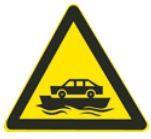
A. Right
B. Wrong
Answer:A
3. If a front tire blowout has caused a turn in direction, the driver should not avoid excess adjustment. Instead, he should control the direction of the vehicle, ____, and slowly reduce the speed of the vehicle.
A. Apply emergency braking
B. Use the handbrake
C. Gently depress the brake pedal
D. Swiftly depress the brake pedal
Answer:C
4. A motorized vehicle driver who does not hang the license plate is subject to a ________.
A. 6-point penalty
B. 12-point penalty
C. 2-point penalty
D. 3-point penalty
Answer:B
5. It lights to remind that engine oil needs to be filled.

A. Right
B. Wrong
Answer:B
6. Change driving license before of expiration.
A. 60 days
B. 30 days
C. 90 days
D. 6 months
Answer:C
7. Reduce speed or stop to look before the stop line when encountering this traffic light at the intersection.
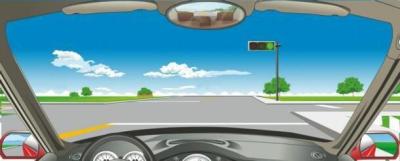
A. Right
B. Wrong
Answer:B
8. Whats the meaning of this sign?
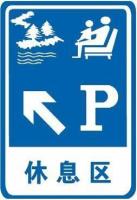
A. rest area
B. service area
C. car park
D. observation deck
Answer:A
9. Is there any effective auxiliary method to control the speed while driving on a long downhill road besides braking.
A. Shift to the neutral gear and slide
B. Use the engine to brake
C. Turn off the engine and slide
D. Depress the clutch and slide
Answer:B
10. When starting up a vehicle stopping at the roadside, the driver should first ________.
A. Depress the accelerator pedal and start
B. Honk
C. Increase engine rotation speed
D. Observe the conditions around the vehicles
Answer:D
11. When a vehicle passes a narrow road or bridge, it is prohibited from overtaking.
A. Right
B. Wrong
Answer:A
12. When encountering slow-moving vehicles at an intersection that has no traffic signals, the motorized vehicle should pass alternately.
A. Right
B. Wrong
Answer:A
13. On which kind of city road a vehicle is not allowed to overtake?
A. main streets
B. one-way section
C. section with heavy traffic flow
D. two one-way lanes
Answer:C
14. Whats the meaning of the white horizontal solid line in the circle?
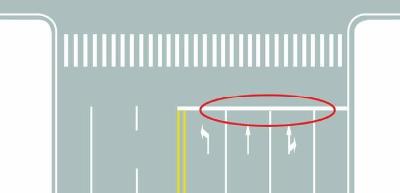
A. turning waiting line
B. deceleration line
C. yielding line
D. stop line
Answer:D
15. When a motorized vehicle goes at night through an intersection that has no traffic lights, the driver should not use the high and low beam lights alternately.
A. Right
B. Wrong
Answer:B
16. Whats the meaning of this guide arrow?

A. changing to left lane
B. going straight ahead
C. left turn ahead
D. right turn ahead
Answer:C
17. After causing a road accident, the vehicle driver needs to change the scene for rescuing the wounded, the driver should mark the location.
A. Right
B. Wrong
Answer:A
18. How to do first when encountering such kind of bridge?
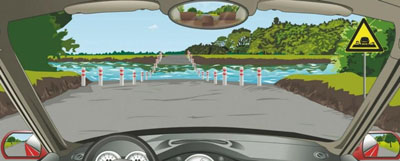
A. maintain the speed and pass
B. speed up and pass as soon as possible
C. stop and observe
D. pass slowly
Answer:C
19. Whats the meaning of this sign?
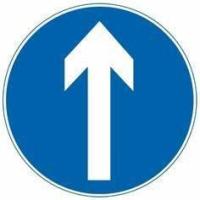
A. straight-going lane
B. going straight only
C. one-way road
D. no going straight
Answer:B
20. Whats the meaning of this sign?
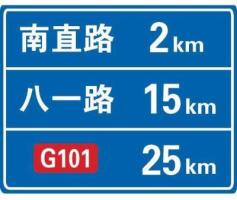
A. location and distance
B. driving route
C. destination name
D. driving direction
Answer:A
21. A motorized vehicle runs on the road without a label of inspection, the traffic police can detain the vehicle.
A. Right
B. Wrong
Answer:A
22. What is the max speed when in or out of the lane for non-motorized vehicles?
A. 40km/hr
B. 50km/hr
C. 60km/hr
D. 30km/hr
Answer:D
23. What is the max speed on this city road?
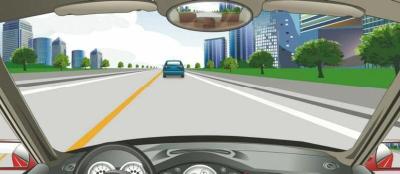
A. 30km/hr
B. 40km/hr
C. 50km/hr
D. 70km/hr
Answer:C
24. This set of the hand signals of the traffic police indicates that the vehicles should ___ .
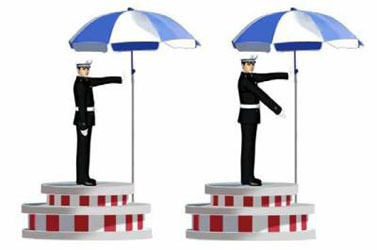
A. wait to turn left
B. pull over
C. turn right
D. reduce speed and pass slowly
Answer:C
25. When a driver needs to borrow a lane to bypass an obstacle in front and a vehicle in the opposite direction is approaching the obstacle, the driver should ___________.
A. Reduce speed or stop and yield to the vehicle coming in the opposite direction
B. Speed up and bypass the obstacle in advance
C. Honk to indicate the vehicle in the opposite direction to yield
D. Rapidly occupy the lane and force the vehicle coming in the opposite direction to stop and yield
Answer:A


