
1. Whats the meaning of this guide arrow?

A. indicate changing to left lane
B. indicate changing to left lane
C. indicate making a U turn ahead
D. indicate turning right ahead
Answer:D
2. This set of the hand signals of the traffic police indicates that the vehicles should ___ .

A. turn left
B. wait to turn left
C. reduce speed and pass slowly
D. turn right
Answer:B
3. If a driver has driven a motorized vehicle for more than four hours running, he should stop the vehicle and rest for at least ____________.
A. 10 minutes
B. 15 minutes
C. 20 minutes
D. 5 minutes
Answer:C
4. A motorized vehicle driver who uses falsified and altered vehicle license is subject to a ________.
A. 6-point penalty
B. 3-point penalty
C. 2-point penalty
D. 12-point penalty
Answer:D
5. How to do when causing a minor traffic accident with no human casualties and no dispute?
A. do not move the vehicle
B. counsel other vehicles bypass
C. leave the scene and discuss on their own
D. protect the scene and discuss
Answer:C
6. Whats the meaning of this sign?

A. provincial highway No.
B. county road No.
C. township road No.
D. national highway No.
Answer:C
7. Whats the meaning of this sign?

A. expressway bus station ahead
B. expressway shelter ahead
C. expressway service area ahead
D. expressway toll station ahead
Answer:C
8. Whats the meaning of this sign?

A. special lane for large buses
B. special lane for multi-passenger vehicles
C. special lane for public buses
D. special lane for BRT vehicles
Answer:D
9. A motorized vehicle driver who drives more than 50% faster than the prescribed speed limit is subject to a 12-point penalty.
A. Right
B. Wrong
Answer:A
10. Traffic Police can detain the vehicle according to law if the driver does not carry the IDcard.
A. Right
B. Wrong
Answer:B
11. How to pass this intersection?

A. not reduce speed to pass
B. speed up to pass as soon as possible
C. slide over in the neutral gear
D. reduce speed or stop to observe
Answer:D
12. Reducing the speed when driving in sand, hail, rain, fog, ice and other weather conditions.
A. Right
B. Wrong
Answer:A
13. Which is correct to use lights on rainy day when following a vehicle?

A. use high beam lights
B. cannot use the low beam lights
C. cannot use the high beam light
D. use fog lights
Answer:C
14. When crossing each other on a narrow road, the driver should slow down, yield and stop first.
A. Right
B. Wrong
Answer:A
15. It lights to remind that engine needs to add oil.

A. Right
B. Wrong
Answer:B
16. How to choose parking spot when needing to stop by the roadside?
A. stop in the opposite direction by the left roadside
B. stop in the parking area
C. stop anywhere as will by the roadside
D. stop in the sidewalk
Answer:B
17. What is the max speed on this expressway?

A. 110km/hr
B. 120km/hr
C. 90km/hr
D. 100km/hr
Answer:A
18. Whats the meaning of this sign?

A. pass with low speed
B. watch for pedestrians
C. on foot
D. pedestrians go first
Answer:C
19. This traffic light means ______

A. intersection warning
B. no passing
C. draw attention
D. allow to pass
Answer:D
20. Whats the meaning of this sign?
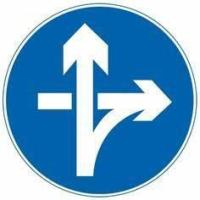
A. going straight and turning left
B. going straight and turning right
C. going straight and turning right at an interchange
D. going straight and turning left at an interchange
Answer:C
21. When a vehicle passes a crosswalk, the driver should yield to the pedestrians.
A. Right
B. Wrong
Answer:A
22. When driving in icy and snowy weather, the vehicle steadiness decreases and sudden acceleration can very easily cause spins and slides.
A. Right
B. Wrong
Answer:A
23. Whats the meaning of this sign?
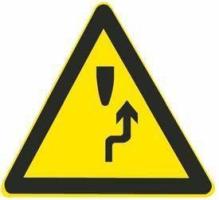
A. bypass from right side
B. one-way passing
C. watch for danger
D. bypass from left side
Answer:A
24. When braking on a muddy road, the tires can easily spin or drift and cause traffic accidents.
A. Right
B. Wrong
Answer:A
25. When a vehicle approaches a bus stopping at a bus stop, the driver should ______ in case the bus starts up suddenly or pedestrians cross in front of the bus.
A. Reduce speed, keep a sufficient distance and be ready to stop anytime
B. Maintain the normal speed
C. Honk to remind, speed up and pass
D. Be ready to apply emergency braking
Answer:A


