
1. A small bus driver should reduce speed rapidly when he suddenly feel bumpy on a flat expressway, to prevent tire blowout.
A. Right
B. Wrong
Answer:A
2. According to rules on the road traffic safety, the maximum speed on the expressway is less than 120km/hr, thus, it will not be in violation of the traffic regulations as long as the speed does not exceed 120km/hr on the expressway.
A. Right
B. Wrong
Answer:B
3. When a vehicle encounters a bike rider coming in the opposite direction on the road, the driver should _________.
A. Continuously change the high and low bean lights
B. Continuously honk
C. Use the low beam light, reduce speed or stop to evade
D. Use the high beam light
Answer:C
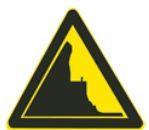
4. This sign reminds embankment road ahead.
A. Right
B. Wrong
Answer:B
5. When a vehicle is being overtaken by another vehicle, the driver should _____.
A. Run by the central line of the road
B. Speed up and yield
C. Continue to speed up and run
D. Reduce speed and run on the right side
Answer:D
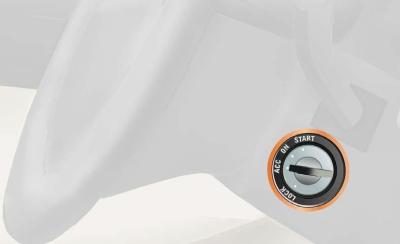
6. The starter works when turning the ignition switch to the ACC position.
A. Right
B. Wrong
Answer:B
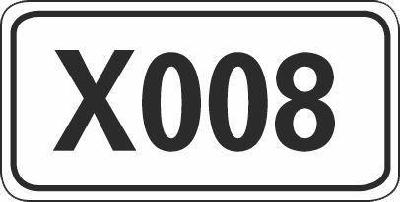
7. Whats the meaning of this sign?
A. provincial highway No.
B. national highway No.
C. county road No.
D. township road No.
Answer:C
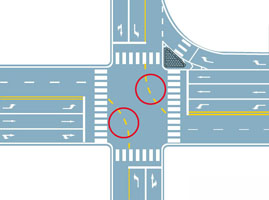
8. What marking is the yellow broken line in the circle?
A. non-motorized vehicles guide lines
B. intersection guide line
C. lane connection lines
D. small vehicles turning lines
Answer:B
9. The main impact of foggy weather on safe driving is _________.
A. The engine can easily stop
B. The vehicle can easily slide sideways
C. The resistance the vehicle increases
D. The visibility is low and the vision is poor
Answer:D
10. What is this manipulation device?
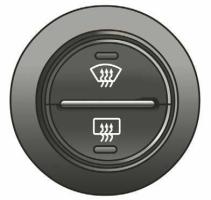
A. switch of the turn signal
B. switch of the head lights
C. switch of wiper
D. switch of defogger
Answer:D
11. Whats the meaning of this sign?

A. reduce speed in tunnel
B. turn on the high beam lights in tunnel
C. turn on the light in tunnel
D. width light in tunnel
Answer:C
12. At night, the drivers observation is markedly poorer than in the daytime and the range of visibility range is _______.
A. Unchanged
B. Irregular
C. Longer
D. Shorter
Answer:D
13. If an improper place is chosen for crossing another vehicle, the driver should immediately _______.
A. Reduce speed and cross each other slowly, or stop to yield
B. Occupy the left lane to force the opposite party to reduce speed and yield
C. Turn the head light to indicate the opposite party to stop and yield
D. Speed up and select a better place
Answer:A
14. When a vehicle goes downhill, the driver should properly control the speed and fully use the engine to brake.
A. Right
B. Wrong
Answer:A
15. Traffic Police can detain the vehicle according to law if the driver does not carry the IDcard.
A. Right
B. Wrong
Answer:B
16. On which kind of city road a vehicle is not allowed to overtake?
A. main streets
B. one-way section
C. section with heavy traffic flow
D. two one-way lanes
Answer:C
17. Whats the meaning of this sign?
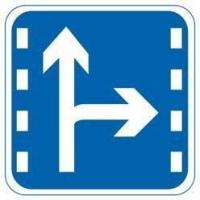
A. straight-going and left-turn lane
B. straight-going and side road exit lane
C. lane for both going straight and right turn
D. lanes for going in different directions
Answer:C
18. The full mark of Driving Skills, Common Knowledge on Safe and Courteous Driving of the subject 3 test is 100, each of the passing mark is 80 and 90.
A. Right
B. Wrong
Answer:B
19. It flashes when turning on the hazard lights.

A. Right
B. Wrong
Answer:A
20. What pedal is it?
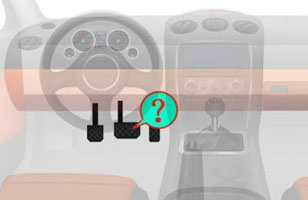
A. clutch pedal
B. accelerator pedal
C. brake pedal
D. handbrake
Answer:C
21. It lights to indicate that ______
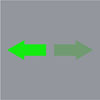
A. left-turn signal flashes
B. front and rear width lights light on
C. front and rear width lights light on
D. right-turn signal flashes
Answer:A
22. From which side to overtake?
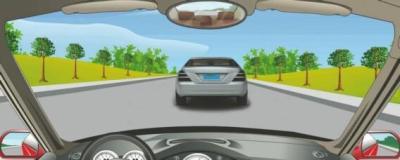
A. both sides
B. right side
C. left side
D. the side with no obstacle
Answer:C
23. Whats the meaning of this sign?
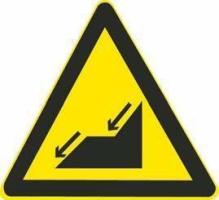
A. continuous down slopes
B. steep downhill road
C. steep uphill road
D. continuous up slopes
Answer:A
24. Whats the meaning of this sign?
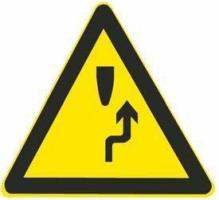
A. bypass from right side
B. one-way passing
C. watch for danger
D. bypass from left side
Answer:A
25. When a driver needs to borrow a lane to bypass an obstacle in front and a vehicle in the opposite direction is approaching the obstacle, the driver should ___________.
A. Reduce speed or stop and yield to the vehicle coming in the opposite direction
B. Speed up and bypass the obstacle in advance
C. Honk to indicate the vehicle in the opposite direction to yield
D. Rapidly occupy the lane and force the vehicle coming in the opposite direction to stop and yield
Answer:A


