
1. When driving in a heavy rain, the driver should control the speed to avoid the danger arising from water slide.
A. Right
B. Wrong
Answer:A
2. Emergency braking on a road covered by ice and snow can easily cause side skidding. The driver should use the engine braking to reduce speed.
A. Right
B. Wrong
Answer:A
3. Whats the meaning of the double white solid lines in far front of the intersection?

A. stopping and yield line
B. slowdown and yield line
C. left-turn waiting line
D. waiting to run line
Answer:A
4. Whats the meaning of the yellow solid line on the curbstone?

A. only for taking and dropping people
B. only for loading and unloading cargos
C. no long stopping
D. no parking
Answer:D
5. Whats the meaning of this sign?

A. rest area
B. service area
C. car park
D. observation deck
Answer:A
6. Whats the meaning of this sign?

A. embankment road
B. cliffside road
C. waterside road
D. slippery road
Answer:A
7. Which of the following vehicle in front in the same lane is not allowed to be overtaken?
A. large bus or large truck
B. taxis
C. ambulance on duty
D. public bus
Answer:C
8. When passing through an inundated road, the driver should ________.
A. Reduce speed and go slowly
B. Maintain the normal speed and pass
C. slide over in the neutral gear
D. Speed up and pass
Answer:A
9. Whats the meaning of this sign?
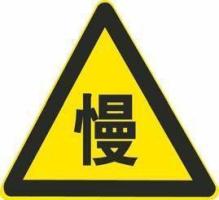
A. more vehicles section
B. passing slowly
C. jammed section
D. construction section
Answer:B
10. You may not use the turn signal when you change to the right lane.
A. Right
B. Wrong
Answer:B
11. What is this traffic sign?

A. Road narrows on both sides
B. Road narrows on the right side
C. Road narrows on the left side
D. Bridge narrows
Answer:B
12. Whats the meaning of the white broken lines area on the far left side?

A. special lane for multi-passenger vehicles
B. special lane for small buses
C. special lane for taxis with no passenger
D. special lane for large buses
Answer:A
13. If a person who has caused a major traffic accident and if his act constitutes a crime, he should be held for _________.
A. criminal liability
B. civil liability
C. direct liability
D. economic liability
Answer:A
14. Honking in a foggy day can arouse the attention of the opposite side. After hearing the honking from the opposite side, the driver should also honk to respond.
A. Right
B. Wrong
Answer:A
15. May speed up to go through the crosswalk in this situation.
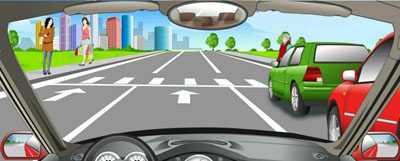
A. Right
B. Wrong
Answer:B
16. Whats the meaning of this sign?

A. ring intersection ahead
B. intersection ahead
C. Y-shaped intersection ahead
D. T-shaped intersection ahead
Answer:C
17. It lights to indicate that right door is not closed.

A. Right
B. Wrong
Answer:B
18. Whats the meaning of this sign?

A. bump road
B. high outburst road
C. low-lying road
D. hump bridge
Answer:B
19. ABS system can maximize the braking efficiency when conducting _______
A. braking intermittently
B. braking continuously
C. applying emergency braking
D. gently depressing the brake pedal
Answer:C
20. The police can detain the vehicle if one drives a vehicle without ______
A. driving license
B. ID card
C. pass paper
D. qualification certificate
Answer:A
21. When a vehicle encounters a bike rider coming in the opposite direction on the road, the driver should _________.
A. Continuously change the high and low bean lights
B. Continuously honk
C. Use the low beam light, reduce speed or stop to evade
D. Use the high beam light
Answer:C
22. Whats the meaning of this sign?

A. yield if going to turn left
B. straight one-way road
C. right one-way road
D. left one-way road
Answer:D
23. Opening the doors of a motorized vehicle should not obstruct the flow of other vehicles and pedestrians.
A. Right
B. Wrong
Answer:A
24. A motorized vehicle driver who uses falsified and altered license plate is subject to a ________.
A. 2-point penalty
B. 3-point penalty
C. 12-point penalty
D. 6-point penalty
Answer:C
25. Whats the meaning of this sign?

A. no honking the tweeter
B. no honking the woofer
C. should honk
D. no honking
Answer:C


