
1. A person who has the expired driving license can drive motorized vehicle within 1 year.
A. Right
B. Wrong
Answer:B
2. It lights to indicate that ______

A. not buckled up
B. safety belt malfunction
C. the safety belts are too loose
D. buckled up already
Answer:A
3. This set of the hand signals of the traffic police indicates that the vehicles should ____ .
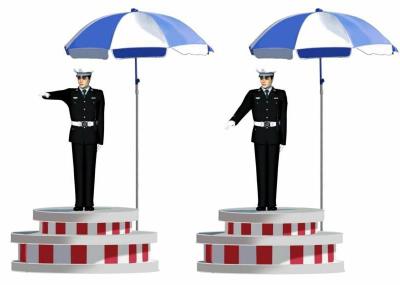
A. turn right
B. change lane
C. reduce speed and pass slowly
D. pull over
Answer:C
4. Whats the meaning of this sign?
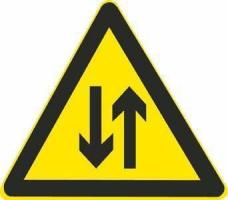
A. reduce speed and yield
B. variable lane
C. separated road
D. two-way traffic
Answer:D
5. Traffic Police can detain the vehicle which is suspected of using other vehicles license plate and vehicle license.
A. Right
B. Wrong
Answer:A
6. Speeding up to go though the intersection before the light turns to red in this case.
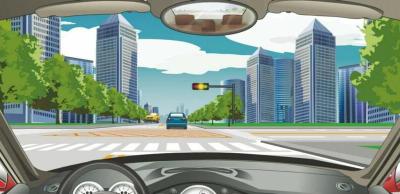
A. Right
B. Wrong
Answer:B
7. Whats the meaning of this guide arrow?

A. left curve or need to merge with the left flow ahead
B. right curve or need to merge with the right flow ahead
C. merge with the left flow due to right side obstacle ahead
D. left curve or need to bypass from left side ahead
Answer:A
8. Whats the meaning of this sign?
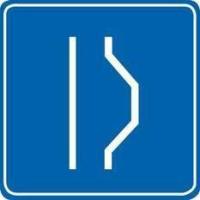
A. uncovered car park
B. emergency stopping
C. parking space
D. passing bay
Answer:D
9. In which section cannot overtake?
A. mountain road
B. urban elevated road
C. urban expressway
D. narrow bridge and curve
Answer:D
10. If discovering pedestrians abruptly cross the road while driving, the driver should immediately reduce speed and evade.
A. Right
B. Wrong
Answer:A
11. It is illegal for a driver to use a cell phone while driving.
A. Right
B. Wrong
Answer:A
12. It lights to indicate that engine oil may be insufficient.

A. Right
B. Wrong
Answer:A
13. It lights to indicate that ______

A. the hazard lights flash
B. right-turn signal flashes
C. left-turn signal flashes
D. front and rear width lights flash
Answer:A
14. When crossing each other on a narrow road, the driver should slow down, yield and stop first.
A. Right
B. Wrong
Answer:A
15. This sign indicates jammed section ahead and passing slowly.
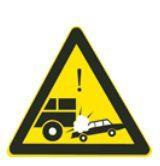
A. Right
B. Wrong
Answer:B
16. When following a vehicle on the road, the distance from the vehicle in front is not important. As long as the driver goes forward at the same speed as the vehicle in front does, he can avoid rear-end collision.
A. Right
B. Wrong
Answer:B
17. What does this symbol indicate?

A. luggage compartment is opened
B. door of one side is opened
C. engine compartment is opened
D. cover of fuel tank is opened
Answer:A
18. It displays that oil in tank has less than the warning line
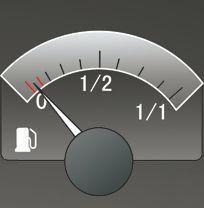
A. Right
B. Wrong
Answer:A
19. How to drive in this section?
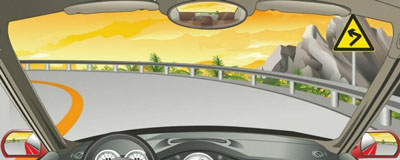
A. occupy the road of the other side to pass the curve
B. drive along the middle of the curve
C. speed up and honk to pass
D. reduce speed and honk
Answer:D
20. A motorized vehicle driver who illegally occupies the emergency lane on the expressway is subject to a 6-point penalty.
A. Right
B. Wrong
Answer:A
21. When driving at night, the drivers visibility range becomes shorter and his observation becomes poorer. At the same time, the driver can easily become tired because he has to highly concentrate his attention.
A. Right
B. Wrong
Answer:A
22. It lights to indicate that ______

A. the tail fog light is turned on
B. the low beam light is turned on
C. the high beam light is turned on
D. the head fog light is turned on
Answer:A
23. The vehicle is allowed to pass the intersection ahead when the green light on.
A. Right
B. Wrong
Answer:A
24. Whats the meaning of the area between two yellow broken lines in the circle?
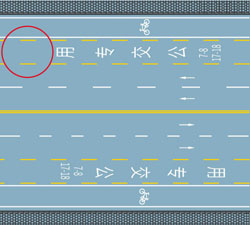
A. special lane for operating buses
B. special lane for large buses
C. special lane for taxis
D. special lane for public buses
Answer:D
25. This sign warns two neighboring inverse curves ahead.
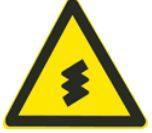
A. Right
B. Wrong
Answer:B


