
1. Whats the meaning of this sign?
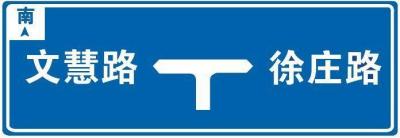
A. T-shaped intersection ahead
B. road branching point ahead
C. Y-shaped intersection ahead
D. intersection ahead
Answer:A
2. When driving on a road covered by ice and snow, the driver must reduce speed and increase the safe distance.
A. Right
B. Wrong
Answer:A
3. The double yellow solid lines in the middle of the road are used to separate the traffic flow in opposite directions, crossing the lines to overtake or make a turn is allowed if it is safe.
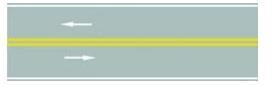
A. Right
B. Wrong
Answer:B
4. It lights to indicate that engine oil may be insufficient.

A. Right
B. Wrong
Answer:A
5. When reaching a sharp curve, the driver should reduce speed and drive on the right side so as to avoid colliding with the vehicle crossing the central line of the curve in the opposite direction.
A. Right
B. Wrong
Answer:A
6. How to turn left at this intersection?
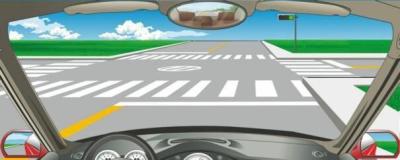
A. along the right side of the center point in the intersection
B. along the left side of the center point in the intersection
C. cover the center point in the intersection
D. can not turn left
Answer:B
7. A person who has falsified or altered the motorized vehicle driving license and if his act constitutes a crime, he should be held for criminal liabilities according to law.
A. Right
B. Wrong
Answer:A
8. As the road is wet and slippery after rain, brake application when driving can easily ___.
A. Cause sideways slide and traffic accident
B. Cause collision due to poor visibility
C. Be ignored by the drivers of other vehicles
D. Cause engine kill
Answer:A
9. Whats the meaning of this sign?
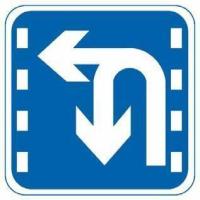
A. lanes for going in different directions
B. lane for both U turn and left turn
C. the lane of no left turn and no U turn
D. lane for both going straight and left turn
Answer:B
10. What is this manipulation device?
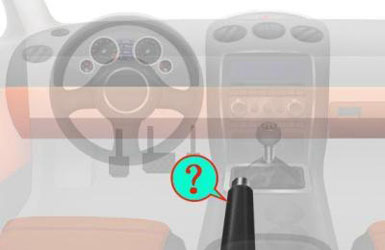
A. the air throttle lever
B. the gear lever
C. the clutch lever
D. the handbrake
Answer:D
11. Whats the role of the indicative marking?
A. No passing
B. indicate vehicles to pass
C. restrict from passing
D. warn and remind
Answer:B
12. When a vehicle changes lane, the driver should turn on the turn signal and rapidly enter the new lane.
A. Right
B. Wrong
Answer:B
13. When a motorized vehicle encounters the cut in by another vehicle in a roundabout, the driver may not evade as long as he has the right of way.
A. Right
B. Wrong
Answer:B
14. Change driving license before of expiration.
A. 60 days
B. 30 days
C. 90 days
D. 6 months
Answer:C
15. When crossing each other on a narrow road, the driver should slow down, yield and stop first.
A. Right
B. Wrong
Answer:A
16. How to use lights when entering the speed-reducing lane?
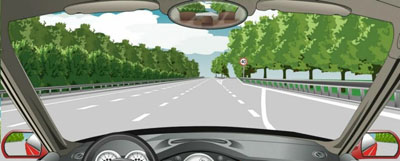
A. turn on the hazard lights
B. turn on the head light
C. turn on the left-turn signal
D. turn on the right-turn signal
Answer:D
17. The main impact of mountain roads on safe driving is _______.
A. The traffic conditions are boring
B. The slopes are long, the curves are sharp and visibility range is shorter.
C. The traffic flow is heavy
D. The road signs are fewer
Answer:B
18. When the light switch is rotated to the position, the whole car lights turn on.
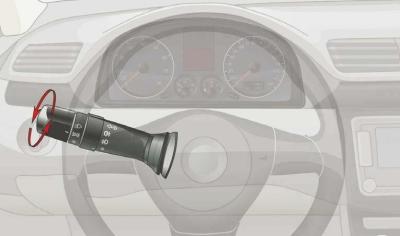
A. Right
B. Wrong
Answer:B
19. Traffic Police only imposes a fine if a vehicle is suspected of using the falsified or altered label of inspection.
A. Right
B. Wrong
Answer:B
20. Do not hang or place articles close to the front and rear windows that block the vision of the driver.
A. Right
B. Wrong
Answer:A
21. Whats the meaning of this sign?
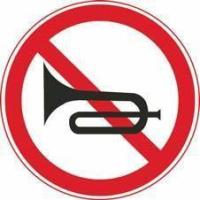
A. no long time honking
B. honk discontinuously
C. reduce speed and honk
D. no honking
Answer:D
22. When encountering an overflowing bridge, the driver should look at the situation, and passes through slowly before he makes sure that it is safe to do so.
A. Right
B. Wrong
Answer:A
23. When a vehicle overtakes the bike riders going in the same direction, the rational way to deal with is to ________.
A. Continuously honk to remind them to yield
B. Continuously honk and speed up to overtake
C. Yield to the bike riders
D. Observe them, reduce speed and go slowly, while keeping a sufficient safe distance.
Answer:D
24. Whats the meaning of this sign?
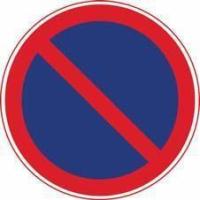
A. no stopping temporarily
B. no long stopping
C. no stopping
D. long stopping is allowed
Answer:B
25. A driver who drives an illegally assembled motorized vehicle is subject to ______ .
A. being held for criminal liabilities according to law
B. a fine of 200 yuan ~ 2,000 yuan
C. being revoked the vehicle license
D. being detained for less than 15 days
Answer:B


