
1. What kind of violation does this broken down vehicle have?
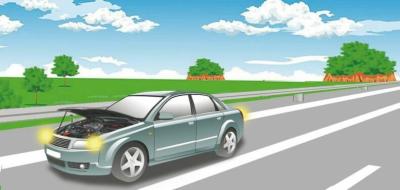
A. not turn on the hazard lights
B. not stop the car by the roadside
C. not solve the problem at once
D. not place the warning sign
Answer:D
2. A vehicle should try to speed up after starting from the roadside and rapidly turn left into the traffic flow on the road.
A. Right
B. Wrong
Answer:B
3. Whats the meaning of this guide arrow?

A. no passing
B. driving lane
C. merging
D. going straight
Answer:D
4. What marking is it?
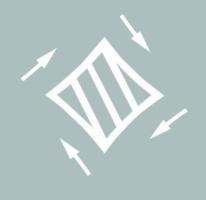
A. A cross-hatched marking
B. prohibitive area
C. guide line
D. central circle
Answer:D
5. When driving in icy and snowy weather, the vehicle steadiness decreases and sudden acceleration can very easily cause spins and slides.
A. Right
B. Wrong
Answer:A
6. If a driver has driven a motorized vehicle for more than four hours running, he should stop the vehicle and rest for at least ____________.
A. 10 minutes
B. 15 minutes
C. 20 minutes
D. 5 minutes
Answer:C
7. Whats the meaning of the marking in the red circle?
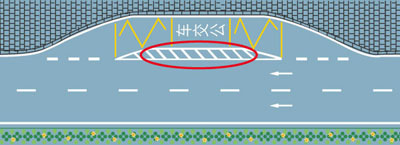
A. temporary stopping
B. large bus stopping
C. bus station
D. emergency stopping
Answer:C
8. Traffic Police can detain the vehicle according to law if the driver does not carry the IDcard.
A. Right
B. Wrong
Answer:B
9. When a tire blows out suddenly on the road, the driver should refrain from violently depressing the brake pedal in panic. Instead, he should try his best to shift the gear to a low position and use the engine braking to reduce the speed of the vehicle.
A. Right
B. Wrong
Answer:A
10. May stop temporarily in the lane for non-motorized vehicles in this section.
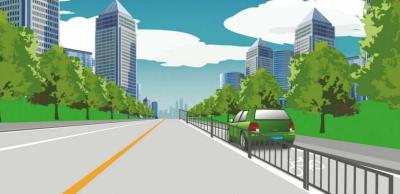
A. Right
B. Wrong
Answer:B
11. Whats the meaning of this sign?
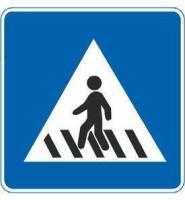
A. crosswalk
B. students passage
C. watch for pedestrians
D. childrens passage
Answer:A
12. When overtaking, the driver should ________ if the vehicle in front refuses to reduce speed or yield.
A. Follow closely and find chance to overtake again
B. Stop overtaking
C. Speed up and continue to overtake
D. Continuously honk and speed up to overtake
Answer:B
13. Whats the meaning of this sign?
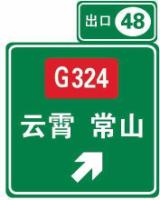
A. expressway right exit ahead
B. expressway destination indication
C. expressway left exit ahead
D. expressway next exit ahead
Answer:A
14. The penalty points will be _____ if violating the traffic lights.
A. 2-point penalty
B. 3-point penalty
C. 6-point penalty
D. 12-point penalty
Answer:C
15. Driving a small passenger vehicle on the expressway, the minimum speed should not be less than 90 kilometers per hour.
A. Right
B. Wrong
Answer:B
16. The three principles for careful driving are concentration, careful observation and early prevention.
A. Right
B. Wrong
Answer:A
17. Whats the meaning of this sign?
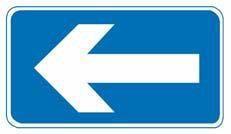
A. yield if going to turn left
B. straight one-way road
C. right one-way road
D. left one-way road
Answer:D
18. Which of the following vehicle in front in the same lane is not allowed to be overtaken?
A. police car on duty
B. large bus or large truck
C. taxis
D. public bus
Answer:A
19. Whats the meaning of this sign?
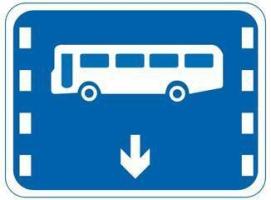
A. special lane for large buses
B. special lane for public buses
C. special lane for Bus Rapid Transit System
D. special lane for multi-passenger vehicles
Answer:B
20. Emergency braking on a road covered by ice and snow can easily cause side skidding. The driver should use the engine braking to reduce speed.
A. Right
B. Wrong
Answer:A
21. Which is correct if a vehicle breaks down and is difficult to move?
A. turn on the hazard lights
B. turn on all the lights of the vehicle
C. forbid the passengers to get off
D. place a warning sign in front of the vehicle
Answer:A
22. What marking is the combination of the white broken lines and the triangle area?
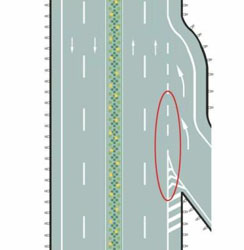
A. road entry marking
B. lane-dividing line that can be crossed
C. deceleration line at road entry
D. road exit marking
Answer:A
23. If discovering pedestrians abruptly cross the road while driving, the driver should immediately reduce speed and evade.
A. Right
B. Wrong
Answer:A
24. When a motorized vehicle goes at night through an intersection that has no traffic lights, the driver should not use the high and low beam lights alternately.
A. Right
B. Wrong
Answer:B
25. Honking in a foggy day can arouse the attention of the opposite side. After hearing the honking from the opposite side, the driver should also honk to respond.
A. Right
B. Wrong
Answer:A


