
1. What is the max speed when passing a level crossing?
A. 15km/hr
B. 20km/hr
C. 30km/hr
D. 40km/hr
Answer:C
2. What marking is the combination of the white broken lines and the triangle area?

A. road entry marking
B. lane-dividing line that can be crossed
C. deceleration line at road entry
D. road exit marking
Answer:A
3. It lights to indicate that ______

A. the hazard lights flash
B. right-turn signal flashes
C. left-turn signal flashes
D. front and rear width lights flash
Answer:A
4. Whats the meaning of this sign?
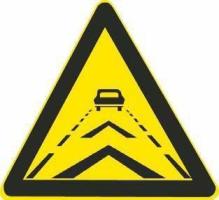
A. section narrows on both sides
B. section for speed test
C. section for ascertaining the distance between the vehicles
D. pay attentions to keeping distance
Answer:D
5. Whats the meaning of this sign?

A. fewer lanes
B. merging point
C. emergency lane
D. changing to left lane
Answer:A
6. In the course of reversing, the driver should move slowly, observe the conditions on both sides and in the rear and be ready to stop anytime.
A. Right
B. Wrong
Answer:A
7. When a vehicle goes down a long slope, it should run at a lower gear and fully use the engine to brake.
A. Right
B. Wrong
Answer:A
8. The vehicle is allowed to _______ at this intersection.

A. go straight or turn right
B. turn right
C. turn left
D. go straight
Answer:C
9. What is the max speed on this city road?

A. 40km/hr
B. 30km/hr
C. 50km/hr
D. 70km/hr
Answer:B
10. What is the main role of the seat belt when there is a collision?
A. to protect the driver and passengers necks
B. to protect the driver and passengers chests
C. to reduce the injuries of the driver and passengers
D. to protect the driver and passengers waists
Answer:C
11. How to run when encountering this situation at the intersection?

A. stop and wait
B. obey the traffic lights
C. run straight on the right side
D. may turn right
Answer:A
12. This sign reminds bump road ahead which may causes bump phenomenon.

A. Right
B. Wrong
Answer:A
13. Whats the meaning of this sign?

A. no U turn at intersection
B. no changing lane from both sides
C. no left or right turn
D. no going straight
Answer:C
14. Stop the vehicle and observe when reaching the level crossing in this situation.

A. Right
B. Wrong
Answer:A
15. A person can not apply the motorized vehicle driving license, if he has been held for criminal liabilities according to law because of driving after drinking and causing a major traffic accident.
A. Right
B. Wrong
Answer:A
16. This motorized vehicle parked on the roadside has no illegal act.

A. Right
B. Wrong
Answer:B
17. A vehicle should try to speed up after starting from the roadside and rapidly turn left into the traffic flow on the road.
A. Right
B. Wrong
Answer:B
18. Within the validity of the Admission Form, the times of test reservation for Driving Skills of subject 2 and subject 3 can not exceed ______
A. 3 times
B. 4 times
C. 5 times
D. 6 times
Answer:C
19. When the vehicles cross each other at night, the driver may continuous change lights to remind the vehicle coming in the opposite direction and at the same should reduce speed and go forward or stop on the right side.
A. Right
B. Wrong
Answer:A
20. How to turn right in this intersection?

A. turn right directly
B. turn right at the front of the opposite car in advance
C. honk to urge
D. let the opposite car turn left first
Answer:D
21. Whats the meaning of the yellow marking on the road?

A. gradual road width
B. more carriageways
C. closing to obstacle
D. construction section indication
Answer:A
22. Whats the meaning of this sign?

A. location and distance
B. driving route
C. destination name
D. driving direction
Answer:A
23. When driving at night, the drivers visibility range becomes shorter and his observation becomes poorer. At the same time, the driver can easily become tired because he has to highly concentrate his attention.
A. Right
B. Wrong
Answer:A
24. After entering the acceleration lane of an expressway, the driver should increase the speed to more than _________ per hour.
A. 50
B. 60
C. 30
D. 40
Answer:B
25. Whats the meaning of the white rectangle marking?

A. special space for taxicabs to take and drop passengers
B. horizontal parking space
C. inclined parking space
D. vertical parking space
Answer:B


