
1. What kind of violation does this broken down vehicle have?

A. not turn on the hazard lights
B. not stop the car by the roadside
C. not solve the problem at once
D. not place the warning sign
Answer:D
2. The three principles for careful driving are concentration, careful observation and early prevention.
A. Right
B. Wrong
Answer:A
3. When a vehicle goes downhill, the driver should properly control the speed and fully use the engine to brake.
A. Right
B. Wrong
Answer:A
4. The vehicle can not run straight or turn left in this situation.

A. Right
B. Wrong
Answer:A
5. You may not use the turn signal when you change to the right lane.
A. Right
B. Wrong
Answer:B
6. How to do when encountering slow-moving vehicles in front?

A. follow the vehicles in front
B. occupy the opposite lane to overtake
C. borrow the lane from right side to overtake
D. overtake from both sides as will
Answer:A
7. Whats the meaning of this sign?

A. reduce speed and yield
B. variable lane
C. separated road
D. two-way traffic
Answer:D
8. Whats the meaning of this sign?
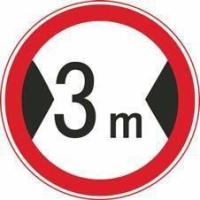
A. 3m width limit ahead
B. 3m width limit
C. the 3m width limit ban is lifted
D. 3m height limit
Answer:B
9. If the vehicle has no license plate, label of inspection or label of insurance, preserve the scene and immediately report to the police.
A. Right
B. Wrong
Answer:A
10. When following a vehicle on the road, the distance from the vehicle in front is not important. As long as the driver goes forward at the same speed as the vehicle in front does, he can avoid rear-end collision.
A. Right
B. Wrong
Answer:B
11. This sign indicates landslide section ahead and bypassing.

A. Right
B. Wrong
Answer:B
12. When encountering non-motorized vehicles cutting in on the road, the driver should ___.
A. Honk to warn
B. Speed up and pass
C. Reduce speed and yield
D. Suddenly speed up when approaching
Answer:C
13. What is the max speed when in or out of the lane for non-motorized vehicles?
A. 40km/hr
B. 50km/hr
C. 60km/hr
D. 30km/hr
Answer:D
14. Whats the meaning of this sign?

A. embankment road
B. dangerous hillside road
C. rock-falling road
D. cliffside road
Answer:B
15. When encountering slow-moving vehicles at an intersection that has no traffic signals, the motorized vehicle should pass alternately.
A. Right
B. Wrong
Answer:A
16. The cycle for recording the accumulated penalty points for violating road traffic safety regulations is ____________.
A. 12 months
B. 24 months
C. 3 months
D. 6 months
Answer:A
17. It is not safe for a woman driver to wear high heels to drive a vehicle.
A. Right
B. Wrong
Answer:A
18. Whats the meaning of this sign?

A. no passing for small vehicle
B. passing for small vehicle only
C. passing for motorized vehicle
D. no passing for small vehicle
Answer:C
19. Whats the meaning of this sign?
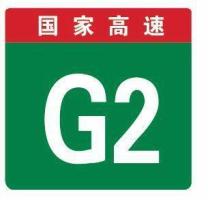
A. expressway mileage No.
B. expressway border plate No.
C. expressway name No.
D. expressway section No.
Answer:C
20. What kind of lane that the red car running in?

A. fast lane
B. slow lane
C. emergency lane
D. special lane
Answer:A
21. What is this instrument?

A. speed and mileage meter
B. engine tachometer
C. top speed meter
D. fuel consumption / 100 km
Answer:A
22. A motorized vehicle is not allowed to stop in the section 50 meters to the bridge, steep slope or tunnel.
A. Right
B. Wrong
Answer:A
23. Traffic Police can detain the vehicle which is suspected of using other vehicles license plate and vehicle license.
A. Right
B. Wrong
Answer:A
24. When driving in thick or extremely thick fog, the driver should ____ due to low visibility.
A. Turn on the head light and keep driving
B. Turn on the contour light, fog light and drive along the right side
C. Turn on the hazard lights and keep driving
D. Turn on the hazard lights, fog light, and stop at a safe place
Answer:D
25. Before a vehicle enters a curve of a mountain road, the driver ______ if there is no vehicle coming in the opposite direction.
A. Should reduce speed, honk and drive on the right side
B. Should drive along the outer side of the curve
C. May briefly borrow the opposite lane
D. May speed up and pass along the tangent line of the curve
Answer:A


