
1. Whats the meaning of this sign?
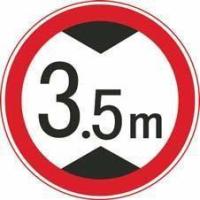
A. 3.5m width limit
B. 3.5m width limit ban is lifted
C. 3.5m distance from vehicles limit
D. 3.5m height limit
Answer:D
2. When a tire blows out suddenly on the road, the driver should refrain from violently depressing the brake pedal in panic. Instead, he should try his best to shift the gear to a low position and use the engine braking to reduce the speed of the vehicle.
A. Right
B. Wrong
Answer:A
3. When passing through an overflowing road, a high gear should be used to pass rapidly.
A. Right
B. Wrong
Answer:B
4. Whats the meaning of this sign?
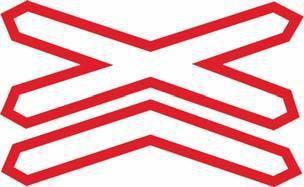
A. a manned level crossing
B. an unmanned level crossing
C. multi-crossing of railway and road
D. yielding the train with care
Answer:C
5. How to do when encountering this situation of waiting in line?
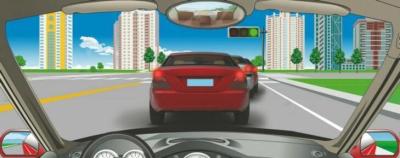
A. cross the solid line from left side to overtake
B. overtake from both sides as will
C. wait in line
D. borrow the lane from right side to overtake
Answer:C
6. When crossing each other on a narrow road, the driver should slow down, yield and stop first.
A. Right
B. Wrong
Answer:A
7. Whats the meaning of this sign?
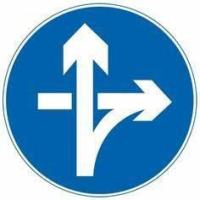
A. going straight and turning left
B. going straight and turning right
C. going straight and turning right at an interchange
D. going straight and turning left at an interchange
Answer:C
8. If a motorized vehicle causes a traffic accident on the road, the driver should immediately move the vehicle to the roadside.
A. Right
B. Wrong
Answer:B
9. Whats the meaning of this sign?
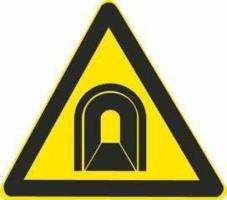
A. water channel
B. bridge
C. tunnel
D. Culvert
Answer:C
10. When a vehicle coming in the opposite direction suddenly overtakes and occupies your lane, the correct way to deal with this situation is to __________.
A. Obstruct the way of that vehicle
B. Maintain the original speed
C. Reduce speed and avoid as much as possible, till stop
D. Speed up and go forward
Answer:C
11. This set of the hand signals of the traffic police indicates that the vehicles should ____ .
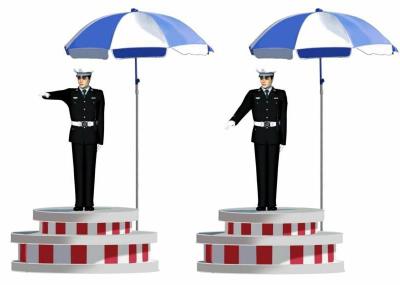
A. turn right
B. change lane
C. reduce speed and pass slowly
D. pull over
Answer:C
12. When changing lanes on an expressway, the driver should turn on the turn signal in advance, observe the traffic conditions, and slowly turn the steering wheel and enter the new lane after making sure it is safe to do so.
A. Right
B. Wrong
Answer:A
13. Traffic Police can detain the vehicle according to law if it uses other vehicles license plate and vehicle license.
A. Right
B. Wrong
Answer:A
14. Violating the law and regulations on road traffic safety is the act of violation of the law.
A. Right
B. Wrong
Answer:A
15. When passing a section of a mountain road which is prone to landside and mudflow, the driver should not stop.
A. Right
B. Wrong
Answer:A
16. When the light switch is rotated to the position, the whole car lights turn on.
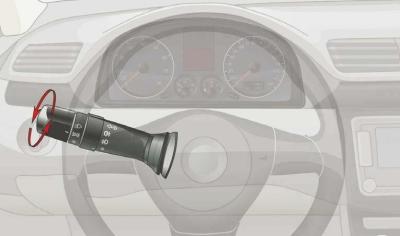
A. Right
B. Wrong
Answer:B
17. How to pass the intersection when running straight
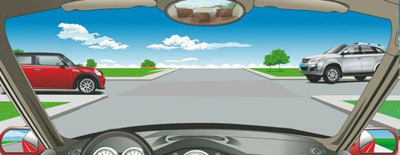
A. turn on the hazard lights and pass
B. directly speed up and pass straight
C. yield to the vehicle from the right road
D. yield to the vehicle from the left road
Answer:C
18. It lights to indicate that ______

A. the front fan works
B. air external circulation
C. windscreen defroster
D. air internal circulation
Answer:D
19. When a traffic accident causing human injuries, preserve the scene and immediately report to the police.
A. Right
B. Wrong
Answer:A
20. When reaching a sharp curve, the driver should reduce speed and drive on the right side so as to avoid colliding with the vehicle crossing the central line of the curve in the opposite direction.
A. Right
B. Wrong
Answer:A
21. You can drive directly into the expressway from this position.
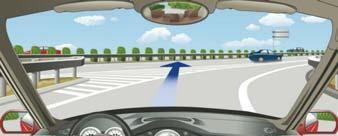
A. Right
B. Wrong
Answer:B
22. Whats the meaning of this sign?
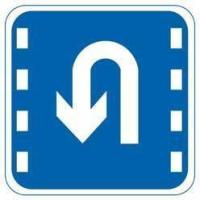
A. U turn lane
B. bypassing lane
C. lanes for going in different directions
D. left-turn lane
Answer:A
23. A motorized vehicle driver who uses other motorized vehicles license plate and vehicle license is subject to a 3-point penalty.
A. Right
B. Wrong
Answer:B
24. Before entering a level crossing, the vehicle should reduce speed and change to a lower gear, and _____ after entering the level crossing.
A. Cannot change gear
B. Can change gear
C. Can change to a higher gear
D. Stop and look
Answer:A
25. It lights to indicate that ______

A. ABS system malfunction
B. handbrake is released
C. braking system malfunction
D. handbrake is pulled up
Answer:D


