
1. Whats the meaning of this mark on the road?
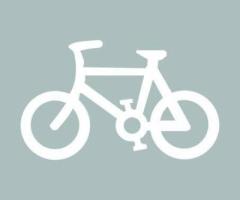
A. the lane for non-motorized vehicles
B. the special lane for motorcycles
C. the special lane for battery bicycles
D. the special lane for bicycles
Answer:A
2. When the green arrow for a lane is on and there are still pedestrians in the crosswalk before the vehicle, the driver should ___________.
A. Directly start up and pass
B. Start up and bypass the pedestrians from behind
C. Start up and bypass before the pedestrians
D. Start up after the pedestrians have passed
Answer:D
3. This set of the hand signals of the traffic police indicates that the vehicles should ___ .
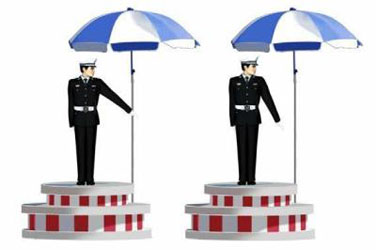
A. turn left
B. wait to turn left
C. reduce speed and pass slowly
D. turn right
Answer:B
4. When a motorized vehicle passes through narrow road or bridge, the maximum speed should not exceed 30 kilometers per hour.
A. Right
B. Wrong
Answer:A
5. Whats the meaning of this sign?
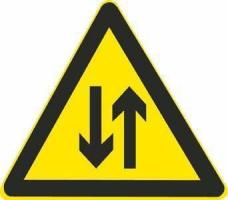
A. reduce speed and yield
B. variable lane
C. separated road
D. two-way traffic
Answer:D
6. Which kind of sign is it?
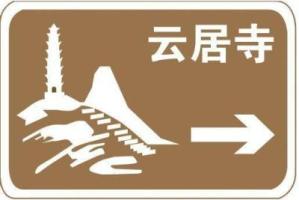
A. tourist zone sign
B. work area sign
C. notification signs
D. expressway sign
Answer:A
7. Whats the meaning of this sign?

A. customs inspection
B. stop-for-inspection
C. frontier inspection
D. no passing
Answer:B
8. Which is subject to a 6-point penalty?
A. violate the traffic lights
B. drive school bus without qualification
C. drive the vehicle which permission is different
D. drive after drink
Answer:A
9. What is the max speed at sharp curve?
A. 20km/hr
B. 30km/hr
C. 40km/hr
D. 50km/hr
Answer:B
10. What is this traffic sign?
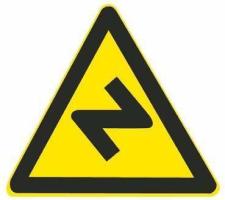
A. slippery section
B. sharp curve
C. inverse curve
D. continuous curves
Answer:C
11. A vehicle may stop on the ramp of an expressway.
A. Right
B. Wrong
Answer:B
12. Traffic Police can detain the vehicle according to law if it uses other vehicles license plate and vehicle license.
A. Right
B. Wrong
Answer:A
13. A person who has falsified or altered the motorized vehicle driving license and if his act constitutes a crime, he should be held for criminal liabilities according to law.
A. Right
B. Wrong
Answer:A
14. Whats the meaning of this sign?
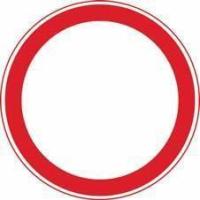
A. No passing
B. driving at reduced speed
C. time limit for entering
D. no entering
Answer:A
15. Whats the meaning of this sign?
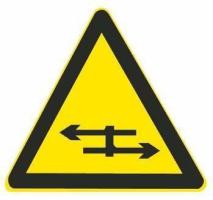
A. flat intersection
B. flat ring intersection
C. attention to interactive intersection
D. attention to separate intersection
Answer:D
16. What does this symbol indicate?

A. switch of high beam lights
B. switch of the low beam lights
C. master switch of vehicle lights
D. the switch of tail fog light
Answer:C
17. A person can not apply the motorized vehicle driving license, if he has been held for criminal liabilities according to law because of driving after drinking and causing a major traffic accident.
A. Right
B. Wrong
Answer:A
18. The driving license of 10-year validity will be issued if the penalty points never reached 12 points in every scoring cycle during the 6-year validity of the license.
A. Right
B. Wrong
Answer:A
19. As the braking distance increases on a wet road in a rainy day, the driver should use the emergency brake as much as possible to reduce speed.
A. Right
B. Wrong
Answer:B
20. You have the priviledged passing right of way at the intersection in this situation.
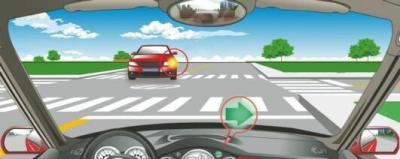
A. Right
B. Wrong
Answer:B
21. After a vehicle enters a mountain road, it should pay special attention to the continuous curves sign. In addition, it should voluntarily evade vehicles and pedestrians, reduce speed in a time manner and honk in advance.
A. Right
B. Wrong
Answer:A
22. The method of this small passenger vehicle to leave the expressway lane is correct.
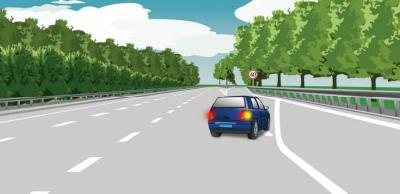
A. Right
B. Wrong
Answer:A
23. When driving during the period of probation, the driver should paste or hang _____ on the rear part of the vehicle
A. a mark of avoiding with care
B. a mark of paying attention of beginner
C. a uniform probation mark
D. a mark of paying attention of vehicle distance
Answer:C
24. The driver is prohibited from opening the door and letting passengers on and off when a vehicle has not come to a full stop.
A. Right
B. Wrong
Answer:A
25. Stopping temporarily on the road should not obstruct the passing of other vehicles and pedestrians.
A. Right
B. Wrong
Answer:A


