
1. When driving in icy and snowy weather, ________.
A. The braking distance becomes longer
B. The resistance to slide becomes larger
C. The braking performance does not change
D. The road grip becomes stronger
Answer:A
2. How to turn right in this intersection?

A. turn right directly
B. turn right at the front of the opposite car in advance
C. honk to urge
D. let the opposite car turn left first
Answer:D
3. The red car can run in this lane.

A. Right
B. Wrong
Answer:B
4. After a tire blows out and before the driver can control the speed of the vehicle, he should refrain from using the foot brake to stop the vehicle. Otherwise, a horizontal swing of the vehicle can cause greater danger.
A. Right
B. Wrong
Answer:A
5. This sign indicates intersection ahead.

A. Right
B. Wrong
Answer:B
6. When passing through an overflowing road, a high gear should be used to pass rapidly.
A. Right
B. Wrong
Answer:B
7. It lights to indicate that ______

A. left-turn signal flashes
B. front and rear width lights light on
C. front and rear width lights light on
D. right-turn signal flashes
Answer:A
8. This set of the hand signals of the traffic police indicates that the vehicles should ___ .

A. turn left
B. wait to turn left
C. reduce speed and pass slowly
D. turn right
Answer:B
9. How to run on this road?

A. run in the middle of the road
B. run on both side of the road
C. run according to lanes
D. go forward at will
Answer:A
10. What is this traffic sign?

A. slippery section
B. sharp curve
C. inverse curve
D. continuous curves
Answer:C
11. What marking is it?

A. prohibitive area
B. cross-hatched marking
C. guide line
D. central circle
Answer:D
12. May speed up to go through the crosswalk in this situation.

A. Right
B. Wrong
Answer:B
13. When driving slowly in a congested road, the driver should ________ if another vehicle forcefully cuts in.
A. Honk to warn it against cutting in
B. Speed up to closely follow the vehicle in front and refuse to allow it to cut in
C. Squeeze the cutting-in vehicle to force it to leave
D. Voluntarily yield to ensure safe driving
Answer:D
14. Whats the meaning of this sign?
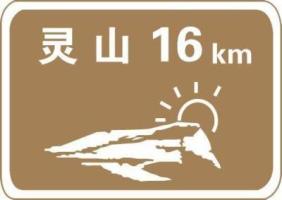
A. distance to a tourist area
B. direction of a tourist area
C. symbol of a tourist area
D. category of a tourist area
Answer:A
15. What marking is the white semicircle in the circle?

A. driving at reduced speed
B. ascertaining the vehicles speed
C. reducing the speed at the intersection
D. ascertaining the distance between the vehicles
Answer:D
16. If a driver has not received full penalty points, and the fine has not been paid, the penalty points will be transferred into the next scoring cycle.
A. Right
B. Wrong
Answer:A
17. Whats the meaning of this sign?

A. steep downhill road
B. continuous up slopes
C. steep uphill road
D. embankment road
Answer:C
18. Whats the meaning of this sign?

A. lane direction indication
B. intersection ahead
C. lane information indication
D. road branching point ahead
Answer:B
19. What pedal is it?

A. accelerator pedal
B. clutch pedal
C. handbrake
D. the brake pedal
Answer:A
20. It lights to indicate that ______

A. windscreen wash lacks
B. braking oil lacks
C. cooling system malfunction
D. coolant lacks
Answer:D
21. You can overtake from right side in this case.

A. Right
B. Wrong
Answer:B
22. Whats the meaning of this sign?

A. reduce speed and yield
B. variable lane
C. separated road
D. two-way traffic
Answer:D
23. A front tire blowout is very dangerous. The vehicle will immediately turn to the side where the tire is blown out and have a direct impact on the drivers control of the steering wheel.
A. Right
B. Wrong
Answer:A
24. The police can detain the vehicle if one drives a vehicle without ______
A. driving license
B. ID card
C. pass paper
D. qualification certificate
Answer:A
25. It lights to indicate that ______

A. the tail fog light is turned on
B. the low beam light is turned on
C. the high beam light is turned on
D. the head fog light is turned on
Answer:B


